
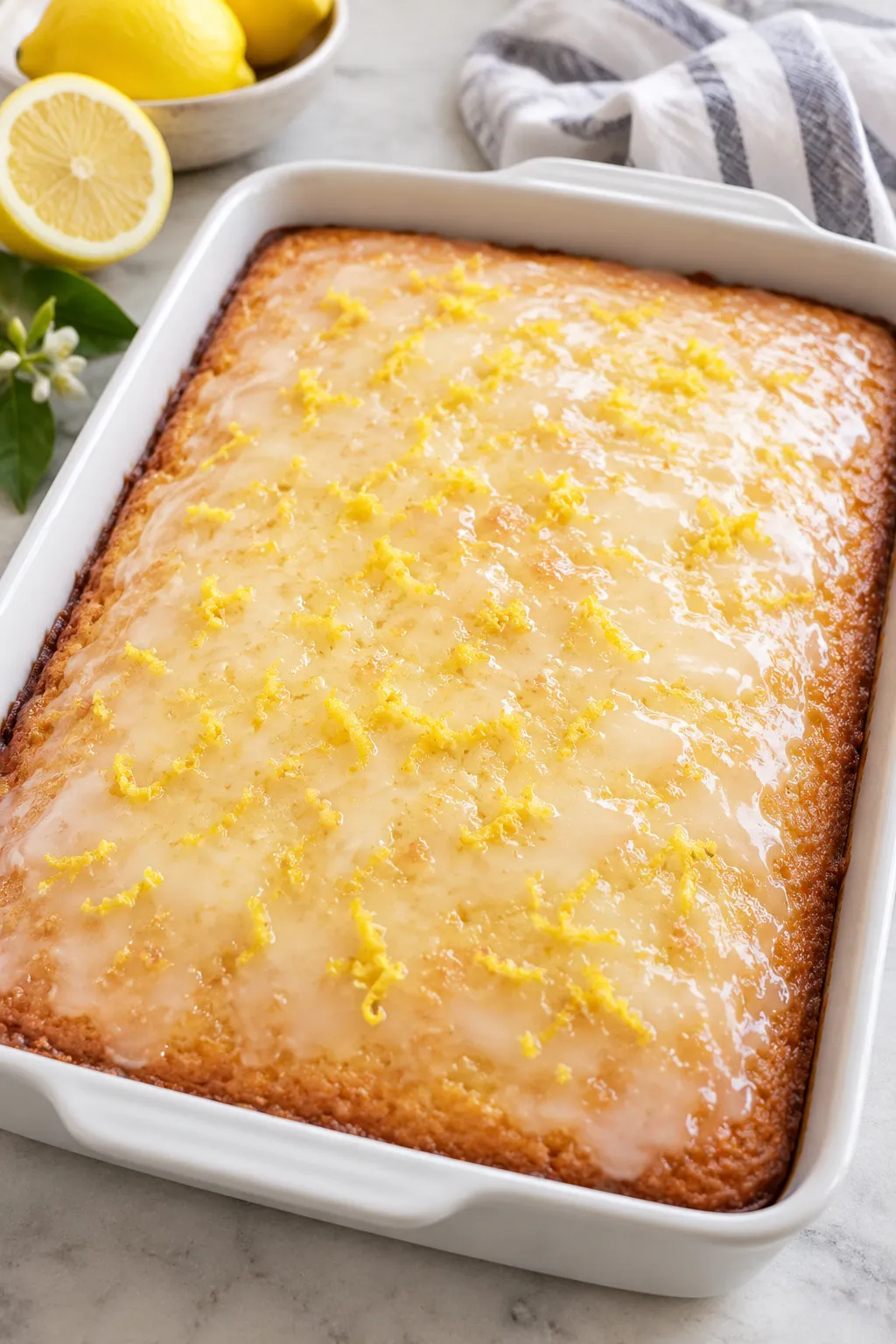
Lemon Cake To Die For is one of those simple cakes that earns a dramatic name because the flavor does most of the work. It has a soft, tender crumb, plenty of fresh lemon flavor, and a glossy lemon glaze that settles into the top instead of sitting there like a heavy frosting.
This version is made from scratch with fresh lemon juice and zest, Greek yogurt, and oil. The yogurt keeps the crumb moist, while the oil gives the cake a soft texture even after it has cooled. It is baked in a 9×13-inch pan, so there is no stacking, piping, or decorating to worry about.
Why You’ll Love This Lemon Cake
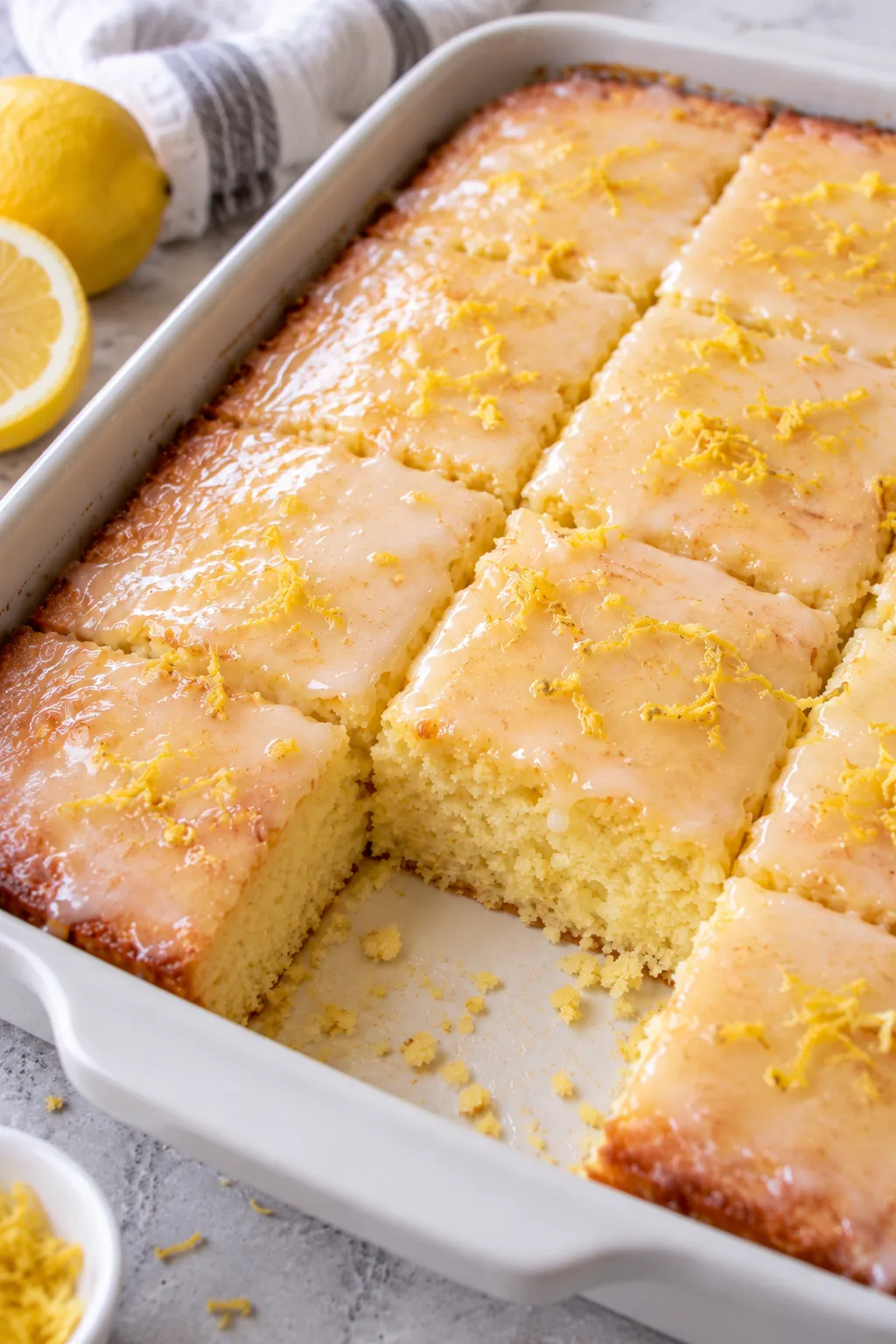
The biggest reason to make this cake is the balance. It is sweet, but the fresh lemon keeps it from tasting flat. The crumb is soft without being wet or overly dense, and the glaze adds another hit of lemon without turning the cake into a frosted dessert.
It is also a practical cake. Everything goes into one rectangular pan, the glaze is stirred together in a bowl, and the finished cake can be cut into neat squares for a family dessert, potluck, brunch table, or casual get-together.
Ingredient Notes
Fresh lemon zest: Zest carries a lot of lemon aroma, so it matters here. Rub it into the granulated sugar before mixing the batter. That simple step releases the fragrant oils and spreads the lemon flavor through the cake.
Greek yogurt: Plain Greek yogurt adds moisture and a little tang without making the batter thin. It also helps give the cake a tender crumb.
Oil: A mild olive oil or neutral oil keeps the cake soft. Avoid strongly flavored oil because it can compete with the lemon.
Fresh lemon juice: Fresh juice goes into both the cake and the glaze. Bottled juice can work in a pinch, but fresh lemon gives the cleanest flavor.
Powdered sugar: This is the base of the glaze. Add the lemon juice gradually so the glaze stays thick enough to cling to the cake instead of disappearing into it.
How to Make Lemon Cake To Die For
Start by heating the oven to 350°F and preparing a 9×13-inch pan. Whisk the flour, baking powder, baking soda, and salt together in one bowl.
In a second, larger bowl, rub the lemon zest into the sugar with your fingertips until the sugar smells strongly of lemon. Whisk in the eggs, then add the Greek yogurt, oil, fresh lemon juice, and vanilla.
Fold the dry ingredients into the wet mixture just until the batter is smooth. Once the flour disappears, stop mixing. Overworking the batter can make a simple sheet cake feel heavier than it should.
Spread the batter evenly in the prepared pan and bake for 27 to 33 minutes. The center should spring back lightly when touched, and a toothpick should come out with a few moist crumbs rather than wet batter.
The Lemon Glaze Makes the Cake
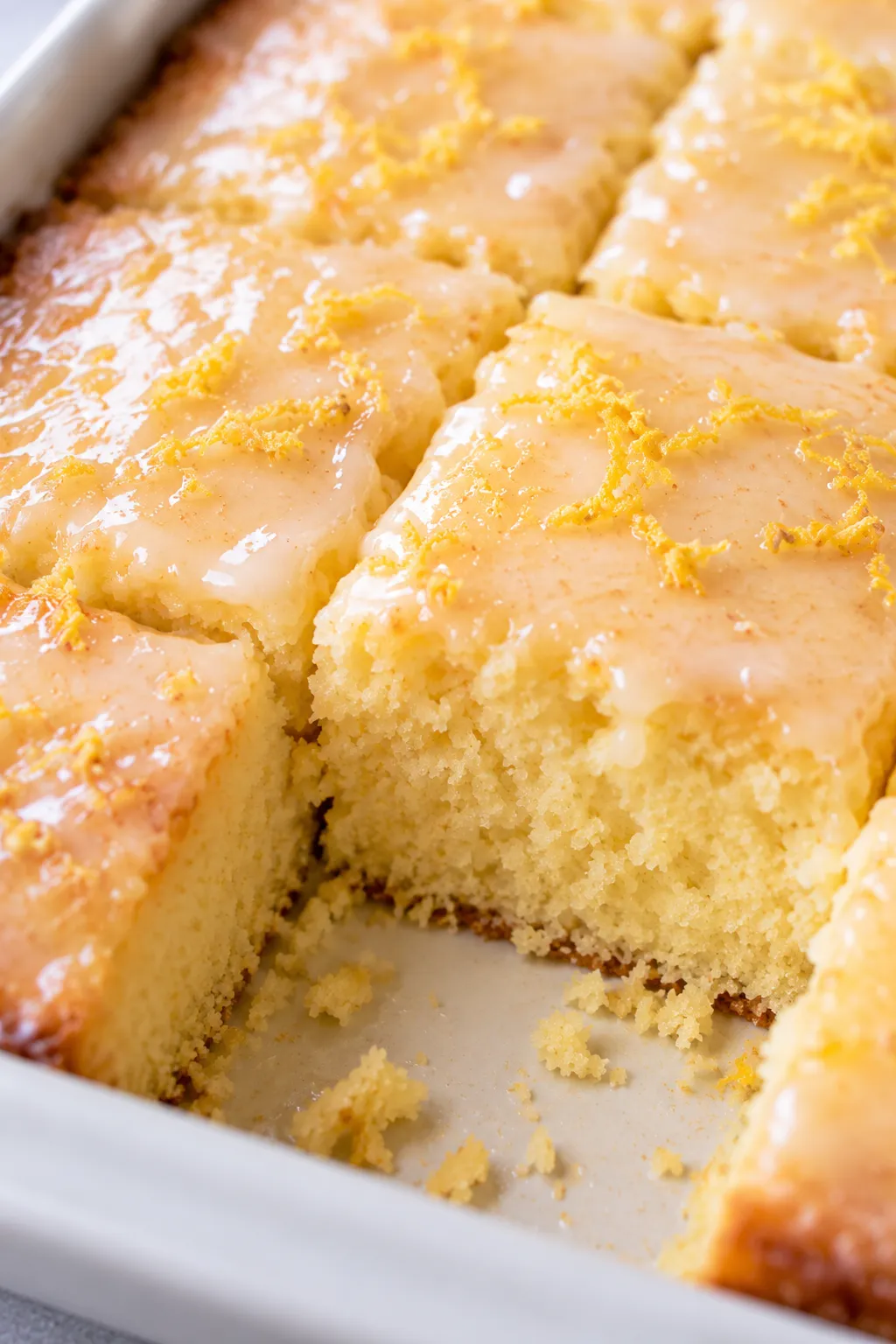
Let the cake cool completely before glazing it. If the cake is still warm, the glaze becomes thin and can soak in too quickly. For a visible, glossy finish, a cool cake works much better.
Whisk the powdered sugar with 2 tablespoons of fresh lemon juice, the lemon zest, and a small pinch of salt. Add more lemon juice a little at a time until the glaze is thick but pourable.

Pour or spread the glaze over the cooled cake, then give it a little time to set before cutting. The top should look glossy and lightly opaque, with enough glaze to taste lemon in every bite.
Tips for a Soft, Moist Lemon Cake
Measure the flour carefully. Packing too much flour into the measuring cup is one of the easiest ways to turn a tender cake into a dry one. Spoon the flour into the cup and level it rather than scooping directly from the bag.
Use room-temperature eggs and yogurt when possible. They blend into the batter more smoothly, which makes it easier to mix everything without overworking the flour.
Watch the cake near the end of the baking time instead of waiting for a deeply browned top. Lemon cake is best when it comes out as soon as the center is set.

Easy Variations
For a stronger lemon flavor, add a little extra zest rather than a large amount of extra juice. Zest boosts the citrus aroma without changing the liquid balance of the batter.
You can also leave the glaze smooth or finish it with a little fresh zest after glazing. If you prefer a lighter finish, drizzle the glaze in thin lines instead of spreading it over the entire cake.
Serving Ideas
This cake does not need much beside it. A square on its own is enough, especially once the glaze has set. For a slightly dressier dessert, serve it with fresh berries or a spoonful of lightly whipped cream.

Frequently Asked Questions
Can I make Lemon Cake To Die For without Greek yogurt?
A thick plain yogurt is the closest substitute because it gives the batter similar moisture and acidity. A thinner yogurt can change the texture, so avoid adding extra liquid elsewhere if you make a substitution.
Why did my lemon glaze turn too thin?
Usually too much lemon juice was added at once, or the cake was still warm. Add juice gradually to the powdered sugar and glaze only after the cake has cooled completely.
How do I know when the cake is done?
The center should spring back lightly when touched. A toothpick inserted near the center should come out without wet batter, although a few moist crumbs are fine.
Can I make the glaze more lemony?
Yes. Add a little more lemon zest first. It increases the lemon aroma without thinning the glaze as quickly as extra juice would.

A Simple Lemon Cake Worth Keeping
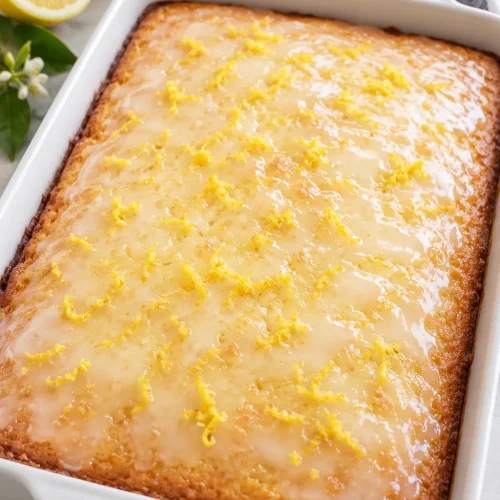
The name may be playful, but the cake itself is straightforward: a soft lemon sheet cake, a bright glaze, and no complicated decorating. The fresh zest gives it the aroma people expect from lemon desserts, while the yogurt and oil keep the crumb tender enough to stay pleasant even after the glaze has set.
Lemon Cake To Die For
Ingredients
Cake
- 2 1/4 cups all-purpose flour
- 2 teaspoons baking powder
- 1/2 teaspoon baking soda
- 1/2 teaspoon fine salt
- 1 cup granulated sugar
- 2 tablespoons finely grated lemon zest
- 3 large eggs
- 3/4 cup plain Greek yogurt
- 1/2 cup mild olive oil or neutral oil
- 1/3 cup fresh lemon juice
- 1 teaspoon vanilla extract
Lemon Glaze
- 1 1/2 cups powdered sugar
- 2 to 3 tablespoons fresh lemon juice
- 1 teaspoon finely grated lemon zest
- salt pinch
Instructions
- Preheat the oven to 350°F. Grease a 9×13-inch baking pan and line the bottom with parchment if desired.
- Whisk together the flour, baking powder, baking soda, and salt. In a separate large bowl, rub the lemon zest into the sugar until very fragrant.
- Whisk the eggs into the lemon sugar, then add the Greek yogurt, oil, lemon juice, and vanilla.
- Fold in the dry ingredients just until the batter is smooth and no pockets of flour remain.
- Spread the batter evenly in the pan and bake for 27 to 33 minutes, until the center springs back lightly and a toothpick comes out with a few moist crumbs.
- Cool the cake completely. Whisk the powdered sugar with 2 tablespoons lemon juice, lemon zest, and salt. Add a little more lemon juice as needed for a thick but pourable glaze, then spread or drizzle over the cooled cake and let it set before slicing.