Butter toffee pretzels get their crunch from a cooked sugar-and-butter coating. The mini twists are tossed in warm toffee, spread apart on a rack, then dried in a low oven. A candy thermometer helps you get the coating firm enough to snap once it sets.
Keep the pretzels measured and the tray ready before you start cooking. Once the toffee reaches its target temperature, you’ll need to coat and spread the pretzels promptly. Allow about an hour for preparation and cooking, followed by cooling and an overnight rest.
A few things to have ready
- A heavy saucepan: Choose one with enough room to stir 4 cups of mini pretzels into the toffee. A 3- to 4-quart pan gives you room to work.
- A candy thermometer: Keep its sensing tip in the mixture, clear of the bottom of the pan. Follow the thermometer’s directions for how deeply to insert it.
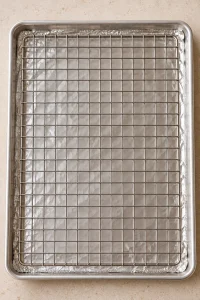
- An oven-safe wire rack and rimmed tray: Check that the rack is suitable for oven use. Line the tray with foil to catch drips and lightly grease the rack before cooking.
The ingredients that affect the coating
Use crisp miniature pretzel twists and measure them before the saucepan goes on the stove. The small twists are easy to turn through the toffee and separate on the rack. Keep the same 4-cup amount if you use small pretzel squares instead.
The coating uses equal cup measures of unsalted butter and granulated sugar, with 2 tablespoons water to help start the mixture. Use butter as specified. The ½ teaspoon coarse salt adds seasoning to the coating, while the pretzels bring their own salt.
Measure the ½ teaspoon vanilla separately so it’s ready to add as soon as the pan comes off the heat. Waiting to find it at that point gives the toffee time to begin firming up.
Give the toffee time to cook
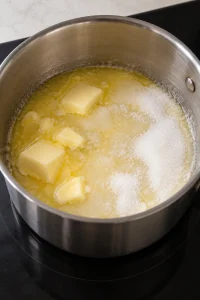
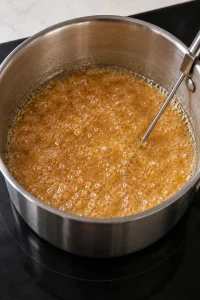
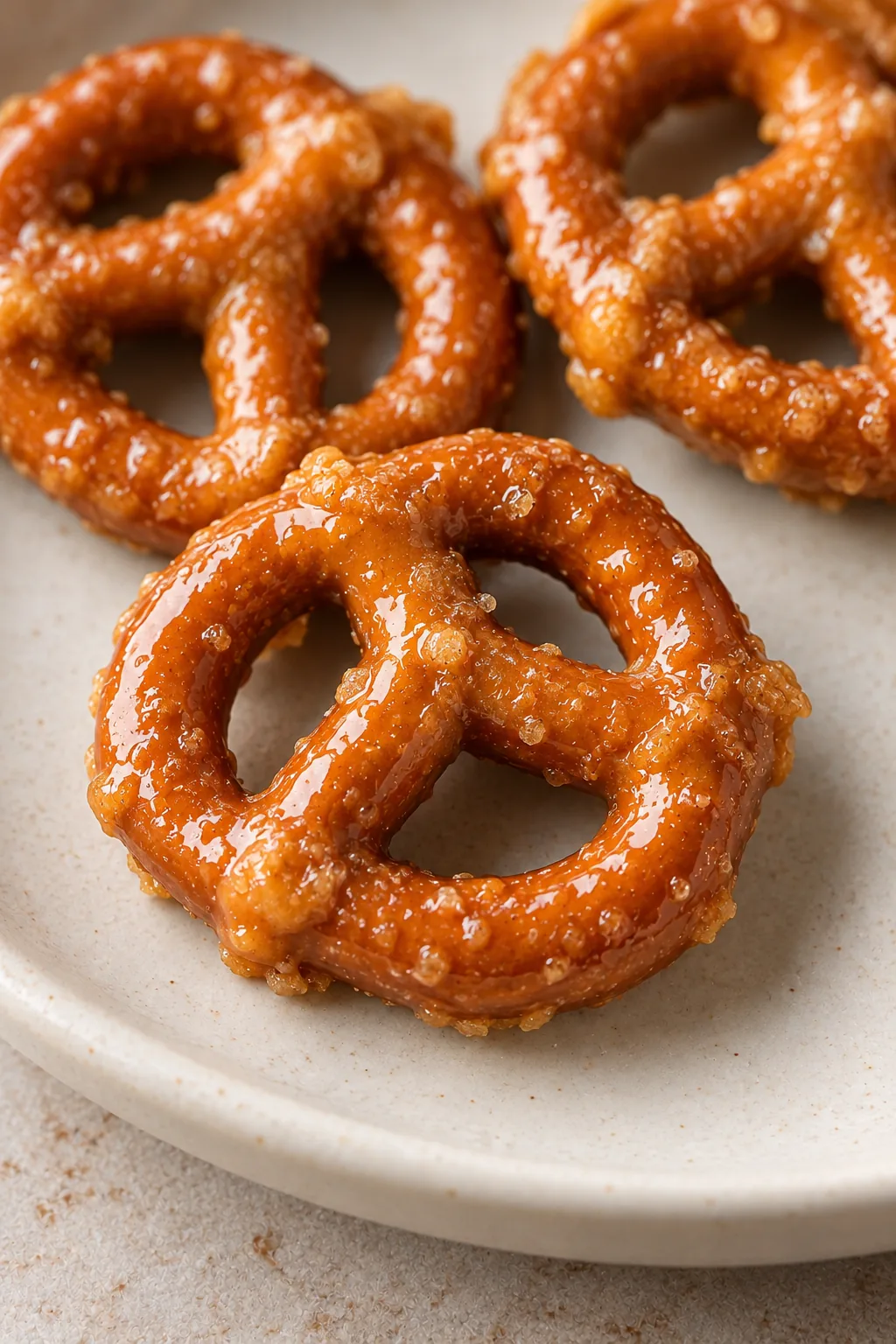
Melt the butter, sugar, water and salt together over medium-low heat, stirring steadily along the bottom. As the mixture heats, it will bubble and gradually take on an amber color. Keep the heat even so one area doesn’t scorch while another is still pale.
For this recipe, the target is 305°F (152°C). The thermometer matters because color alone can be misleading. A light-colored saucepan makes the changes easier to see, but use the temperature as the final cue for taking the pan off the heat.
The stove portion can take about 15–20 minutes, depending on the pan and burner. Stay close as the temperature rises toward the target. Turning the heat up sharply to hurry the last few degrees can make the mixture separate or brown too quickly.
Coat, then separate while the toffee is warm
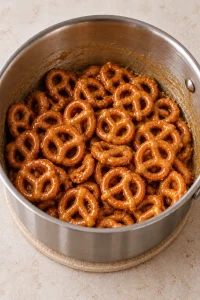
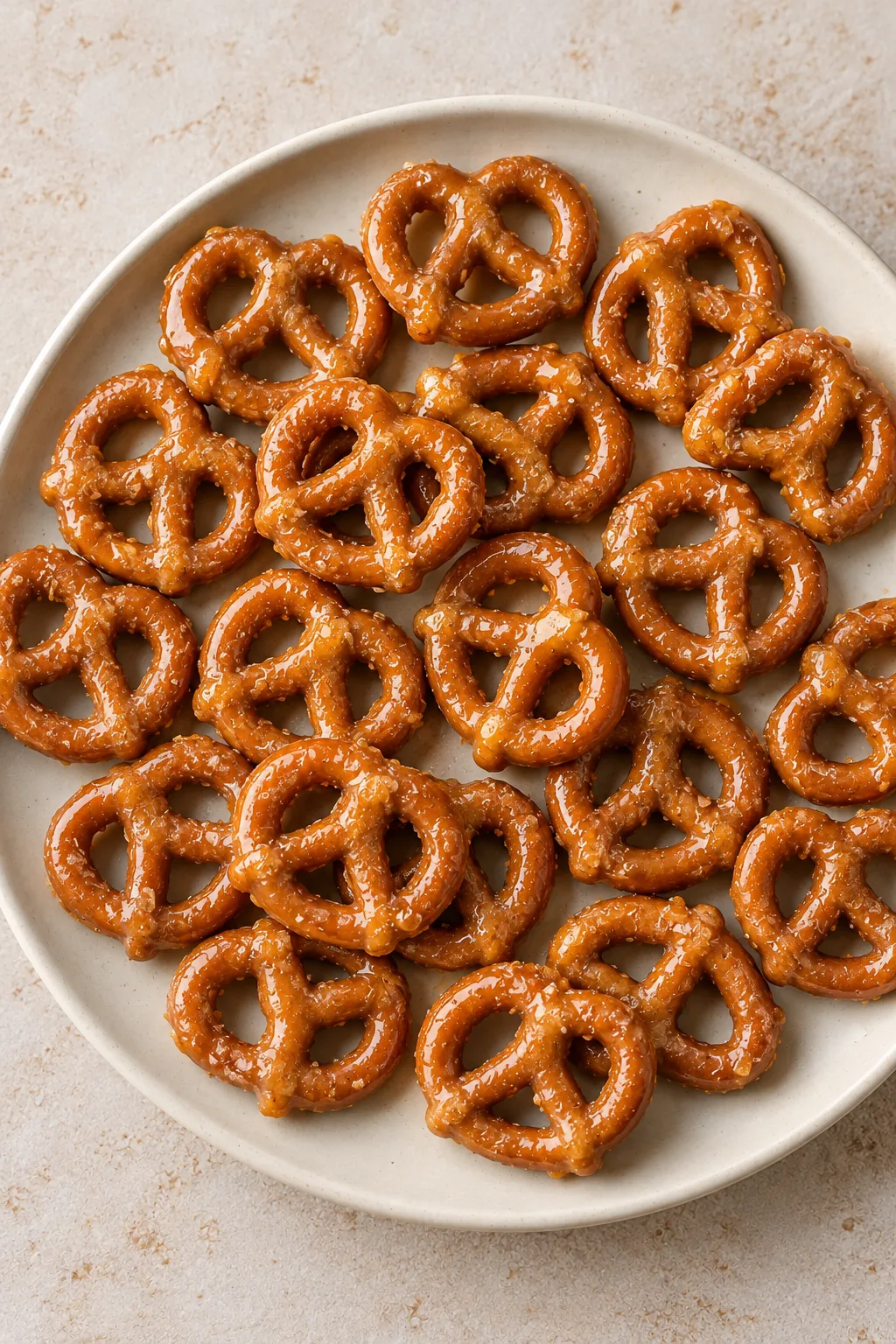
Take the saucepan off the heat and gently stir in the vanilla. Add the pretzels right away and turn them through the toffee with a sturdy heatproof utensil. Work from the bottom of the pan so the coating reaches the pretzels underneath.
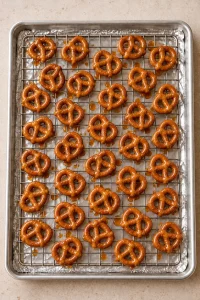
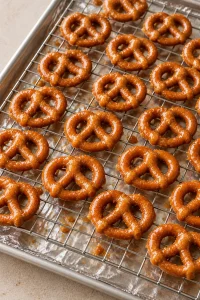
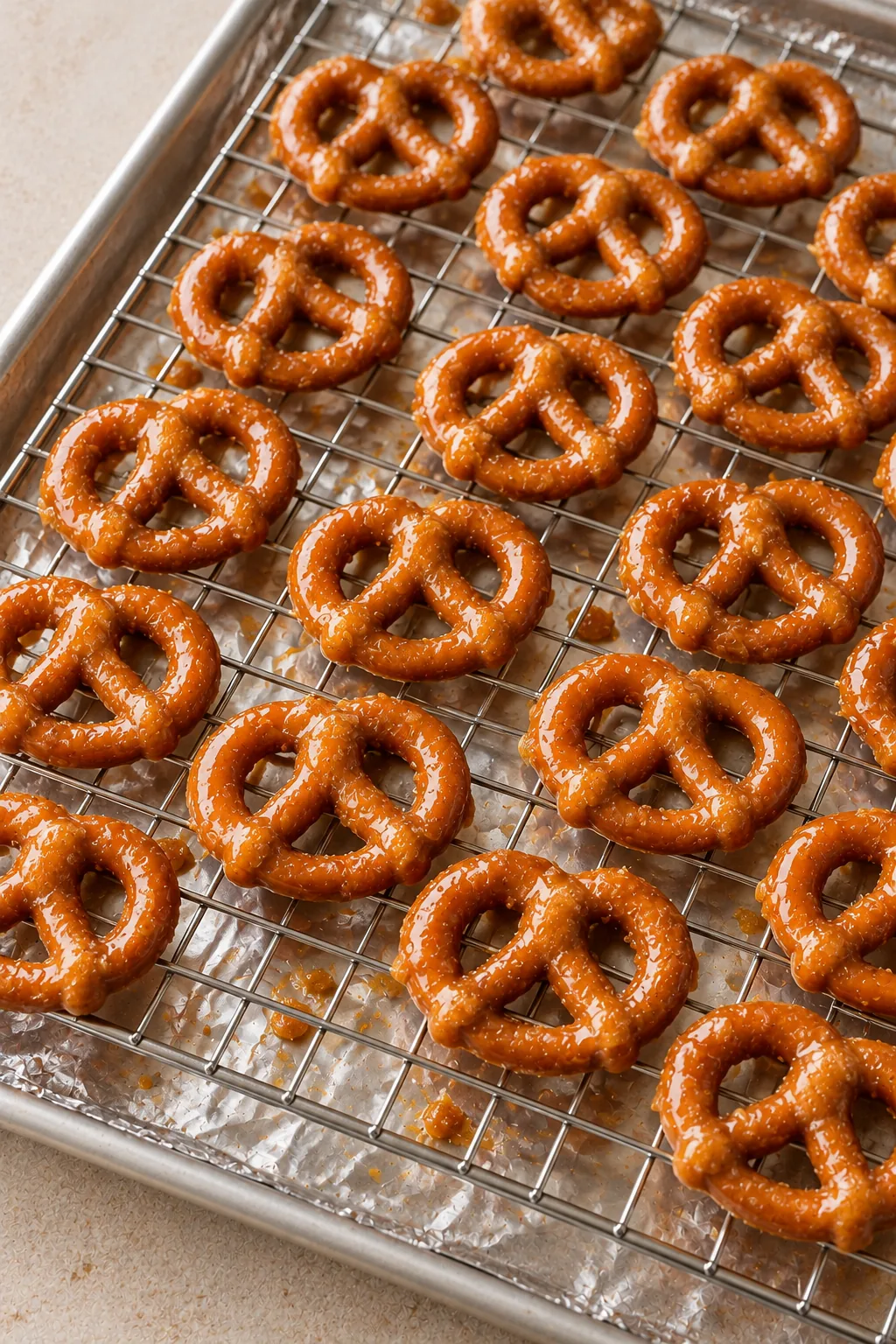
Use small tongs to move the coated pretzels to the prepared rack, a few at a time. Leave gaps between them where you can. Let the tray underneath catch the extra toffee, and use utensils to separate touching pieces while the coating is still warm.
A few small clusters are fine. The aim is to avoid one large joined sheet that will be difficult to separate later. If your tray is crowded, set up a second rack and tray before starting the toffee.
Finish in the low oven
Dry the pretzels at 200°F (95°C) for 20–30 minutes. This step follows the stovetop cooking; it doesn’t replace reaching the toffee temperature. Keep the oven low and avoid browning the pretzels further.
Remove the tray and leave the pretzels on the rack to cool completely. Allow about an hour for cooling, then leave them uncovered overnight to finish setting. That time is included in the recipe card so you can plan when to make the batch.
If the coating doesn’t turn out as expected
A soft or tacky coating: Check that the toffee reached the target temperature and that the pretzels have cooled fully. Humid air can also affect the surface. Waiting longer won’t reliably correct undercooked toffee.
Butter pooling in the saucepan: Lower the heat and keep stirring gently to try to bring the mixture together. Avoid abrupt changes in heat. A thin pan or uneven burner heat can make this harder to control.
Pretzels stuck together: Space them out while the coating is warm, using utensils. For a larger amount, make separate batches so each one can be coated and spread before the candy firms up.
More small sweet treats
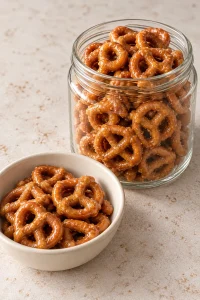
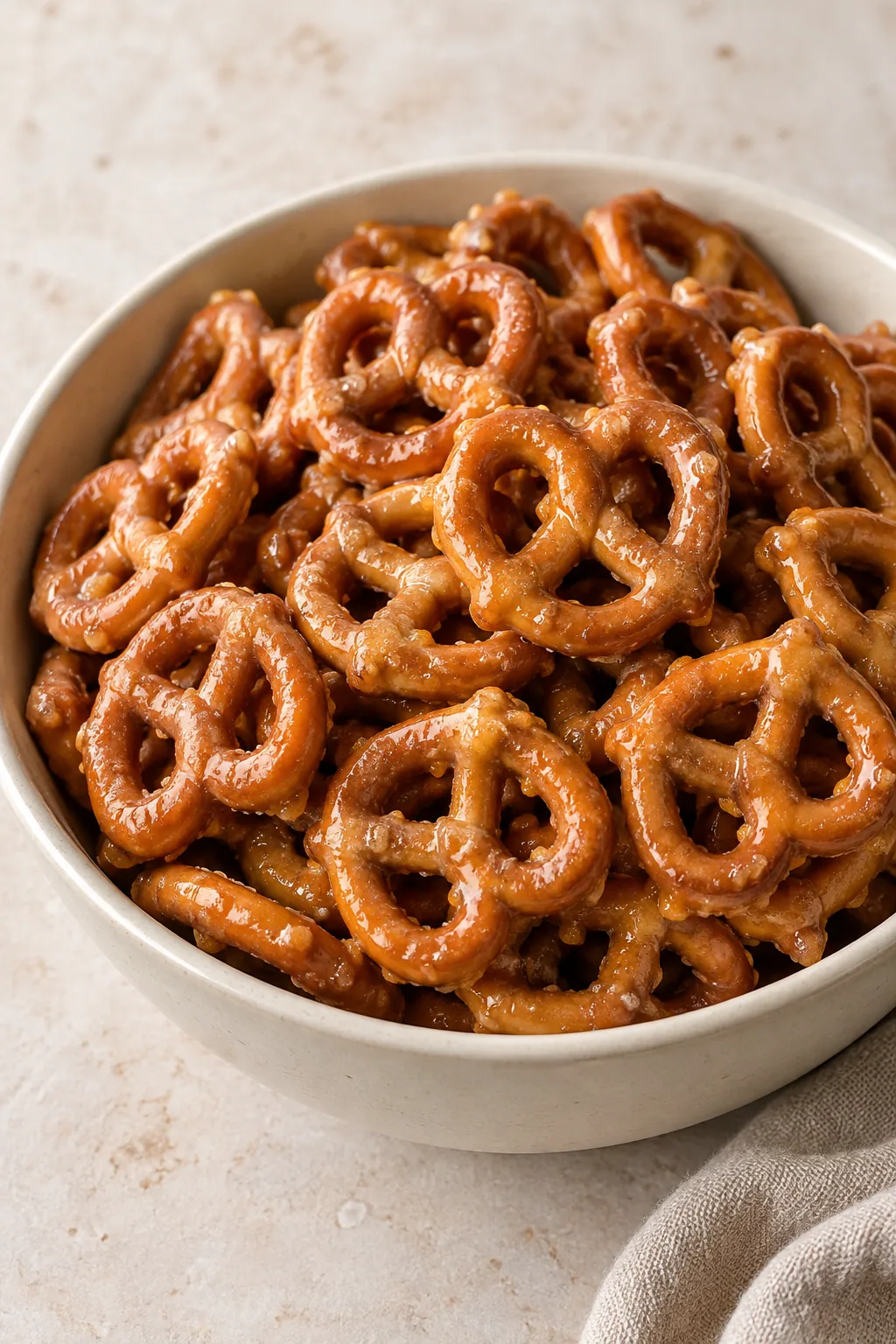
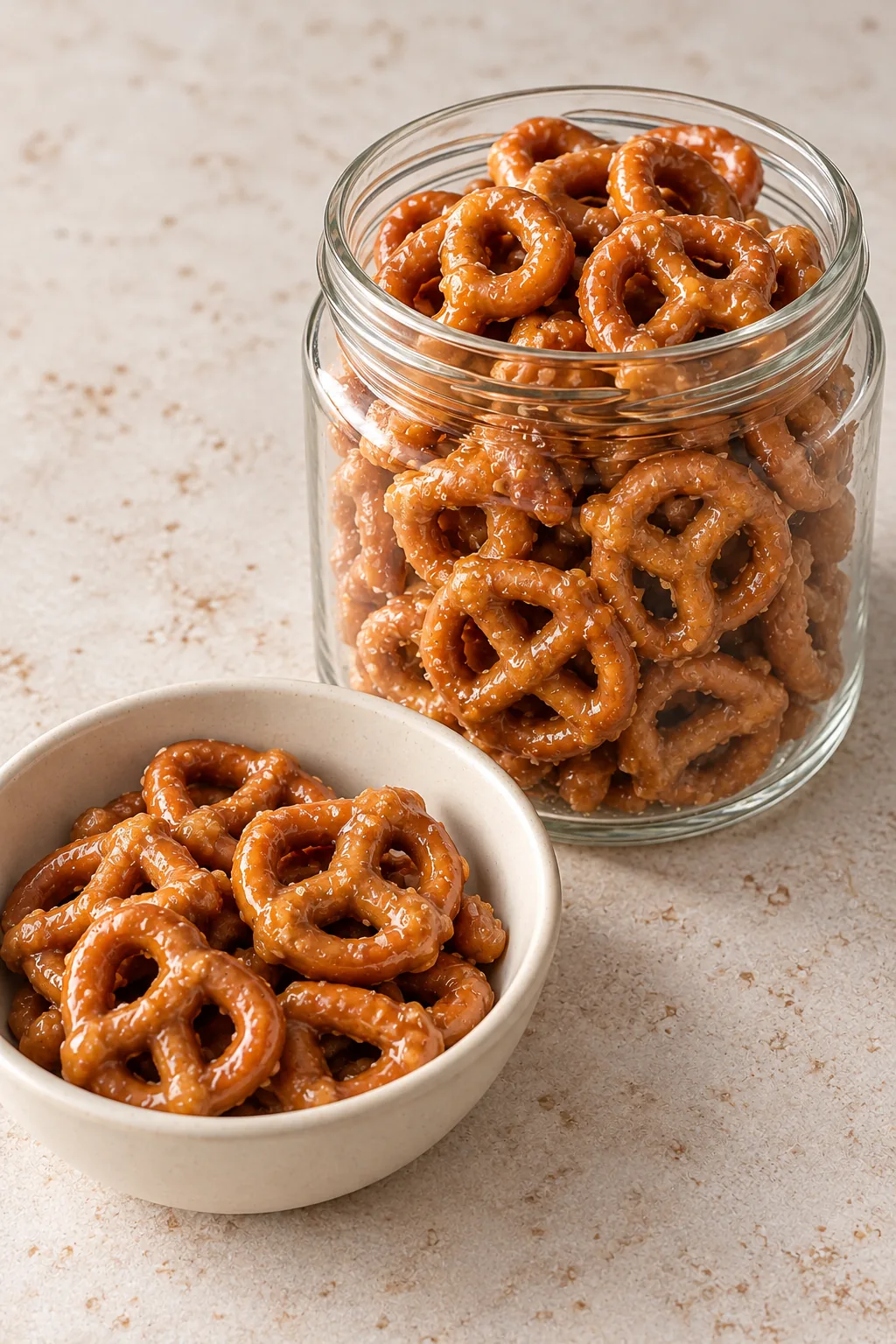
Serve the finished pretzels in a wide bowl. For another bite-size snack, try Pistachio Lemon Puppy Chow, or add butterscotch shortbread cookies to a dessert plate.
Printable recipe
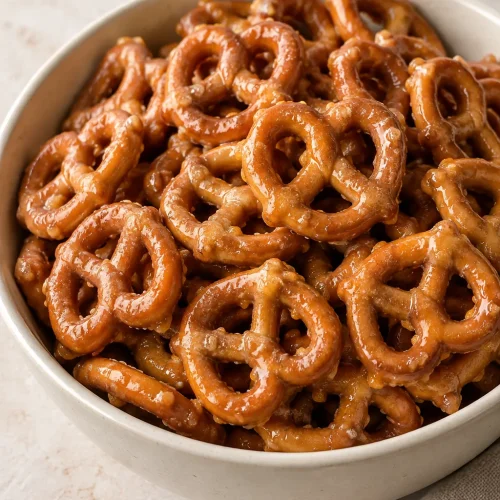
Butter Toffee Pretzels
Ingredients
- 4 cups miniature pretzel twists measured before cooking
- 1 cup unsalted butter 2 standard U.S. sticks
- 1 cup granulated sugar
- 2 tablespoons water
- ½ teaspoon coarse salt
- ½ teaspoon vanilla extract add after removing the pan from the heat
Instructions
- Preheat the oven to 200°F (95°C). Line a large rimmed baking sheet with foil. Set an oven-safe wire rack over it and lightly grease the rack with nonstick cooking spray. Measure the pretzels and vanilla and keep them ready. Prepare a second rack and tray if needed for space.

- In a heavy 3- to 4-quart saucepan, combine the butter, granulated sugar, water and salt. Heat over medium-low heat, stirring steadily along the bottom, until melted and combined.
- Continue cooking over medium-low heat, stirring gently, until the toffee reaches 305°F (152°C) on a candy thermometer. Keep the sensing tip in the mixture without touching the pan bottom. This can take about 15–20 minutes; use the temperature rather than the clock as your guide.
- Remove the saucepan from the heat. Gently stir in the vanilla, then immediately add the pretzels. Turn them through the warm toffee with a sturdy heatproof utensil until coated.
- Using small tongs, transfer the coated pretzels to the prepared rack, a few at a time. Space them in a single layer, separating touching pieces with utensils while the coating is warm. Let extra toffee drip onto the foil below.
- Bake the pretzels on the rack at 200°F (95°C) for 20–30 minutes. Remove the tray and let the pretzels cool completely on the rack, allowing about 1 hour for cooling.
- Once completely cool, leave the pretzels uncovered on the rack overnight, allowing about 8 hours to finish setting. Serve the firm, cooled pretzels in a bowl.