
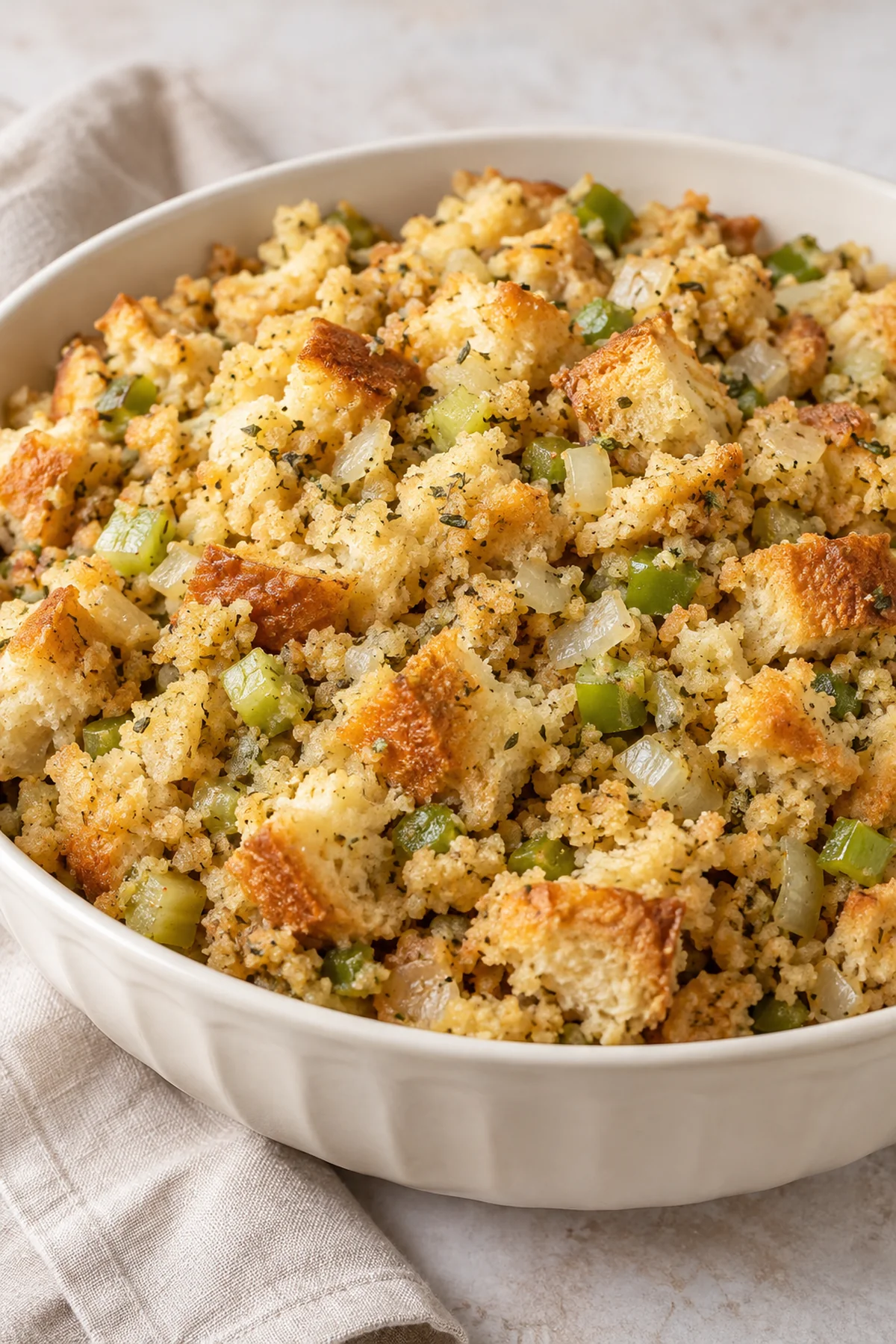
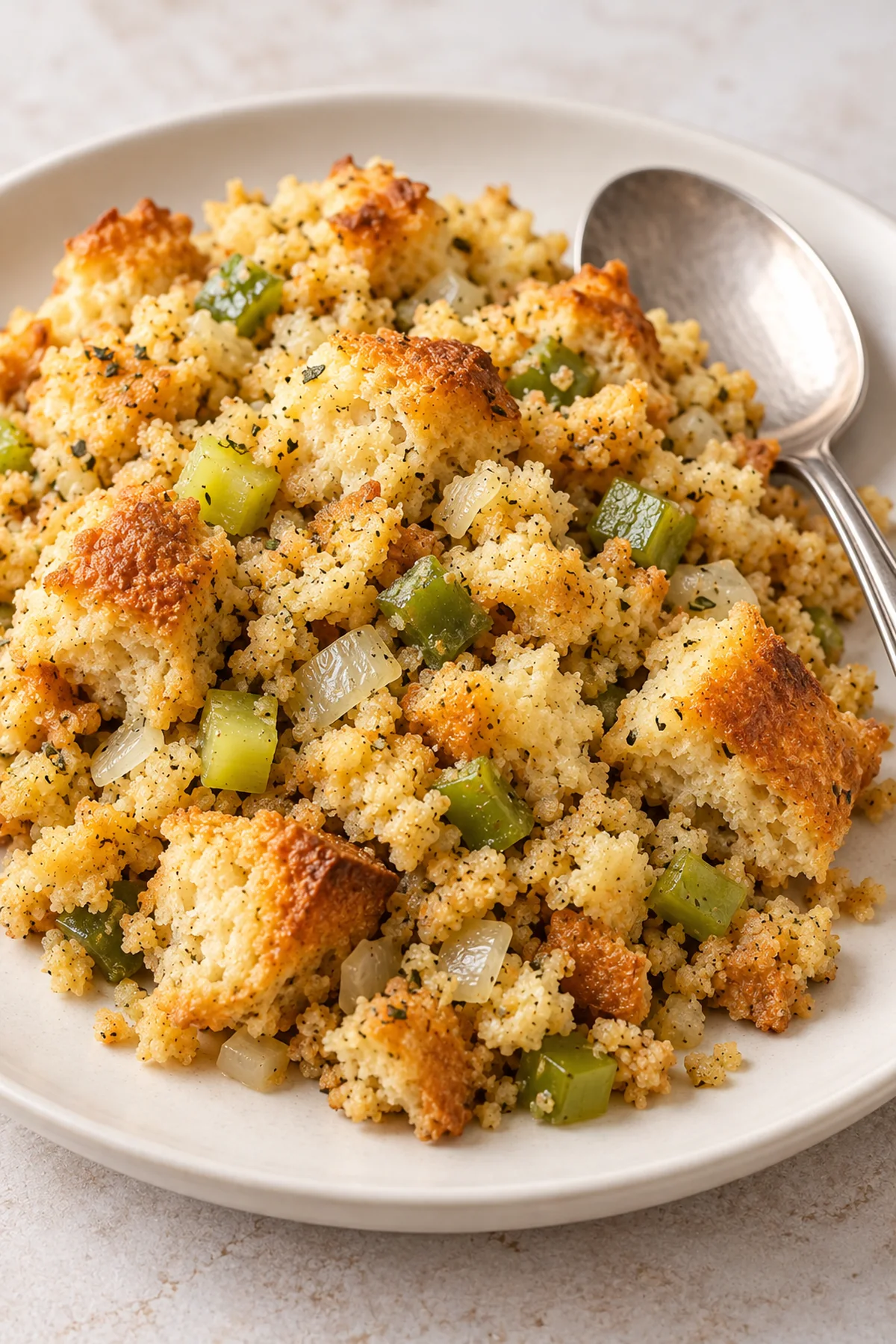
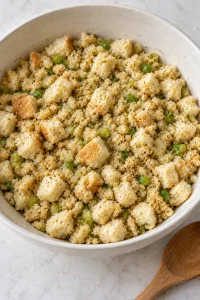
My Mom’s Perfect Thanksgiving Stuffing pairs soft bread cubes with herbed stuffing crumbs, buttery vegetables, and chicken broth. It’s a simple, savory side with plenty of onion, celery, and green pepper tucked into every spoonful.
My main tip is to take your time with the broth. The bread should feel soft and evenly moistened, with enough shape left to keep the stuffing from turning heavy. Below, we’ll walk through that texture, the turkey method, and an option for baking the stuffing in a dish.
What Makes This Thanksgiving Stuffing Different?
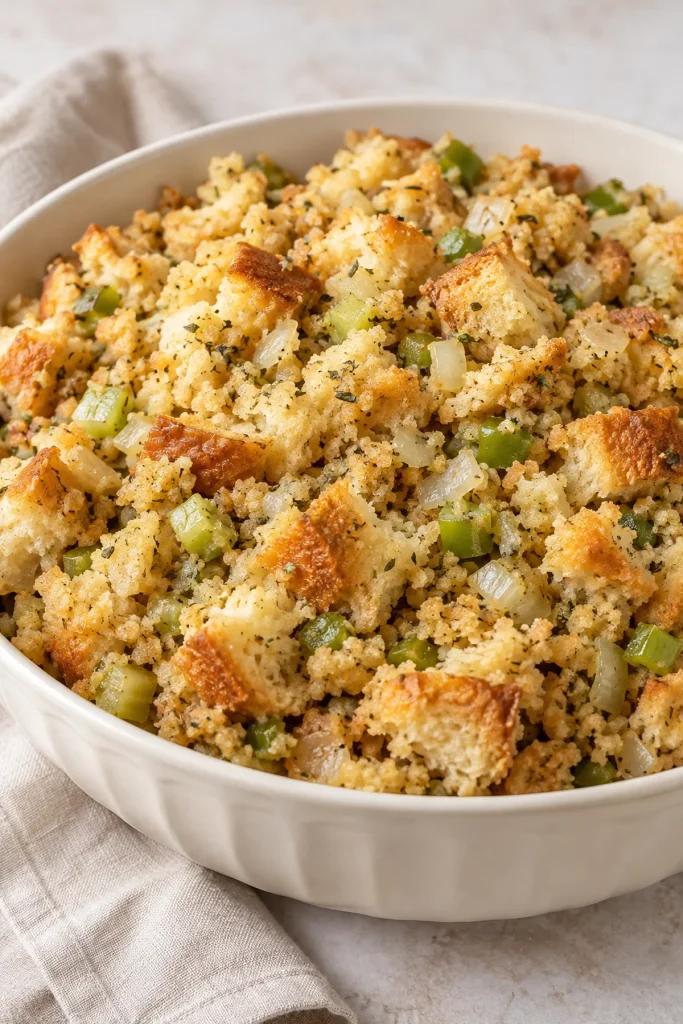
The two kinds of bread do different jobs. Soft bread cubes give the stuffing its tender bite, while the smaller seasoned crumbs spread the herbs throughout the mixture. Keep both: replacing everything with dry croutons changes how much liquid the bread needs.
Green pepper adds a mild, savory note alongside the familiar onion and celery. A full cup of butter carries those flavors through the bread, and chicken broth adds more depth than plain water. There’s no sausage or added cheese here, so the vegetables and herbs have room to shine.
Ingredients and a Few Helpful Notes
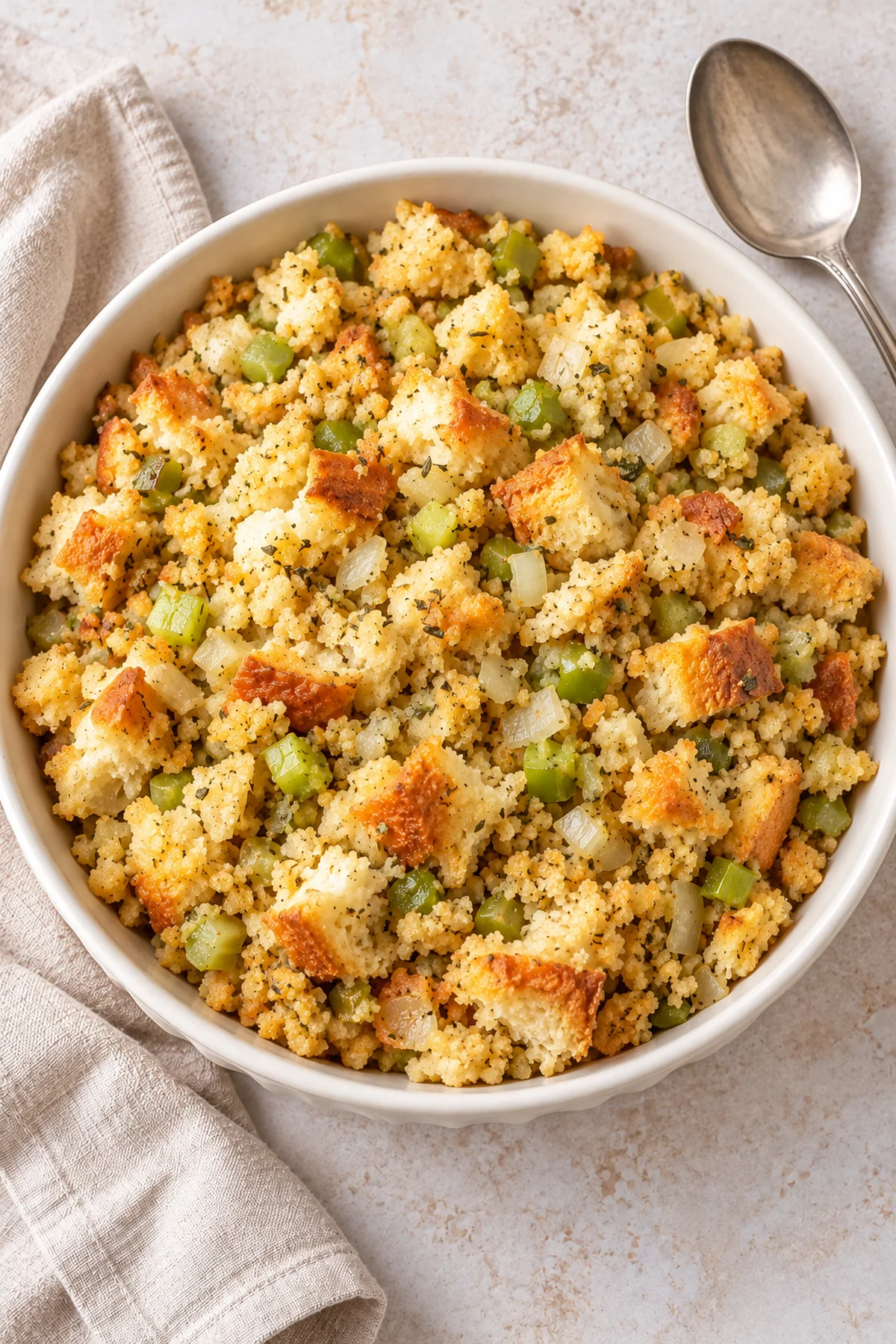
- 1 onion, diced: Small pieces soften evenly and blend into the bread.
- 1 green bell pepper, diced: Remove the stem, seeds, and white ribs before chopping.
- 1 cup butter: That’s 2 standard U.S. sticks. Unsalted butter gives you more control when using seasoned crumbs and canned broth.
- ¾ cup diced celery: You can use about 1 teaspoon celery seed instead, though you’ll lose the little pieces of celery in the finished stuffing.
- 2 large eggs, beaten: These help hold the stuffing together.
- 2 cups canned chicken broth: Add it gradually. Depending on the bread, you may use less or need a little extra.
- 16 ounces Pepperidge Farm Herb Seasoned Classic Stuffing: Choose the crumb-style mixture, rather than cubed stuffing. Measure by weight instead of relying on the bag’s color or size.
- 16–20 ounces soft bread cubes: Use soft cubes rather than crunchy croutons.
- 1 teaspoon garlic powder, 1 teaspoon poultry seasoning, 2 tablespoons dried parsley flakes, and 1 teaspoon dried oregano. Chopped fresh parsley can replace the dried parsley if you prefer; add it to suit your taste.
For the turkey method: You’ll also need a fully thawed turkey, a Reynolds turkey-size oven bag with its supplied tie, a roasting pan, and a food thermometer. Reynolds calls for 1 tablespoon flour inside the bag; that extra ingredient is for preparing the bag.
Shopping tip: Pepperidge Farm’s current recipe lists a 12-ounce package of Herb Seasoned Classic Stuffing. This recipe calls for 16 ounces, so check your package and weigh out the full amount. With 12-ounce bags, use one full bag plus 4 ounces from a second.
How to Make My Mom’s Perfect Thanksgiving Stuffing
1. Get Everything Ready
Heat the oven to 350°F. Have your roasting pan and turkey ready before mixing the stuffing. For the oven-bag method, shake 1 tablespoon flour inside the bag, then set it in a roasting pan at least 2 inches deep. Keep the bag’s supplied tie nearby.
2. Combine the Bread
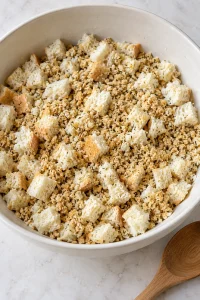
Put the soft bread cubes and herbed stuffing crumbs in a very large bowl. Toss gently so the smaller crumbs are spread throughout the cubes. Leave enough room in the bowl to fold in the vegetables and broth without spilling.
3. Soften the Vegetables
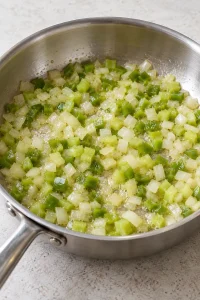
Melt the butter in a large skillet over medium heat. Add the onion, green pepper, and celery. Cook, stirring often, until the vegetables are soft and the onion looks translucent. If using celery seed, add it with the other seasonings instead.
Take the skillet off the heat and let the mixture cool until warm. Pour the vegetables and every bit of butter over the bread, then fold gently to coat.
4. Add the Eggs and Herbs
Once the bread mixture is warm rather than hot, fold in the beaten eggs. Sprinkle over the garlic powder, poultry seasoning, parsley, oregano, and celery seed if using. Toss again so you don’t end up with a pocket of seasoning in one spot.
5. Add the Broth Slowly
Pour in about 1 cup of broth and fold the mixture. Add the remaining broth a little at a time, giving the bread a moment to absorb it between additions. Stop when the bread is well moistened but still holds its shape.
I recommend checking the bottom of the bowl before adding more. Dry crumbs need another splash; a puddle of broth means you’ve added enough. If the full 2 cups leaves dry patches, add extra broth in small amounts. Don’t taste the mixture after adding raw eggs.
6. Cook It Right Away
Remove the turkey’s neck and giblets. Spoon the stuffing loosely into the cavity just before roasting. Don’t press it in or try to fit the whole batch into a turkey that can’t hold it. Bake any extra stuffing immediately in a separate dish, using the directions below.
Place the turkey in the prepared oven bag. Close it with the supplied nylon tie and cut six ½-inch slits in the top. Tuck the bag into the pan so it won’t touch the oven walls, racks, or heating elements. Roast on the lowest rack at 350°F, following the bag’s stuffed-turkey timing guide for your turkey’s weight.
Use a thermometer to check the center of the stuffing and the turkey’s breast, inner thigh, and inner wing, avoiding bone. All must reach at least 165°F. Let the turkey rest for 20 minutes, then remove the stuffing and carve. For the full bag instructions and weight-based times, see Reynolds’ oven-bag turkey guide.
Can I Bake This Stuffing Separately?
Yes. Baking it in a dish also makes it easier to check the center and leaves more room in the turkey. The USDA recommends cooking stuffing separately for more even cooking.
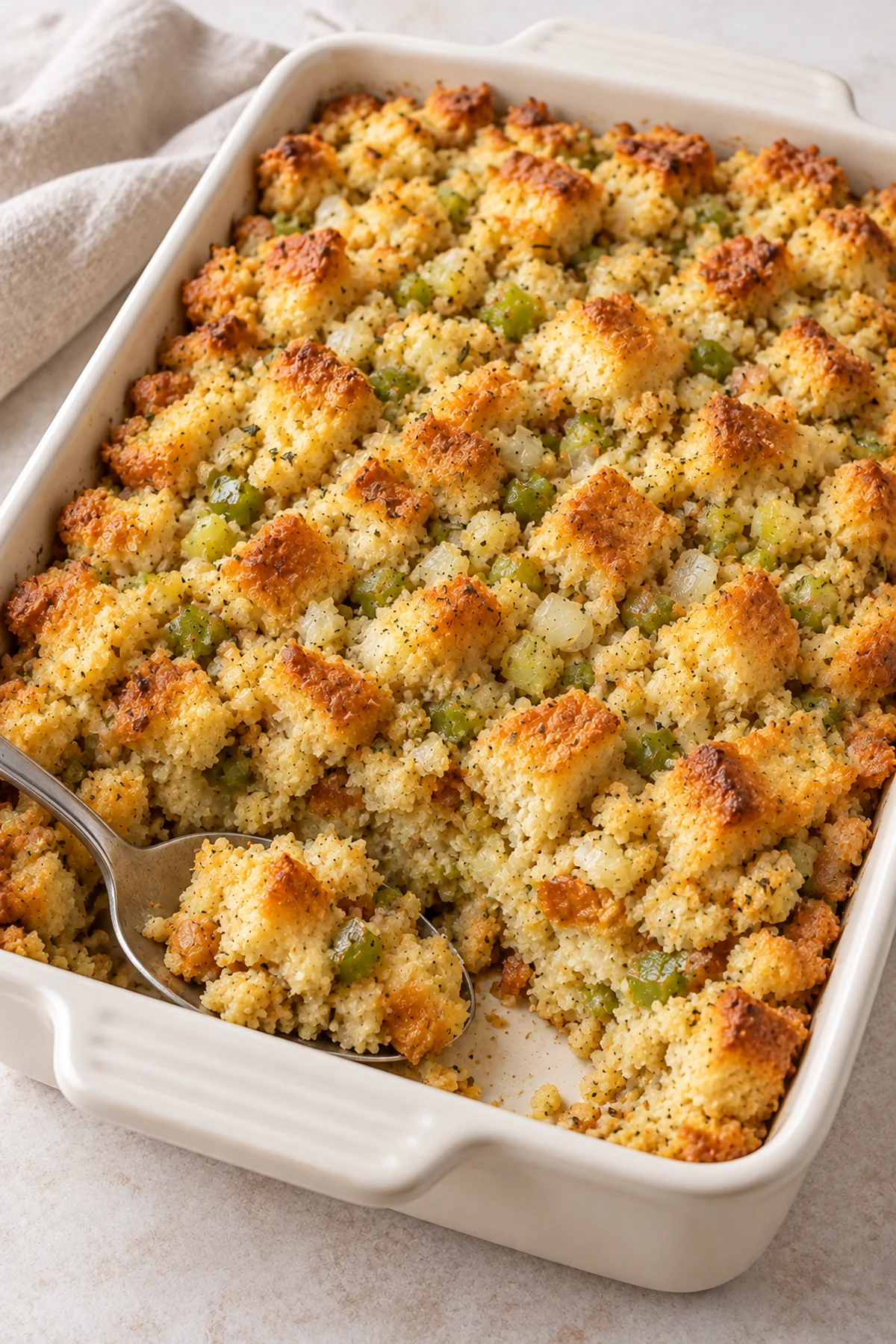
Heat the oven to 350°F. Spoon the freshly mixed stuffing into greased baking dishes, keeping the layer about 2 inches deep or less. This is a large batch, so use two dishes if needed rather than packing everything into one.
Cover with foil and bake. Start checking the center after 30 minutes, then keep baking until it reaches 165°F. For a browned top, uncover for the final 10–15 minutes. The total time will vary with the dish size, depth, and starting temperature; use the thermometer to decide when it’s done.
My Tips for Soft, Flavorful Stuffing
- Cook the vegetables until tender. The oven won’t reliably soften large, crunchy pieces buried in the bread.
- Let the butter mixture cool before adding eggs. Warm is fine; piping hot can start cooking the eggs as you stir.
- Fold instead of mash. A wide spoon helps keep some of the bread cubes intact.
- Judge the bread, not just the measuring cup. Different breads absorb broth differently. Look for evenly moist pieces with no dry pockets or standing liquid.
- Keep salt optional. The seasoned crumbs and broth already bring salt. I’d check the finished, fully cooked stuffing before adding more.
Make-Ahead Prep and Leftovers
You can chop the vegetables and measure the dry seasonings ahead. Keep the bread mixture separate from the wet ingredients, and refrigerate the prepared vegetables. Combine everything just before cooking; don’t refrigerate the assembled, uncooked egg stuffing or stuff the turkey the night before.
After dinner, remove all stuffing from the turkey. Refrigerate it in shallow containers within 2 hours and use it within 3–4 days. To reheat, add a small splash of broth, cover, and heat until the center reaches 165°F.
A Few Common Questions
Can I Use All Seasoned Stuffing Crumbs?
I’d keep the soft bread cubes in this version. Using only dry crumbs changes the texture and broth needs, so it won’t be a straight swap.
Do I Have to Use Green Pepper?
The green pepper is part of this recipe’s flavor. If you don’t care for it, leave it out; the onion, celery, butter, and herbs will still make a savory stuffing.
What If My Stuffing Looks Dry Before Cooking?
Fold in a little more broth, then check again. Give it a moment to soak in before adding another splash. The bread should be soft and moist, with no dry crumbs hiding at the bottom.
What Should I Serve With It?
I’d pair this stuffing with turkey, gravy, mashed potatoes, and a tart cranberry sauce. For more ideas, browse our side dish recipes.
My Mom’s Perfect Thanksgiving Stuffing Recipe
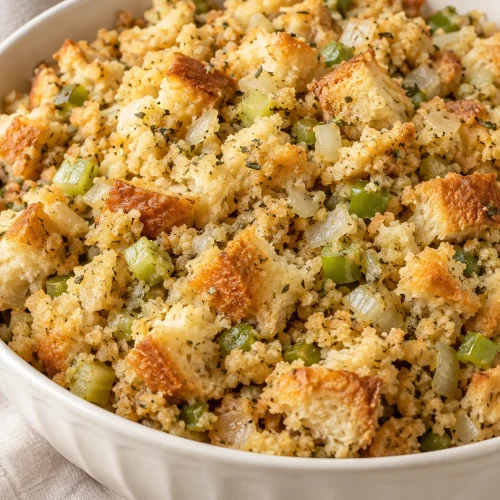
My Mom’s Perfect Thanksgiving Stuffing
Equipment
- 1 Very large mixing bowl
- 1 Large skillet
- 1 Roasting pan at least 2 inches deep; large enough for the turkey and bag
- 1 Food thermometer
- 1 Reynolds turkey-size oven bag with its supplied nylon tie; for turkey method
- Baking dishes and foil for extra stuffing or the casserole option
Ingredients
Stuffing
- 1 onion diced
- 1 green bell pepper seeded and diced
- 1 cup butter 2 standard U.S. sticks; unsalted preferred
- 3/4 cup celery diced; or about 1 teaspoon celery seed, added with the seasonings
- 2 large eggs beaten
- 2 cups canned chicken broth add gradually; use only what is needed and have extra available if the bread remains dry
- 16 ounces Pepperidge Farm Herb Seasoned Classic Stuffing crumb-style mixture, not cubed; weigh out 16 ounces regardless of package size
- 16-20 ounces soft bread cubes not hard croutons
- 1 teaspoon garlic powder
- 1 teaspoon poultry seasoning
- 2 tablespoons dried parsley flakes or chopped fresh parsley to taste
- 1 teaspoon dried oregano
For cooking inside a turkey
- 1 whole turkey fully thawed; roasting time depends on weight
- 1 tablespoon flour required by Reynolds to prepare the oven bag; omit for the casserole option
Instructions
Mix the stuffing
- Preheat the oven to 350°F. For the turkey method, shake 1 tablespoon flour inside the oven bag and place it in a roasting pan at least 2 inches deep. Have the fully thawed turkey ready before mixing the stuffing.
- Gently toss the soft bread cubes and seasoned stuffing crumbs together in a very large mixing bowl.

- Melt the butter in a large skillet over medium heat. Add the onion, green pepper, and celery. Stir often until soft and the onion is translucent. If using celery seed, save it for the seasoning step. Remove from the heat and let the butter mixture cool until warm.
- Pour the vegetables and all of the melted butter over the bread. Fold gently until evenly coated. Make sure the mixture is warm rather than hot before adding the eggs.
- Fold in the beaten eggs. Add the garlic powder, poultry seasoning, parsley, oregano, and celery seed if using. Toss gently to spread the seasonings throughout.
- Add about 1 cup of broth and fold. Add the remaining broth gradually, allowing it to soak in between additions. Stop when the bread is evenly moist and still holds its shape, with no dry pockets or liquid pooling at the bottom. Reserve unused broth; add a little extra if 2 cups is not enough. Do not taste the mixture after adding raw eggs. Cook immediately.
Cook inside the turkey (or use the casserole option below)
- Remove the turkey’s neck and giblets. Spoon the freshly mixed stuffing loosely into the cavity just before roasting. Do not pack it down. Bake any extra immediately in separate dishes using the notes below.
- Place the turkey in the prepared bag. Secure it with the supplied nylon tie and cut six ½-inch slits in the top. Tuck the bag into the pan so it cannot touch the oven walls, racks, or heating elements.
- Roast on the lowest rack at 350°F. Use the oven-bag package’s stuffed-turkey timing chart for the turkey’s weight. Check with a thermometer: the center of the stuffing, thickest breast, inner thigh, and inner wing must each reach at least 165°F; avoid touching bone.
- Rest the turkey for 20 minutes. Remove the stuffing from the cavity, transfer it to a serving bowl, and carve the turkey.