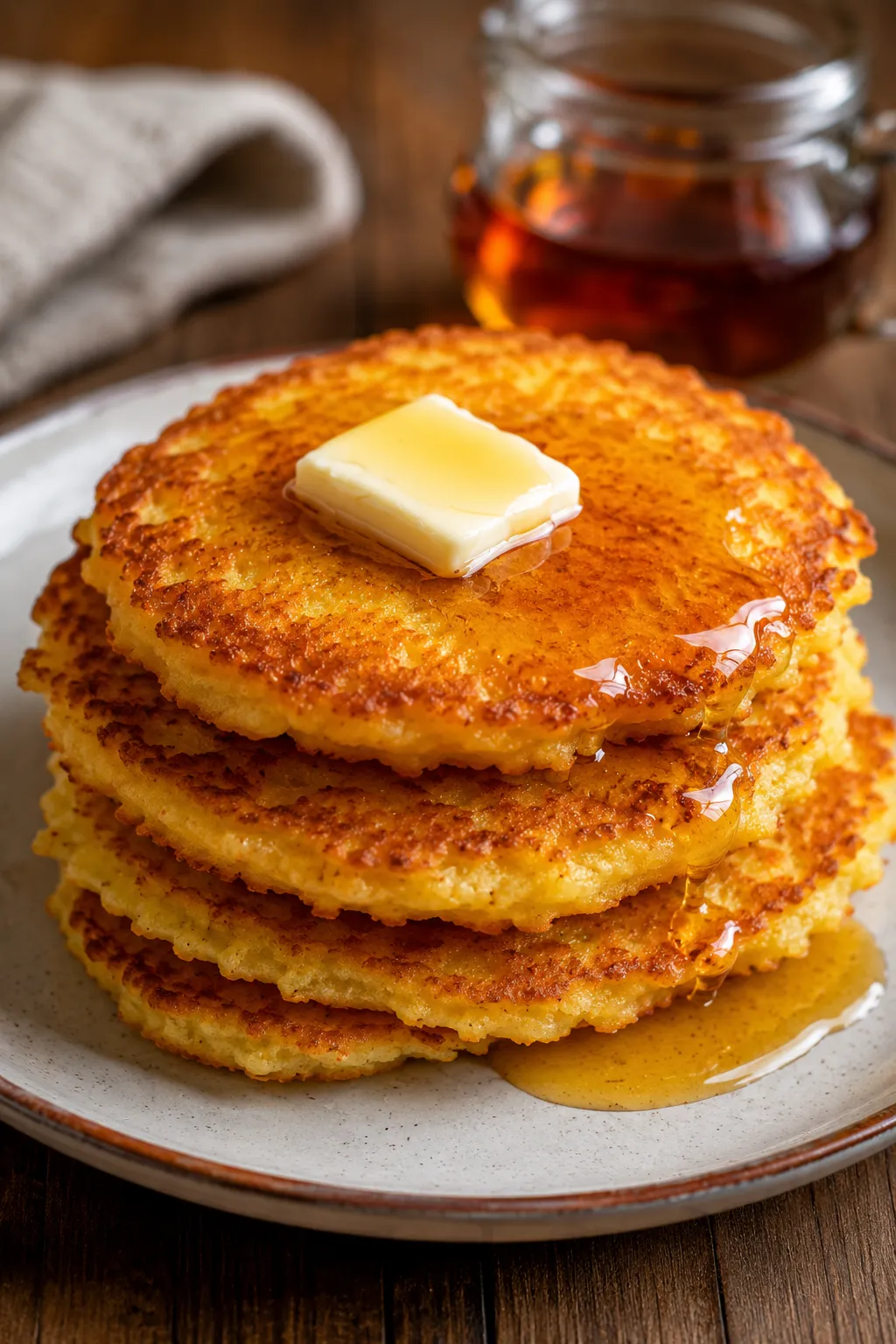
Southern hoe cakes are one of those simple skillet recipes I come back to when I want something warm, crisp around the edges, and a little more interesting than a plain slice of cornbread. They cook like pancakes, but the cornmeal gives them a rustic texture and a deeper, toasty flavor.
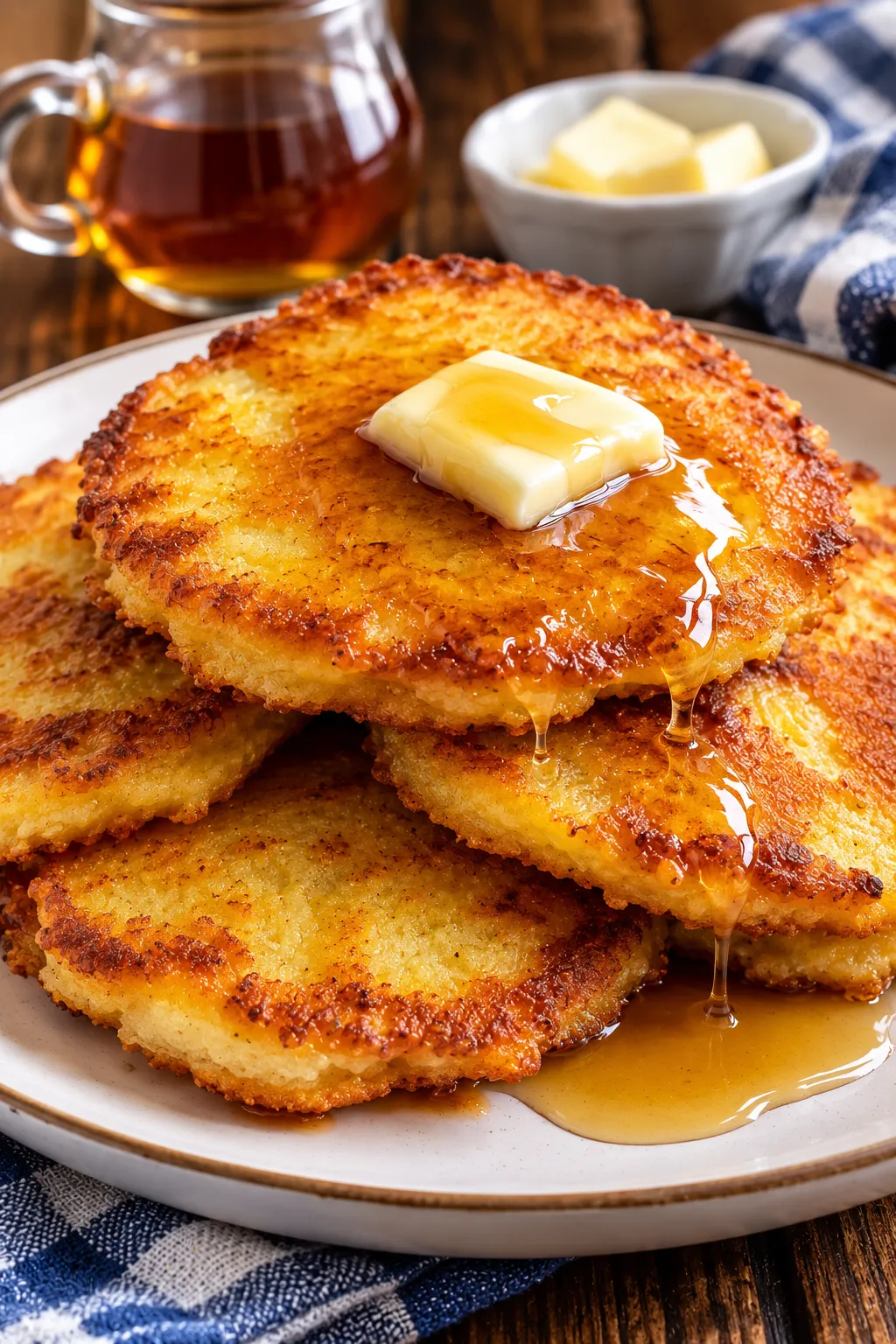
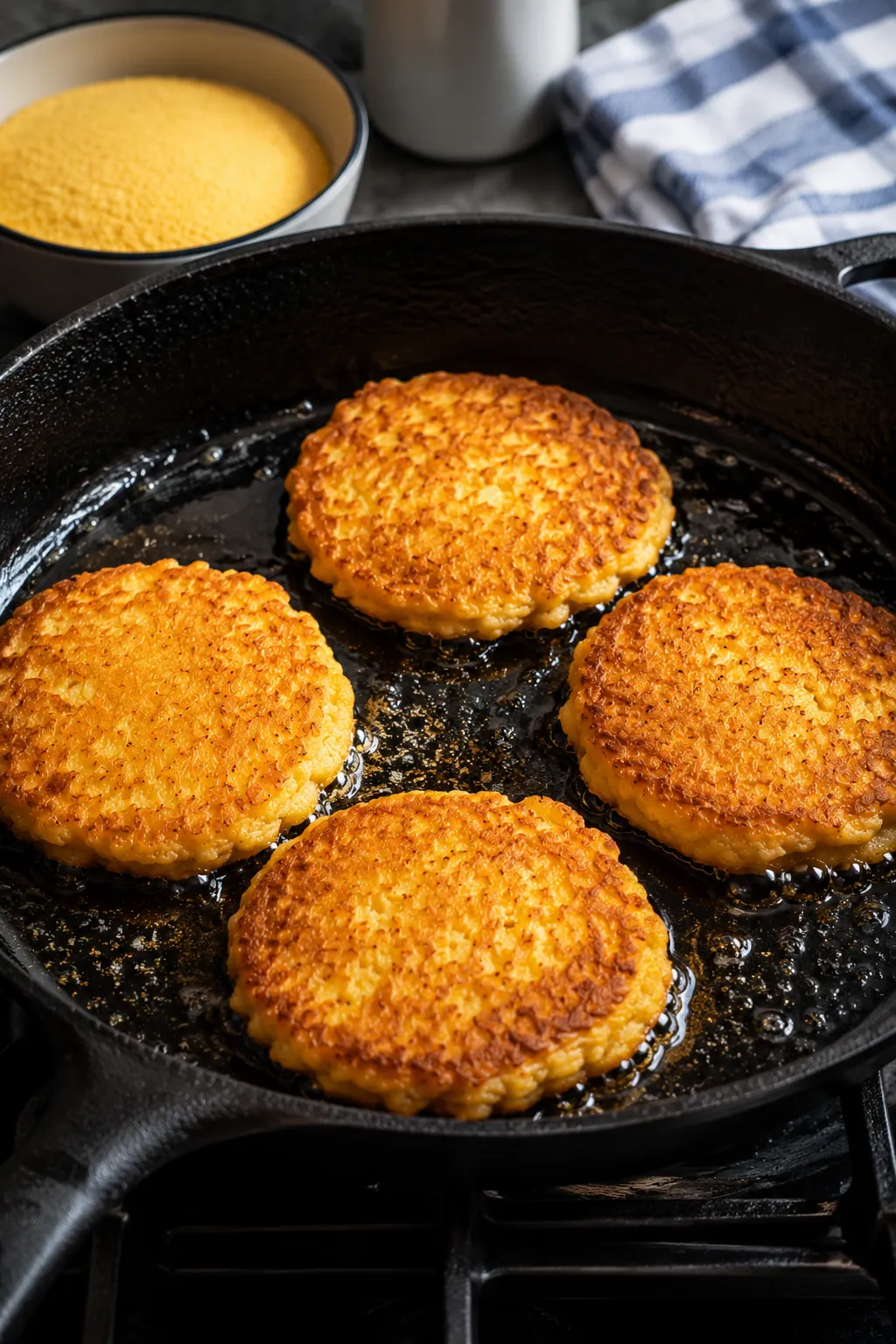
My favorite way to make them is in a well-heated cast-iron skillet with just enough oil or bacon grease to crisp the outside. The centers stay soft and tender, and the edges pick up those browned, lacy spots that make a fresh hoe cake so good straight from the pan.
We serve them both ways at my table. A warm stack with butter and honey works for breakfast, while a less-sweet version is just as good beside beans, greens, chili, or a hearty Southern dinner.
Why This Hoe Cake Recipe Works
The cornmeal and flour are balanced. Cornmeal brings the flavor and crisp texture, while all-purpose flour keeps these cakes from becoming too crumbly. I like this combination when I want a hoe cake that is easy to flip but still tastes unmistakably of corn.
Buttermilk keeps the middle tender. It adds a light tang and gives the batter a softer texture than water alone. The small amount of sugar does not make these dessert-sweet; it simply rounds out the cornmeal flavor.
The hot skillet does most of the work. A properly heated pan gives us browned edges before the center has time to dry out. That contrast between crisp outside and tender inside is what I look for in a good batch.

Ingredient Notes
Cornmeal: I use regular cornmeal here rather than a cornbread mix. A medium or fine grind gives the cakes plenty of corn flavor without making them overly coarse.
All-purpose flour: The flour gives the batter enough structure to hold together in the skillet. This version uses equal amounts of flour and cornmeal, which makes the finished cakes softer than very traditional all-cornmeal versions.
Buttermilk: Its acidity adds flavor and tenderness. If I am out of buttermilk, I use a quick soured-milk substitute, but real buttermilk gives the best texture.
Butter: Let the melted butter cool for a few minutes before mixing it with the eggs and buttermilk. Adding very hot butter can make the wet mixture harder to combine evenly.
Oil or bacon grease: Vegetable oil gives a clean flavor, while bacon grease adds a smoky, savory edge. I use enough to lightly coat the skillet rather than deep-frying the cakes.
How I Make Southern Hoe Cakes
1. Mix the dry ingredients
I whisk the cornmeal, flour, baking powder, sugar, and salt together before adding any liquid. This distributes the baking powder evenly and helps prevent little salty or bitter pockets in the batter.
2. Add the eggs, buttermilk, water, and butter
Stir only until the dry spots disappear. I do not try to beat this batter perfectly smooth. A little lumpiness is fine, and overmixing can make the centers less tender.
3. Get the skillet properly hot
Heat a cast-iron or other heavy skillet over medium to medium-high heat, then add a thin layer of oil or bacon grease. The fat should look fluid and hot, but it should not be smoking aggressively.
4. Cook in small batches
I use about 3 tablespoons of batter for each cake and leave space between them. Once the edges look set and bubbles appear across the surface, I slide a thin spatula underneath and flip. The second side usually cooks a little faster.
5. Serve them while the edges are crisp
Hoe cakes are at their best straight from the skillet. If I am making several batches, I keep the finished cakes on a wire rack in a low oven rather than stacking them on a plate, because trapped steam softens the crust.

My Best Tips for Crisp Edges and Tender Centers
Adjust the heat as you go. Cast iron holds heat very well, so the second and third batches can brown faster than the first. If the outside darkens before the center sets, I lower the burner slightly.
Do not press the cakes with the spatula. Pressing them down pushes out moisture and can make the middle dense. I let the heat and baking powder do their job.
Add a little more fat between batches. The skillet should stay lightly coated. If it looks dry, another teaspoon or two of oil helps the next batch develop the same crisp edge as the first.
Keep the batter scoopable. It should spread slightly when it hits the pan but should not run as thin as crepe batter. If your cornmeal absorbs a lot of liquid and the batter feels unusually stiff, a small splash of water or buttermilk can loosen it.
What to Serve With Hoe Cakes
For breakfast, I like them with softened butter and honey or maple syrup. They also make a good savory side when you want something that can soak up sauce or pot liquor without turning mushy immediately.
For a full Southern-style meal, serve them beside my Southern Baked Beans with Bacon or Country Ranch Green Beans and Potatoes. They are also excellent with a bowl of Chili Parlor Chili.
If you are planning a brunch spread, the crisp cornmeal cakes pair nicely with my Make-Ahead Sausage Hash Brown Breakfast Casserole.
Frequently Asked Questions
Are hoe cakes the same as cornbread?
They use many of the same ingredients, but the cooking method is different. Cornbread is generally baked in a pan, while hoe cakes are cooked in individual portions on a griddle or skillet. That direct contact with the hot pan gives hoe cakes more browned surface and crisp edges.
Are hoe cakes and johnnycakes the same thing?
The names overlap depending on region and time period, but recipes vary widely. Some johnnycakes are mostly or entirely cornmeal, while this Southern hoe cake recipe uses flour and buttermilk for a softer center.
Can I make hoe cakes without buttermilk?
Yes. For 3/4 cup of buttermilk, I add about 2 teaspoons of lemon juice or white vinegar to regular milk and let it stand for 5 to 10 minutes. It will not taste exactly the same as cultured buttermilk, but it works in a pinch.
Do I need a cast-iron skillet?
No, but I prefer it because it holds heat well and browns the cakes evenly. A heavy stainless-steel or nonstick skillet also works. Whichever pan you use, give it enough time to preheat before adding the batter.
Storage and Reheating
Let leftover hoe cakes cool, then refrigerate them in an airtight container. I try to use them within 3 to 4 days. If I am stacking several, I put parchment between the layers so they do not stick together.
For reheating, a skillet, toaster oven, or air fryer does a better job than the microwave because dry heat brings back some of the crispness. Warm them just until heated through so the centers do not dry out.
More Cornmeal Favorites
If you like these skillet cakes, try my Quick and Easy Pan-Fried Corn Fritters next. For a baked option with plenty of texture, the Zucchini Cornbread Casserole is another easy side for family dinners.

Southern Hoe Cakes
Ingredients
- 1 cup cornmeal
- 1 cup all-purpose flour
- 2 ½ teaspoons baking powder
- 2 tablespoons granulated sugar
- 1 teaspoon salt
- 2 eggs
- ¾ cup buttermilk
- ⅓ cup water
- ⅓ cup melted butter slightly cooled
- Vegetable oil or bacon grease for frying
Instructions
- Combine Dry Ingredients: In a large mixing bowl, add the cornmeal, all-purpose flour, baking powder, granulated sugar, and salt. Whisk everything together thoroughly.
- Add Wet Ingredients: Make a well in the center. Add the eggs, buttermilk, water, and melted butter. Mix gently just until combined (do not overmix).
- Heat the Skillet: Heat a couple of tablespoons of oil or bacon grease in a 12-inch cast iron skillet over medium-high heat.
- Portion the Batter: Scoop about 3 tablespoons of batter per cake into the hot pan. Cook 4 at a time to avoid overcrowding.
- Fry and Flip: Fry until edges set and the top bubbles. Flip carefully and fry for a couple more minutes until bottoms are deep golden brown and crispy.
- Serve: Remove from skillet and serve immediately while hot with butter or syrup.