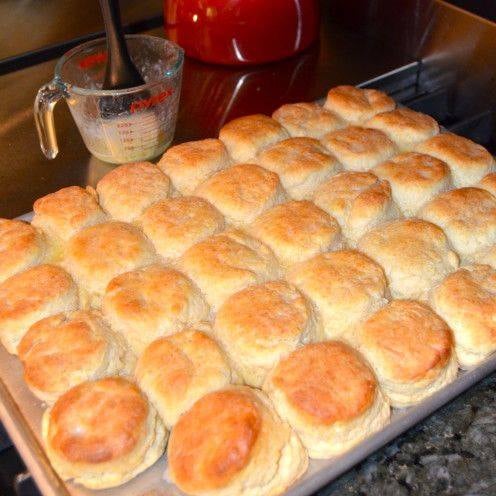
These Copycat KFC Biscuits are a homemade, restaurant-inspired biscuit recipe made with buttermilk, shortening, baking powder, and baking soda. They bake up soft inside with lightly golden tops and are brushed with butter while still hot.
I want to be clear about the name: this is a copycat-style home recipe, not an official KFC recipe or formula. What it gives us is the same general idea—a tender, lightly sweet buttermilk biscuit that works well beside chicken, gravy, soup, or a comfort-food dinner.
The Biscuit Technique Matters More Than Fancy Ingredients
The dough is supposed to be soft and sticky when the buttermilk first goes in. I do not try to “fix” that by dumping in a large amount of extra flour. Too much flour is one of the quickest ways to turn a tender biscuit into a dry one.
The shortening gets cut into the dry ingredients first, leaving small bits of fat throughout the flour. Those pieces help create a softer, more layered texture once the biscuits hit the hot oven.
Ingredients
- 2 cups all-purpose flour
- 1 1/2 teaspoons salt
- 1 tablespoon granulated sugar
- 4 teaspoons baking powder
- 1/4 teaspoon baking soda
- 3 tablespoons vegetable shortening
- 4 teaspoons butter-flavored shortening
- 1 cup buttermilk
- Whole milk, for brushing the tops before baking
- Melted butter, for brushing after baking
What I Watch for When Mixing Biscuit Dough
Coarse crumbs before the buttermilk: After cutting in the shortening, the flour mixture should look uneven and crumbly rather than like a smooth paste.
A loose dough at first: Once the buttermilk is stirred in, the dough will be sticky. That is expected.
Very little kneading: Ten to twelve gentle turns are enough. I use just enough flour on the board to keep the dough manageable.
Do not twist the cutter: Press straight down. Twisting can seal the edges and make it harder for the biscuit to rise evenly.
How to Make Copycat KFC Biscuits
- Preheat the oven to 400°F.
- In a large bowl, whisk together the flour, salt, sugar, baking powder, and baking soda.
- Cut in the vegetable shortening and butter-flavored shortening until the mixture resembles coarse crumbs.
- Pour in the buttermilk and stir only until a soft, sticky dough comes together.
- Lightly flour a work surface and turn the dough out onto it.
- Knead gently about 10 to 12 times, adding only enough flour to prevent sticking.
- Divide the dough in half and gently pat or roll each half to about 1/2-inch thickness.
- Use a 2-inch biscuit cutter and press straight down to cut the biscuits.
- Bring the scraps together gently and cut the remaining biscuits, handling the dough as little as possible.
- Arrange the biscuits on an ungreased baking sheet with the edges just barely touching.
- Brush the tops lightly with whole milk.
- Bake for about 15 minutes, or until the tops are golden.
- Brush the hot biscuits immediately with melted butter and serve warm.
Why I Put the Biscuits Close Together
Biscuits baked with the sides barely touching tend to rise upward and stay softer around the edges. If you prefer crispier sides, leave a little more space between them on the pan.
What to Serve With Them
These fit naturally beside fried chicken, chicken gravy, beef stew, pot roast, soups, chili, or breakfast eggs. I also like the idea of splitting a warm biscuit and adding butter, honey, or jam.
For more easy accompaniments, browse my side dish recipes.
Storage and Reheating
Let the biscuits cool completely before storing them in an airtight container. They are best fresh, but leftover biscuits can be reheated gently in the oven or microwave.
For longer storage, freeze the fully cooled biscuits and reheat them from thawed or frozen until warmed through.
Biscuit Troubleshooting
Why are my biscuits tough?
The dough may have been overworked or had too much extra flour added during kneading. Handle it gently and stop as soon as it becomes manageable.
Why didn’t they rise much?
Check that the baking powder and baking soda are still active, avoid rolling the dough too thin, and press the cutter straight down instead of twisting.
Can I use regular milk instead of buttermilk?
Buttermilk is important here because its acidity works with the baking soda and contributes to tenderness. A homemade buttermilk substitute can work in a pinch, but plain milk will change the dough.
