
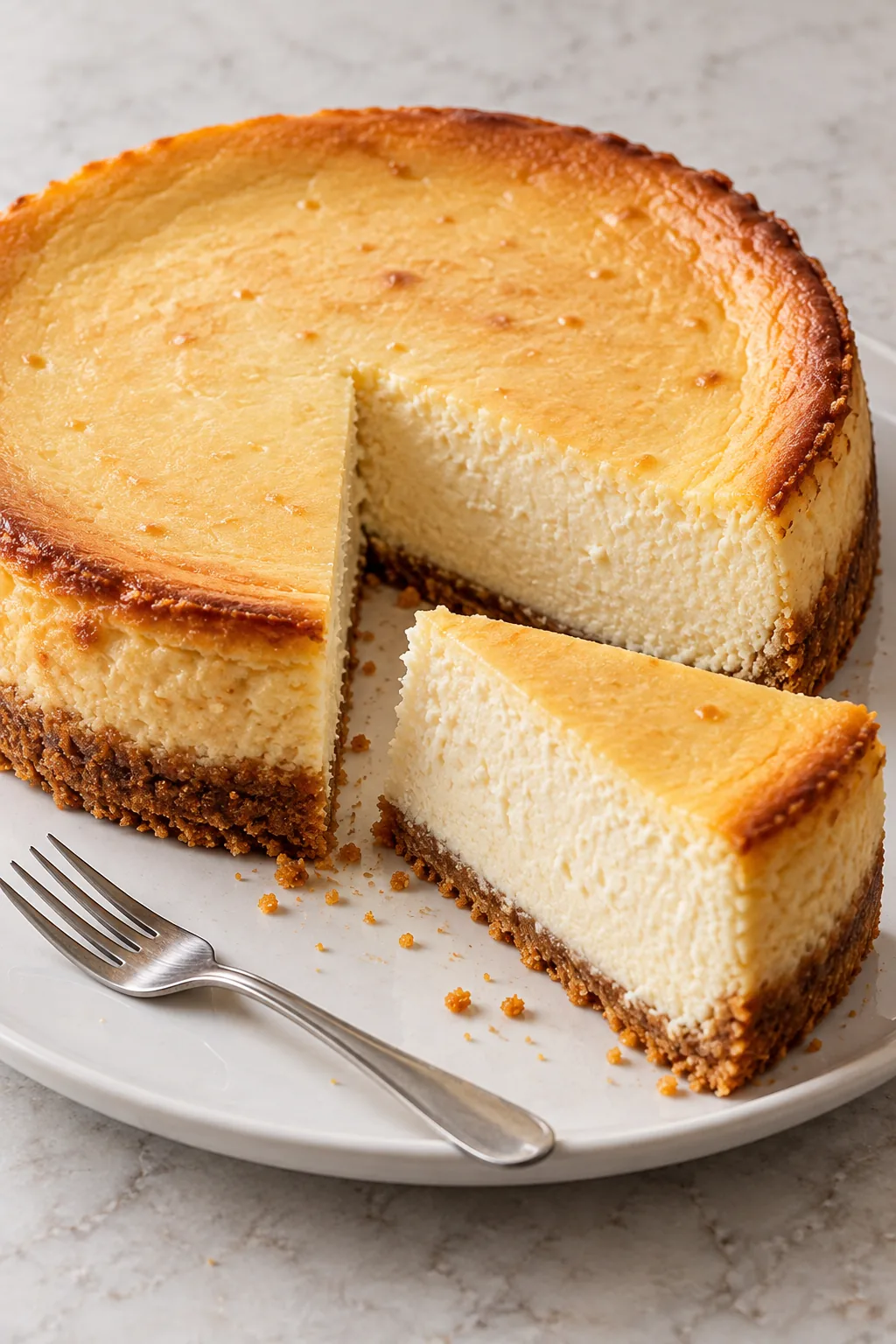
New York cheesecake should be dense enough to stand in a clean slice, but creamy when you take a bite. The easiest way to miss that texture is to overbeat the eggs or leave the cake in the oven until the center looks completely firm. It keeps setting as it cools, so a gentle wobble is exactly what you want when it comes out.
This version has a crisp graham cracker base and a filling made with cream cheese, sour cream, vanilla, and a little fresh lemon. The lemon does not turn it into lemon cheesecake. It just keeps the rich filling from tasting flat. Plan to make it the day before you want to serve it: the long chill makes a much bigger difference to the texture than any last-minute topping.
Why this New York cheesecake works
Four packages of full-fat cream cheese give the filling its familiar New York-style body. Sour cream loosens it just enough to keep the slice smooth. The eggs hold everything together, but they need a light hand. Mix them in one at a time on low speed and stop as soon as each disappears. Beating air into the batter can make the cake rise in the oven and then sink or crack as it cools.
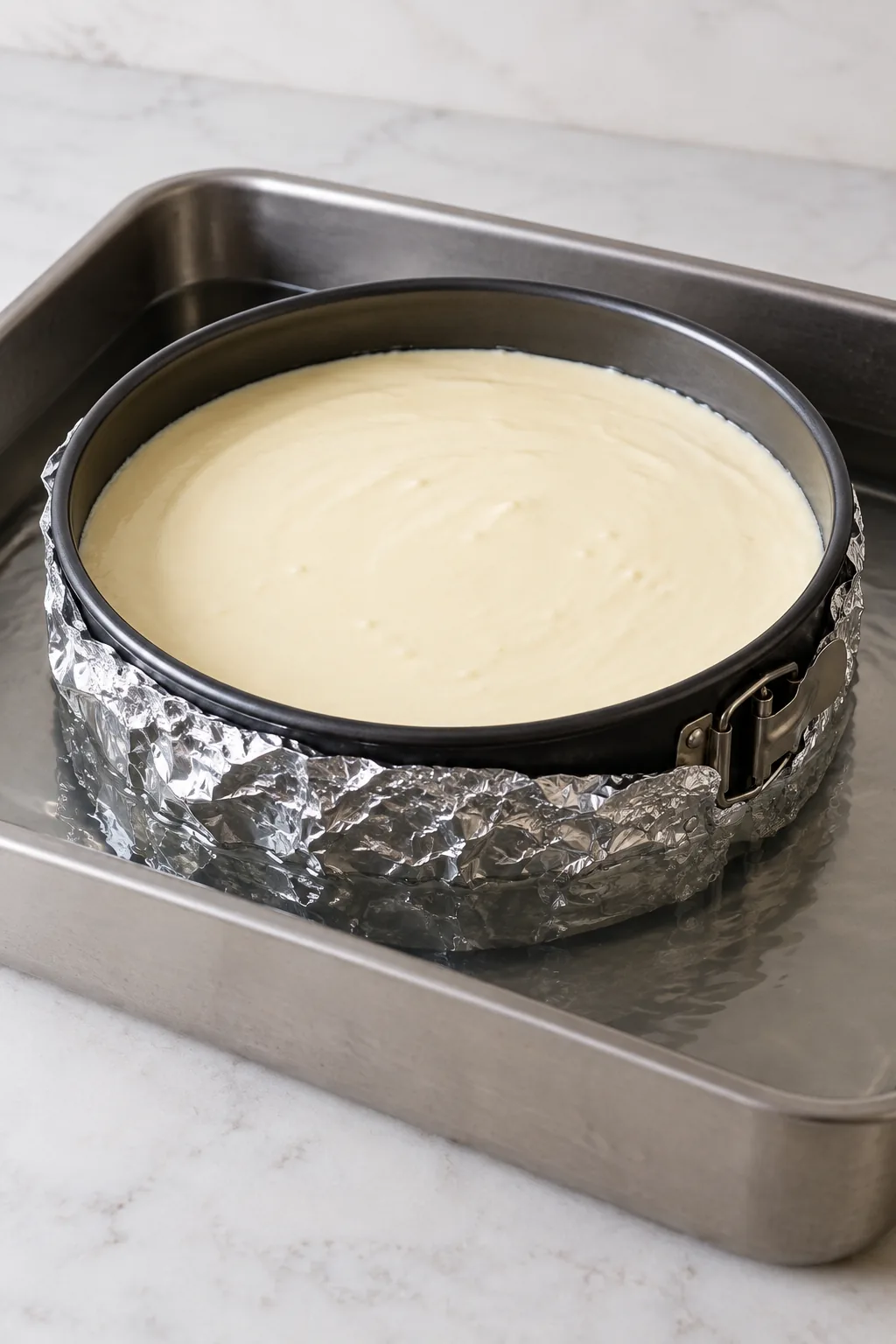
The other quiet helper is the water bath. Hot water around the pan moderates the heat at the edges, giving the middle time to bake before the outside turns dry. A tightly wrapped springform pan matters here. If your pan has ever leaked, set it inside a slightly larger cake pan before placing both in the roasting pan.
Ingredients that matter
Cream cheese: Use four 8-ounce blocks, not whipped or spreadable cream cheese from a tub. Bring the blocks to room temperature so the filling can turn smooth without prolonged mixing. If they still feel cold in the center, give them more time rather than increasing the mixer speed.
Sour cream: One cup adds a small tang and softens the texture. Full-fat sour cream is the most dependable choice for this recipe.
Eggs: Four large eggs are enough to set the filling. Room-temperature eggs blend into the cream cheese more easily. Crack them into a separate bowl first so a bit of shell cannot disappear into the batter.
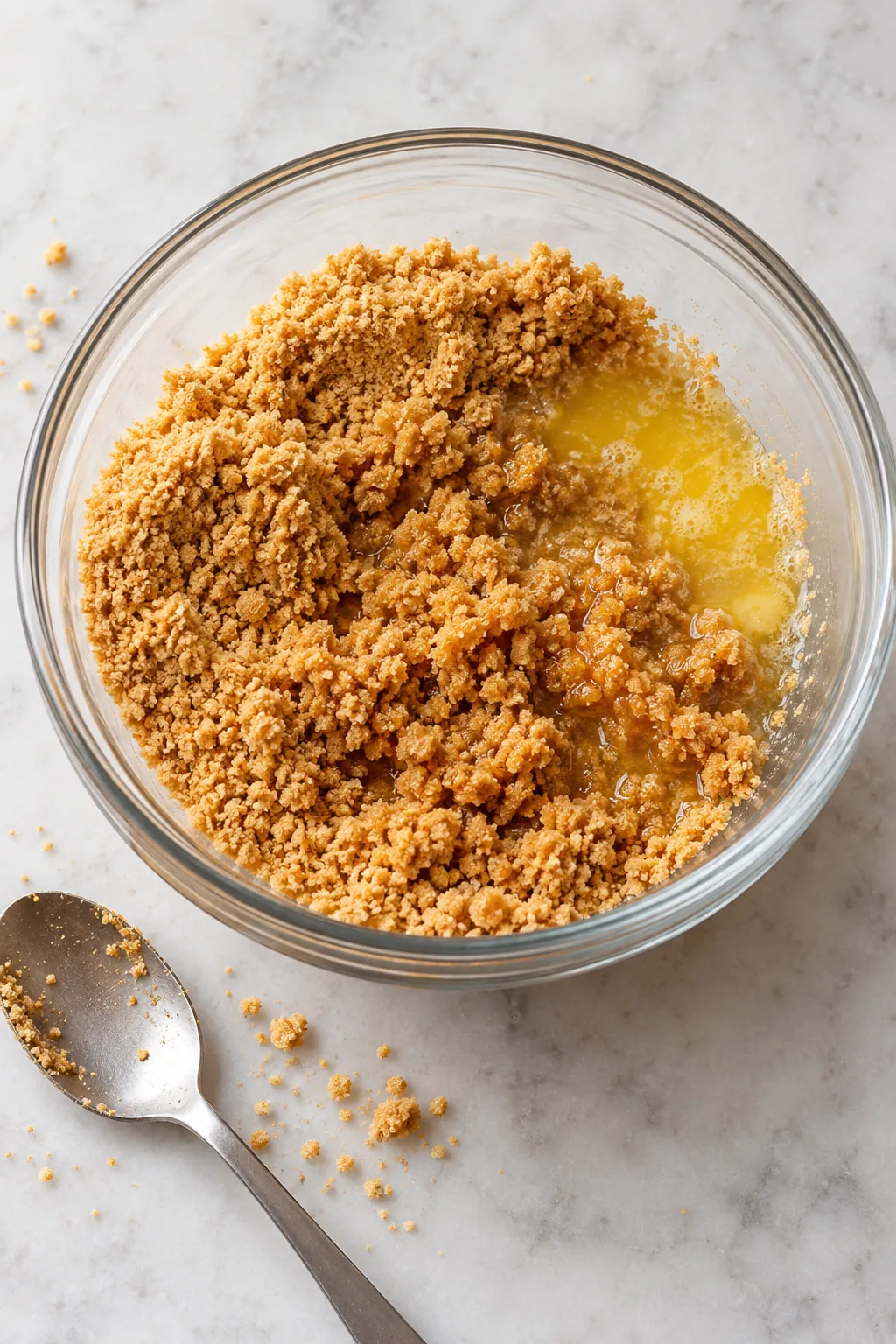
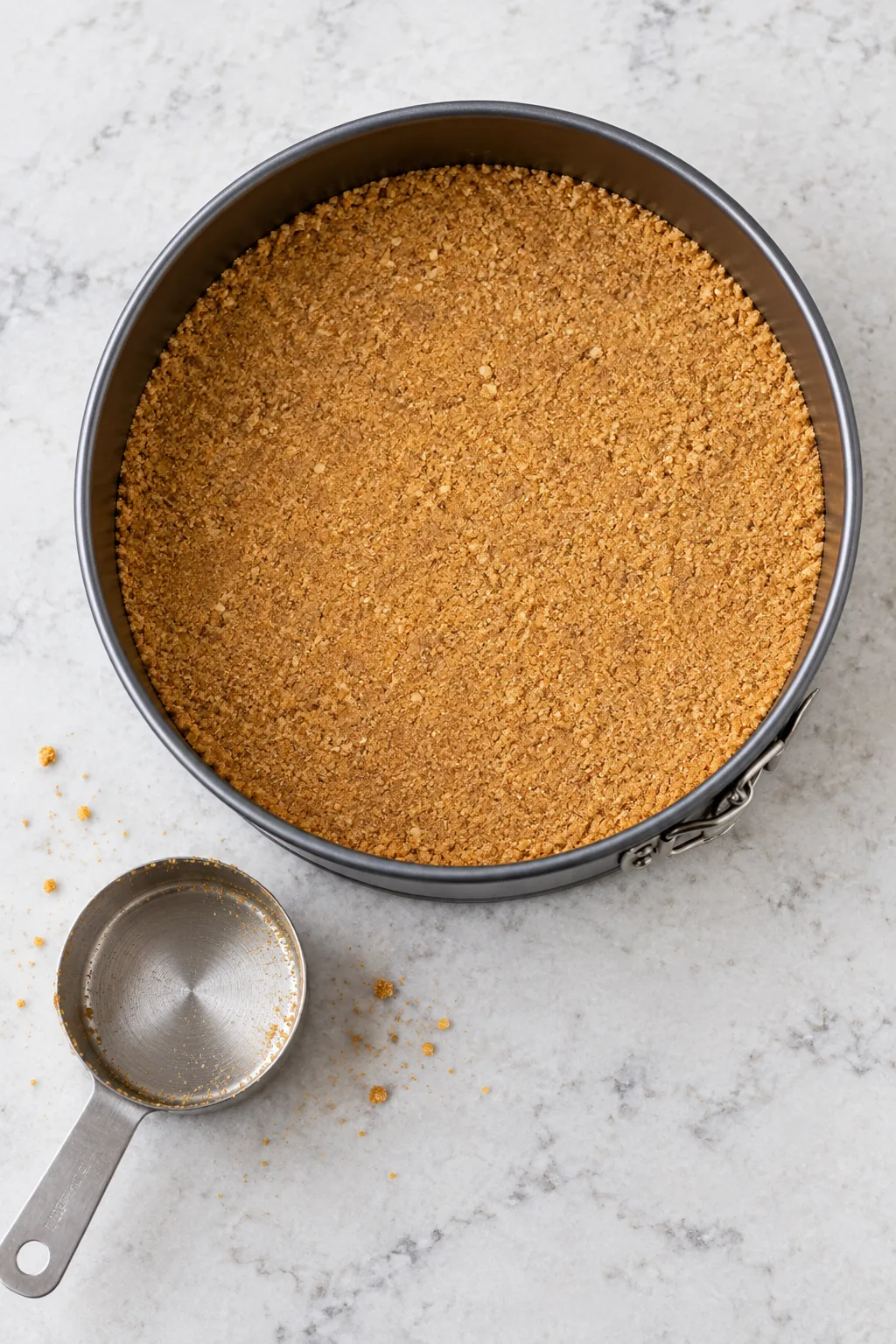
Graham cracker crust: Crumbs, melted butter, a little sugar, and a pinch of salt make a base that holds together when sliced. Press it firmly across the bottom of the pan with the base of a measuring cup. There is no need to build a tall crust up the sides.
Vanilla and lemon: Vanilla gives the filling its main flavor. A tablespoon of fresh lemon juice and a little zest brighten it without hiding the cream cheese. Skip the zest if you prefer a plainer cheesecake.
How to make New York cheesecake
Bake the graham cracker crust
Start with the crust. Line the bottom of a 9-inch springform pan with parchment, press in the crumb mixture, and bake it briefly at 325°F. Let it cool while you mix the filling. This short bake helps the crust stay together instead of turning damp beneath the batter.
Mix the filling gently
For the filling, beat the softened cream cheese with the sugar on low speed until it is smooth. Scrape the sides and bottom of the bowl; pockets of unmixed cheese are harder to fix after the eggs go in.
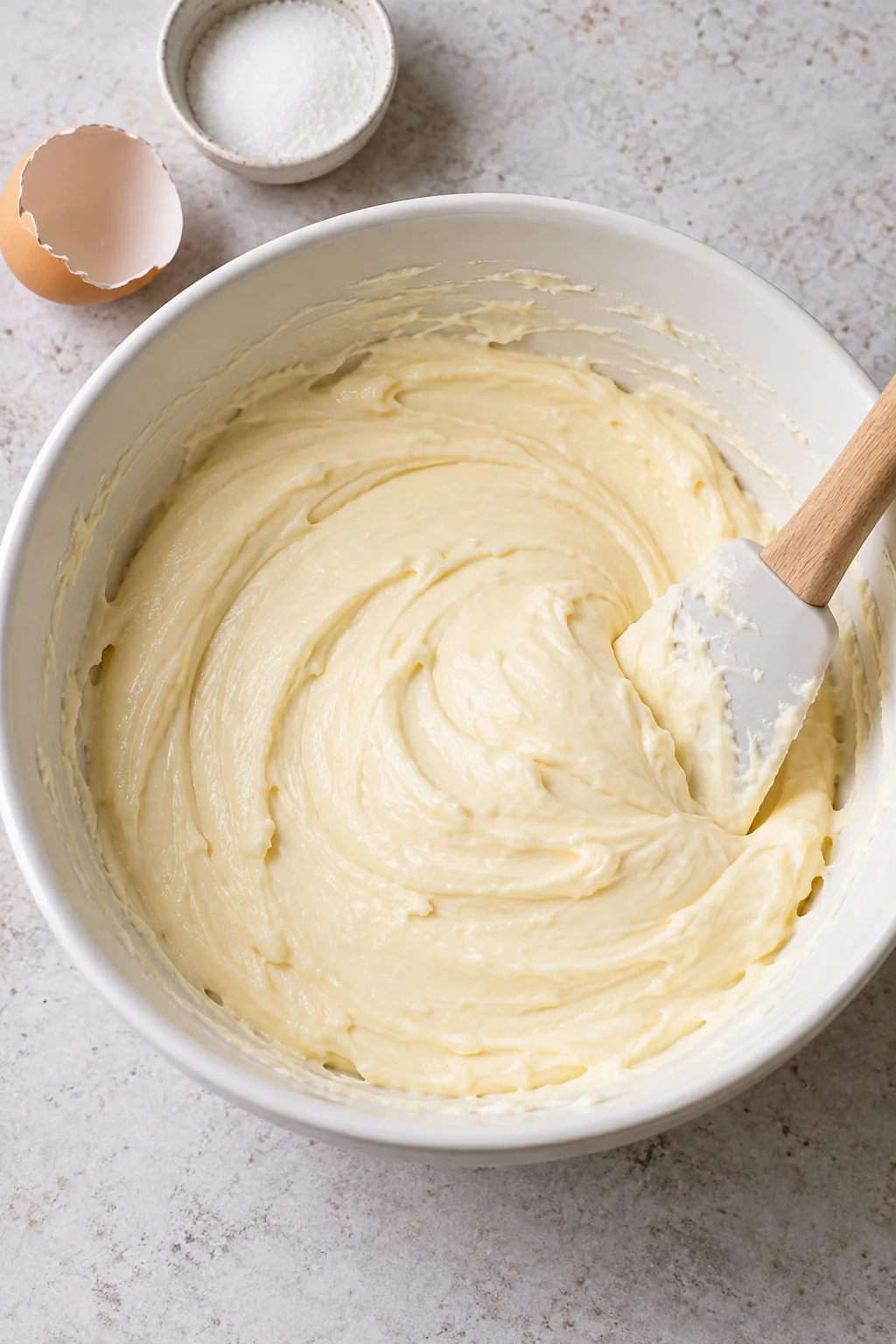
Add the sour cream, vanilla, lemon juice, and zest. Mix just until combined, then add the eggs one at a time. A few gentle passes with a spatula at the end are better than another minute with the mixer.
Set up the water bath
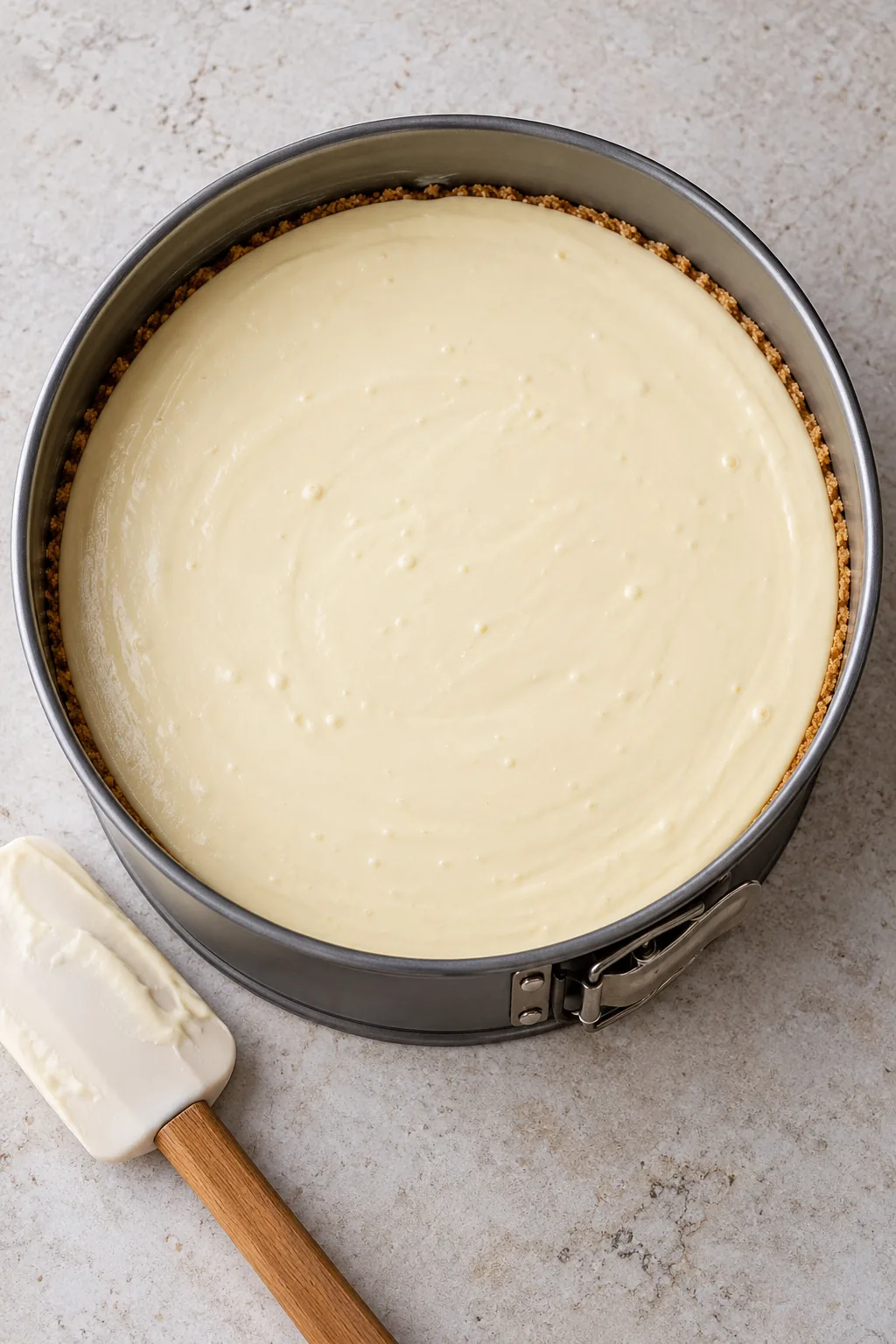
Pour the batter over the crust and tap the pan lightly on the counter to bring up large air bubbles. Wrap the outside of the springform pan well and set it in a roasting pan.
Add hot water until it reaches about halfway up the sides. Move the whole setup carefully into the oven. You can also place the roasting pan on the oven rack first and pour the water in there, so you do not have to carry a heavy pan full of hot water.
How to tell when it is done
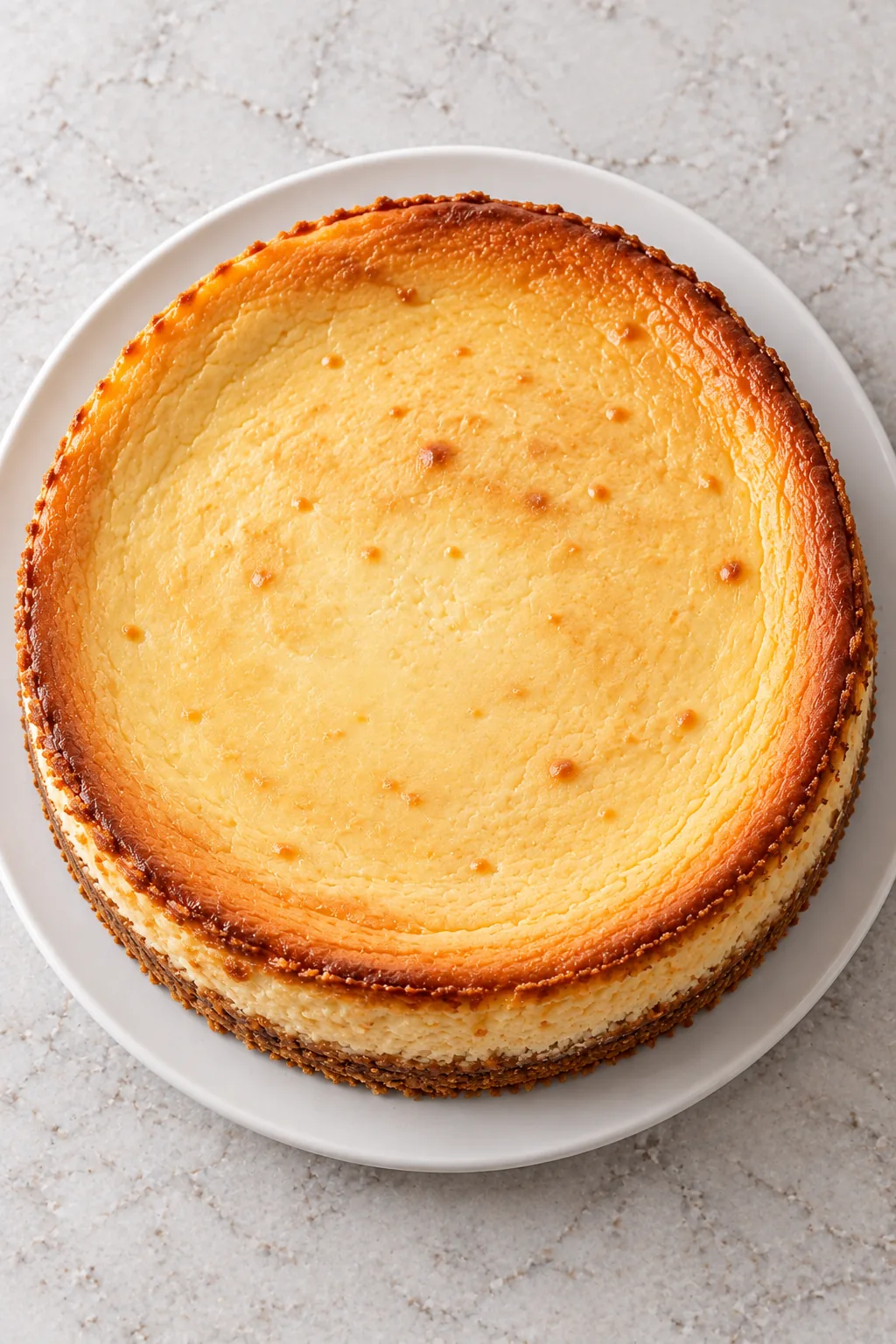
Bake until the outer couple of inches look set and the center still moves as one soft circle when the pan is nudged. That usually takes 70 to 85 minutes, but use the look of the cheesecake over the clock. A loose, liquid-looking center needs more time; a small, gentle wobble is ready.
Turn off the oven, crack the door, and leave the cheesecake inside for an hour. Then remove it from the water bath, cool it to room temperature, and refrigerate for at least six hours. The slow cooling helps prevent a sudden drop in temperature from pulling the top apart.
Chill, slice, and serve
Run a thin knife around the edge before releasing the springform ring.
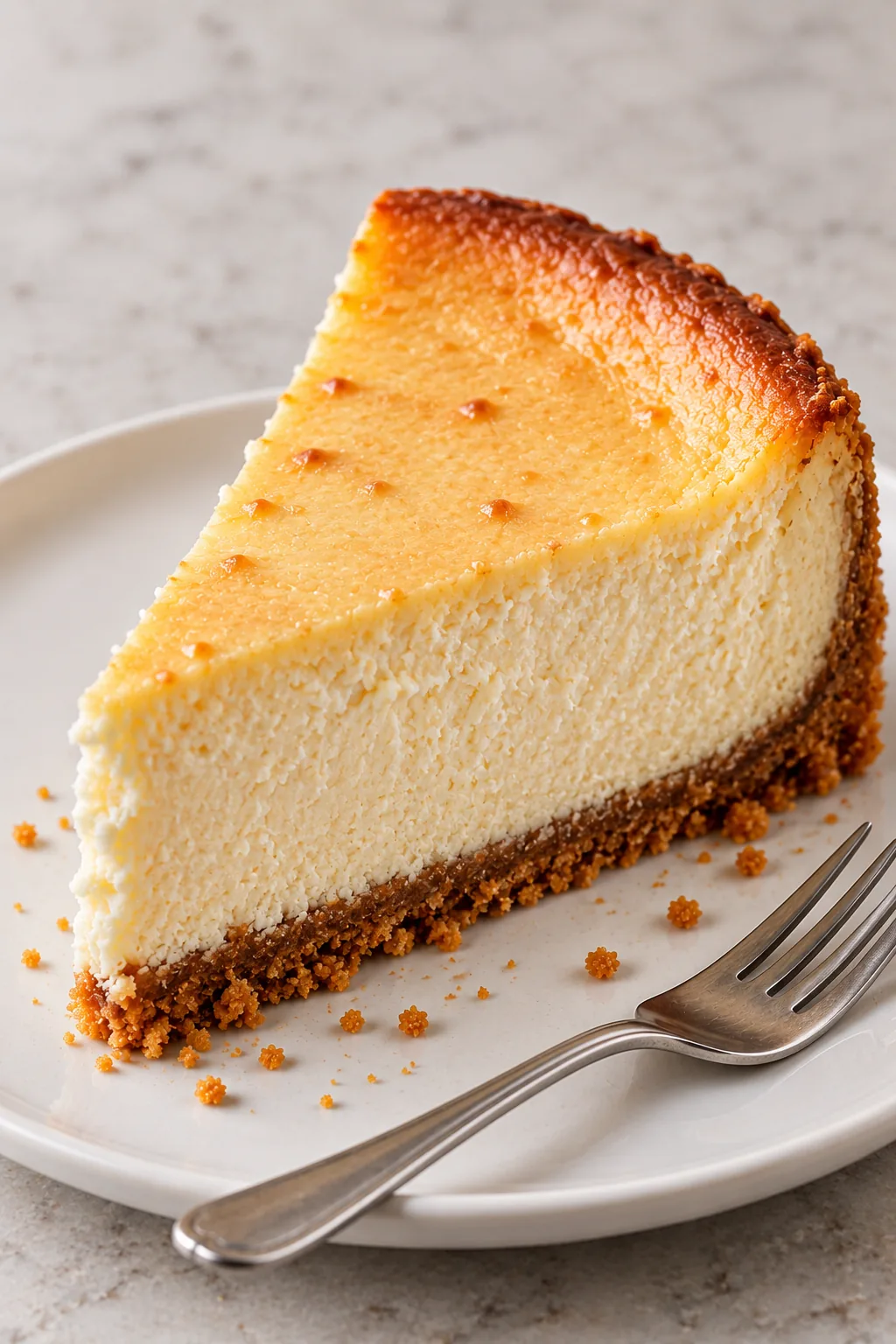
For neat slices, dip a long knife in hot water, dry it, make one cut, and wipe it clean before the next. It takes an extra minute, but it keeps the crust and filling from smearing across the top.
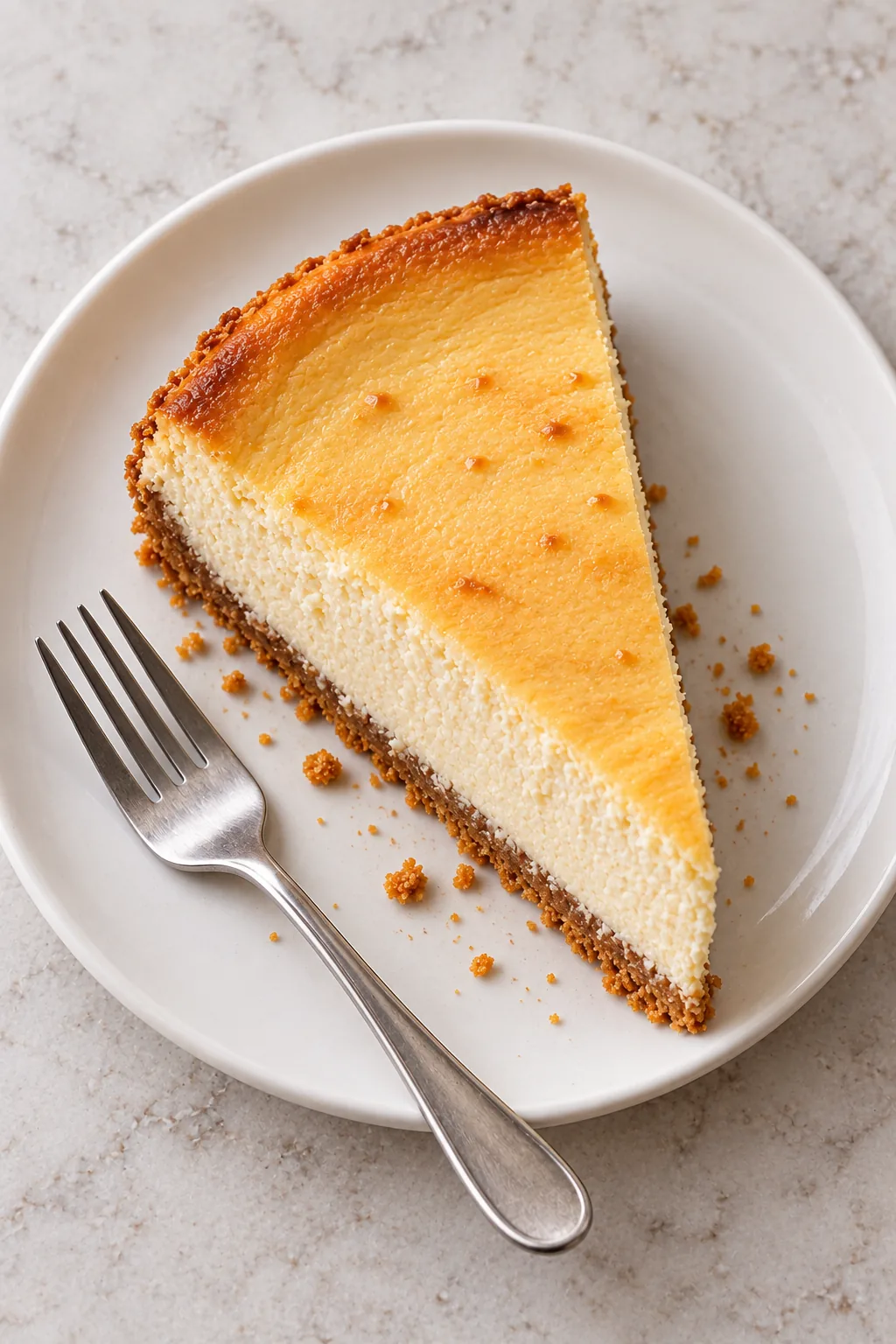
The cheesecake is lovely plain. If you want fruit, spoon it over individual slices just before serving so everyone can still see the smooth top. A small handful of berries beside the plate works well, too.
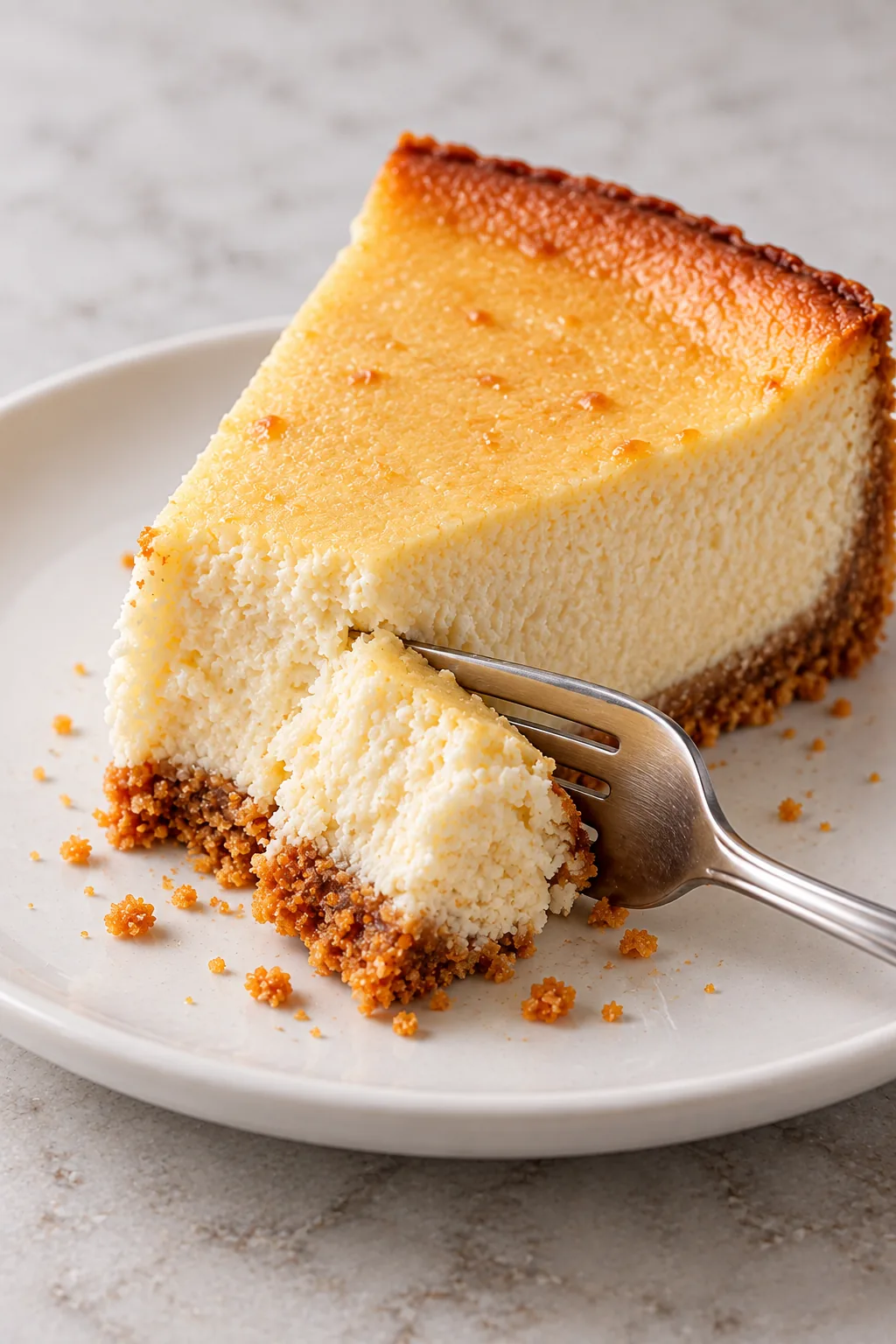
Cheesecake questions
Why did my cheesecake crack? The usual culprits are too much air in the batter, baking until the center is completely firm, or cooling it too quickly. A crack does not change how it tastes. Follow the gentle mixing, water bath, and gradual cooling steps on the next batch.
Can I cut it after a couple of hours in the fridge? You can, but the filling may cling to the knife and feel softer than a New York cheesecake should. Six hours is the minimum; overnight is easier when you want clean slices.
Do I have to use a water bath? This recipe is written for one. Without it, the edges can finish long before the center. Keep the water bath if you want the texture and baking cues described above.
For another dessert built around cream cheese, see the Pecan Cheesecake Pie. If you want a chilled dessert without the oven, try No-Bake Cherry Cheesecake Lush.
New York Cheesecake Recipe
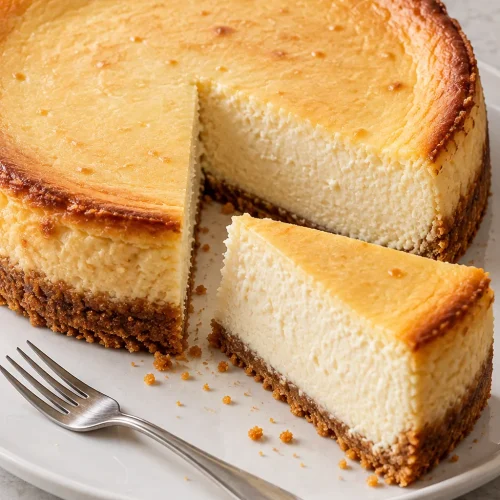
New York Cheesecake
Ingredients
Crust
- 1 1/2 cups graham cracker crumbs
- 2 tablespoons granulated sugar
- 5 tablespoons unsalted butter melted
- 1 pinch salt
Filling
- 32 ounces full-fat cream cheese softened
- 1 cup full-fat sour cream room temperature
- 1 1/4 cup granulated sugar
- 4 large eggs room temperature
- 2 teaspoons vanilla extract
- 1 tablespoon fresh lemon juice
- 1 teaspoon finely grated lemon zest optional
- 1/4 teaspoon fine salt
Instructions
- Preheat the oven to 325°F. Grease a 9-inch springform pan and line the bottom with parchment paper.
- Mix the graham cracker crumbs, sugar, melted butter, and pinch of salt. Press the crumbs firmly across the bottom of the pan. Bake for 8 minutes and cool slightly.
- Beat the softened cream cheese and sugar on low speed until smooth, scraping the bowl. Mix in the sour cream, vanilla, lemon juice, and optional zest just until combined.
- Add the eggs one at a time on low speed, stopping as soon as each is incorporated. Pour the batter over the crust. Wrap the springform pan tightly and place it in a roasting pan. Pour hot water into the roasting pan until it reaches about halfway up the sides of the springform pan.
- Bake for 70 to 85 minutes, until the outer edges are set and the center moves as one gentle, soft circle when nudged. A liquid-looking center needs more time.
- Turn off the oven, crack the door, and leave the cheesecake inside for 1 hour. Remove it from the water bath and cool to room temperature, then refrigerate for at least 6 hours or overnight before slicing.