
Ooey gooey butter cake is a two-layer dessert with a chewy golden base and a soft cream cheese topping. The crust starts with yellow cake mix, melted butter, and one egg. The topping is mixed separately, poured over that crust, and baked until the edges turn golden while the middle still has a little movement.
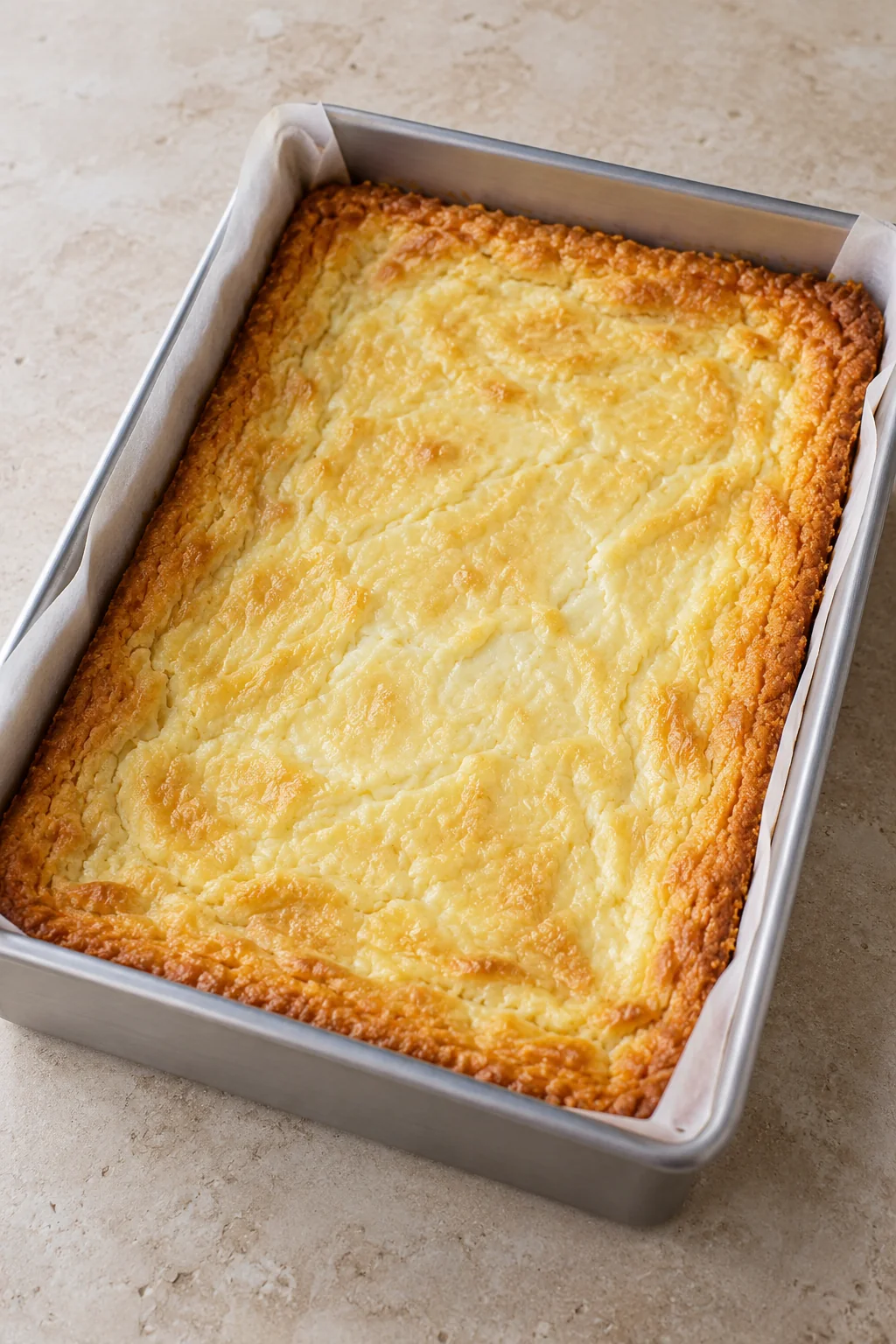
This is a cake to cut into squares rather than stack or frost. The rich top and buttery bottom give each piece enough flavor on their own; a light dusting of powdered sugar is the only finishing touch it needs. The main thing to plan for is the wait after baking, since the cake cools completely and then chills before cutting.
Two bowls, two different textures
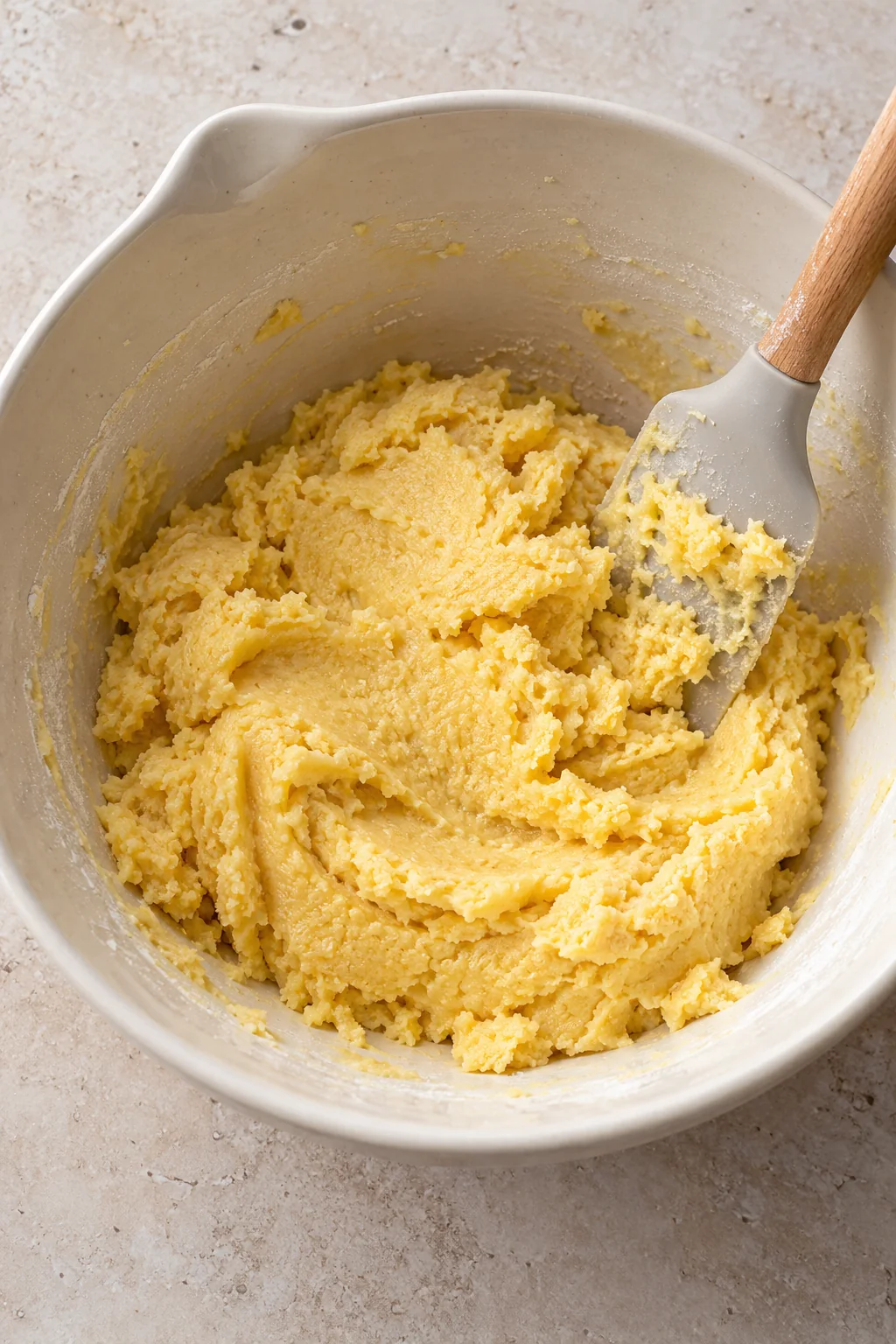
The base and topping should look quite different. The base is a thick dough that you press into the pan. The topping is smooth enough to spread over it. Keeping those textures separate is what gives the finished cake its firm bottom and softer upper layer.
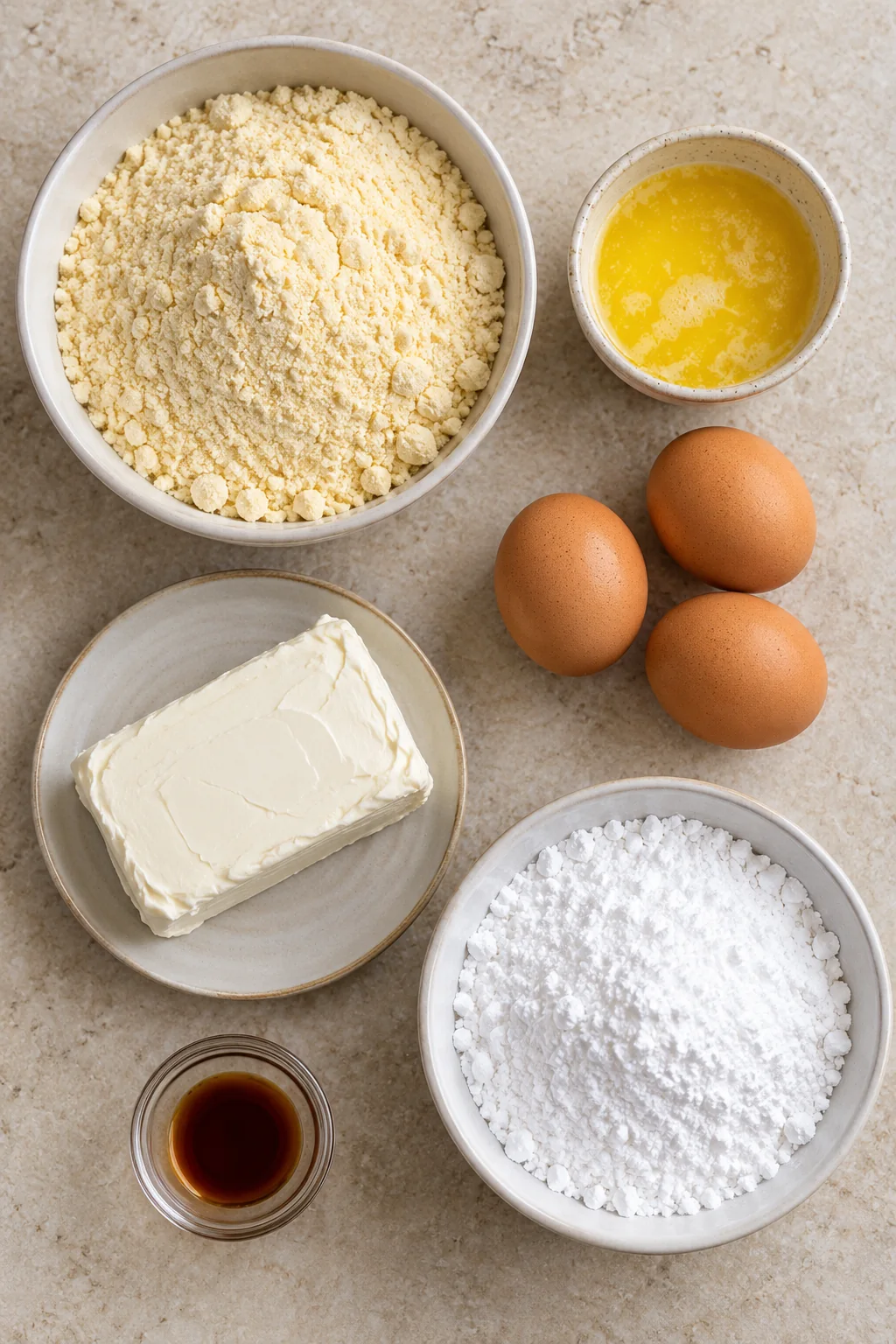
Set out a 9×13-inch pan, two mixing bowls, a spatula, and an electric mixer. Grease the pan or line it with parchment as directed in the card. If you use parchment, leave enough above the sides to help lift the cooled cake, and smooth out the corners before adding the dough.
- Yellow cake mix: use one 15.25-ounce box of dry mix. Add only the butter and egg listed for this crust; do not prepare it with the ingredients on the box.
- Butter: the base takes ½ cup of melted unsalted butter, the same as one stick. Let it cool slightly so it is not piping hot when you mix in the egg.
- Eggs: there are three altogether. One goes into the crust, and the other two go into the cream cheese topping. Set them out in those two groups to keep track.
- Cream cheese: use an 8-ounce package of full-fat cream cheese, softened to room temperature. A softened block is easier to beat smooth before the other topping ingredients go in.
- Powdered sugar: measure 3 cups for the topping, plus a little extra if you want to dust the finished squares. Break up or sift any obvious lumps before mixing.
- Vanilla: 1 teaspoon of pure vanilla extract goes into the topping with its two eggs.
Press the base instead of pouring it
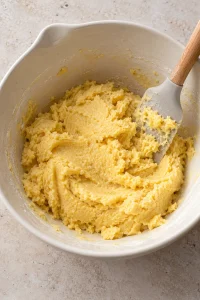
Heat the oven to 350°F. Combine the dry yellow cake mix, melted butter, and one room-temperature egg in a large bowl. Stir until the dry mix is incorporated and a thick dough forms. Scrape around the bottom and sides so no powdery pockets remain.
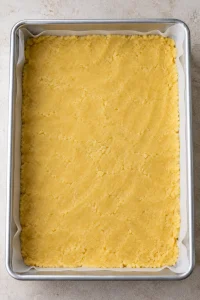
Transfer the dough to the prepared pan. Spread it toward the edges, then press it into an even layer across the bottom. A spatula makes it easier to work the dough into the corners. If it sticks, use the back of a lightly greased spoon to smooth the surface.
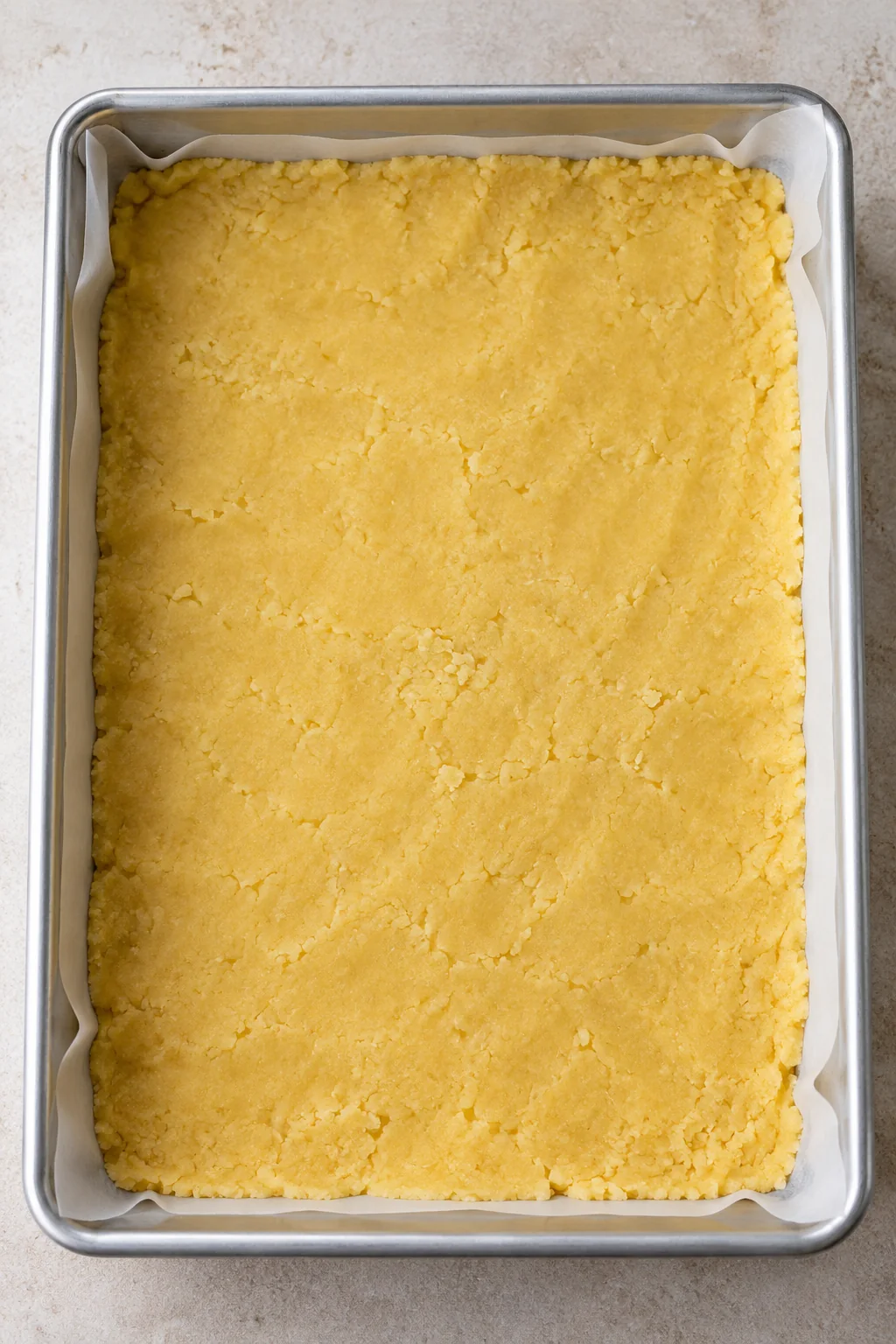
Aim for roughly the same thickness from the middle to the edges. A very thin corner can bake faster than the rest, while a thick mound in the center makes the layers uneven. You do not need a polished surface, just a level base for the filling.
Smooth the cream cheese first
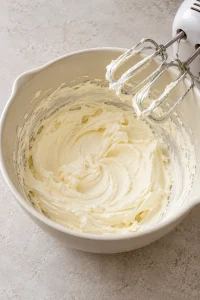
In the second bowl, beat the softened cream cheese with an electric mixer until it is smooth and free of obvious lumps. Scrape the bowl and beat again if thicker pieces collect around the bottom. This is the easiest stage to deal with them.
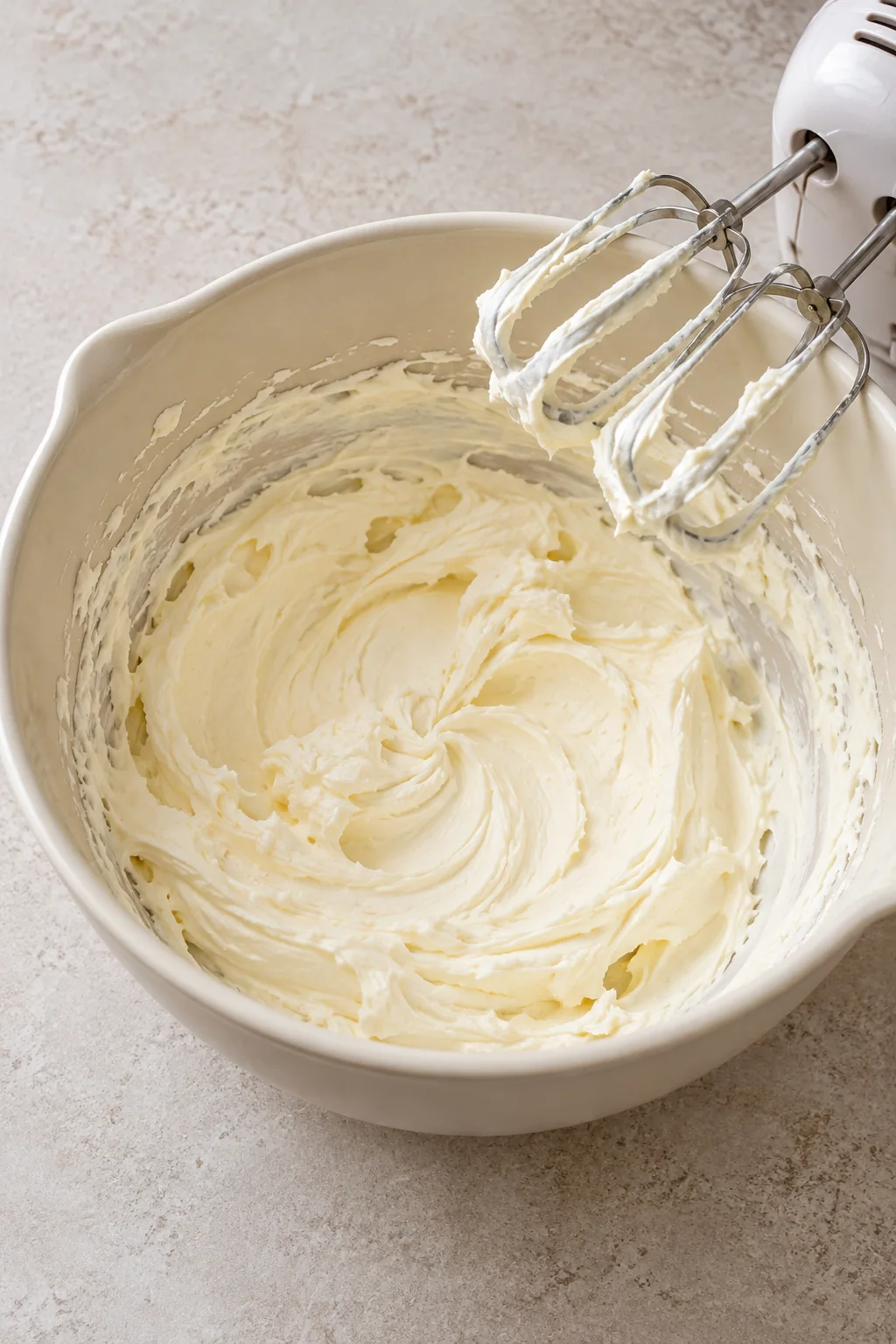
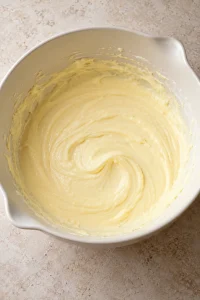
Beat in the remaining two eggs and the vanilla until combined. Pause to scrape the bowl so the cream cheese at the sides is mixed into the rest. The mixture will loosen as the eggs go in.
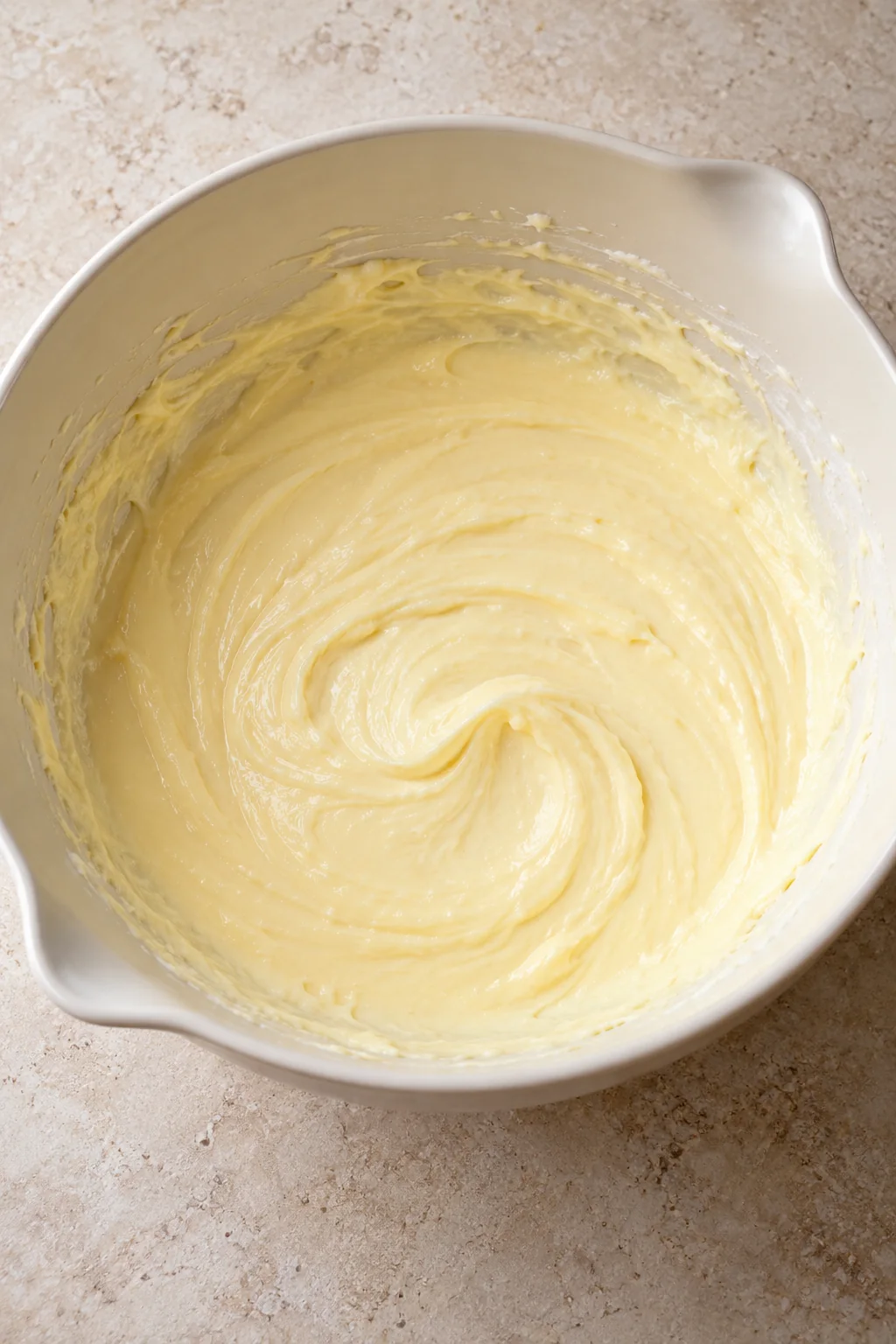
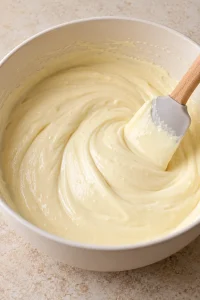
Add the powdered sugar gradually. Start the mixer on low after each addition so the sugar stays in the bowl, then mix until the topping is smooth and glossy. Scrape once more rather than assuming the mixture at the bottom has blended by itself.
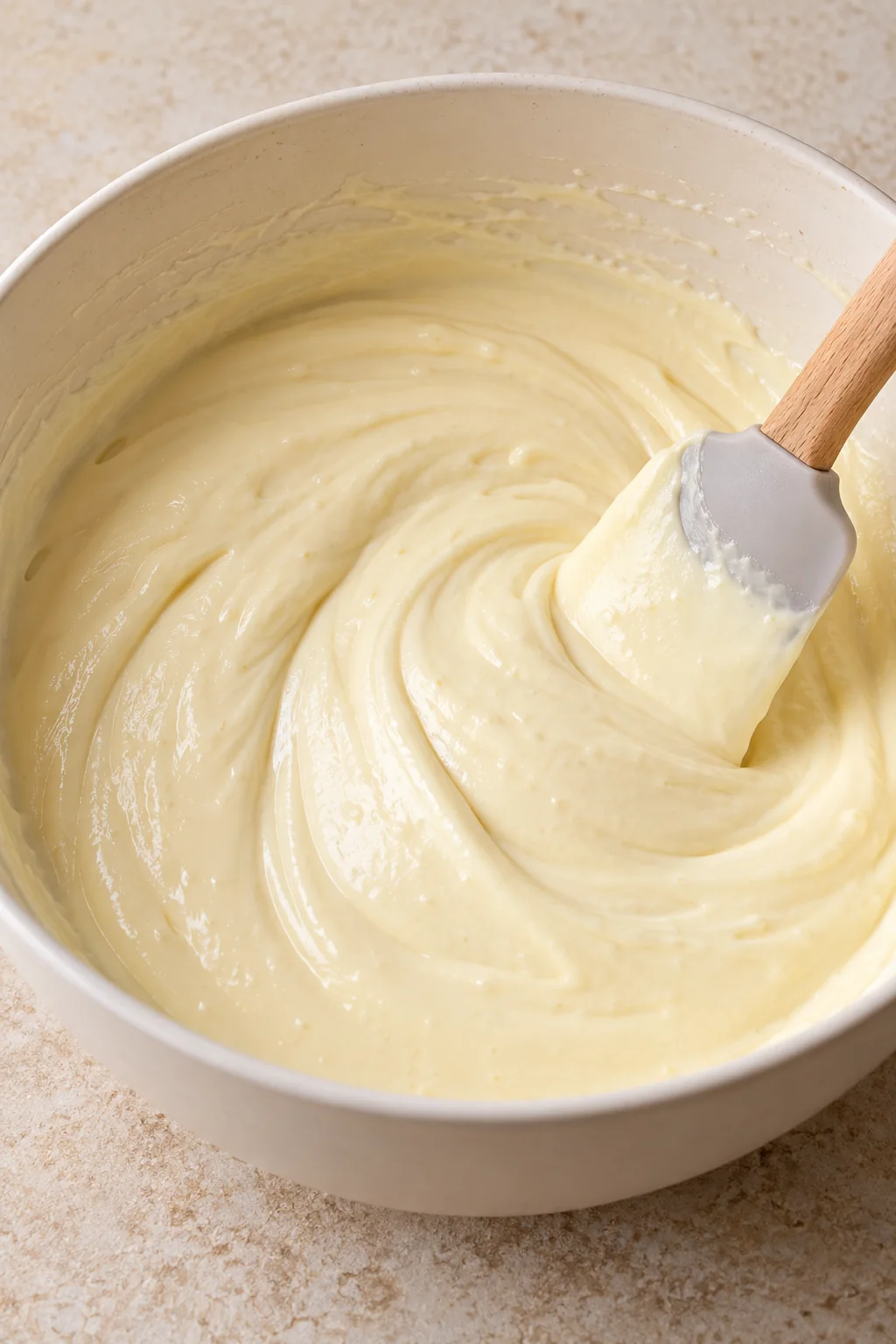
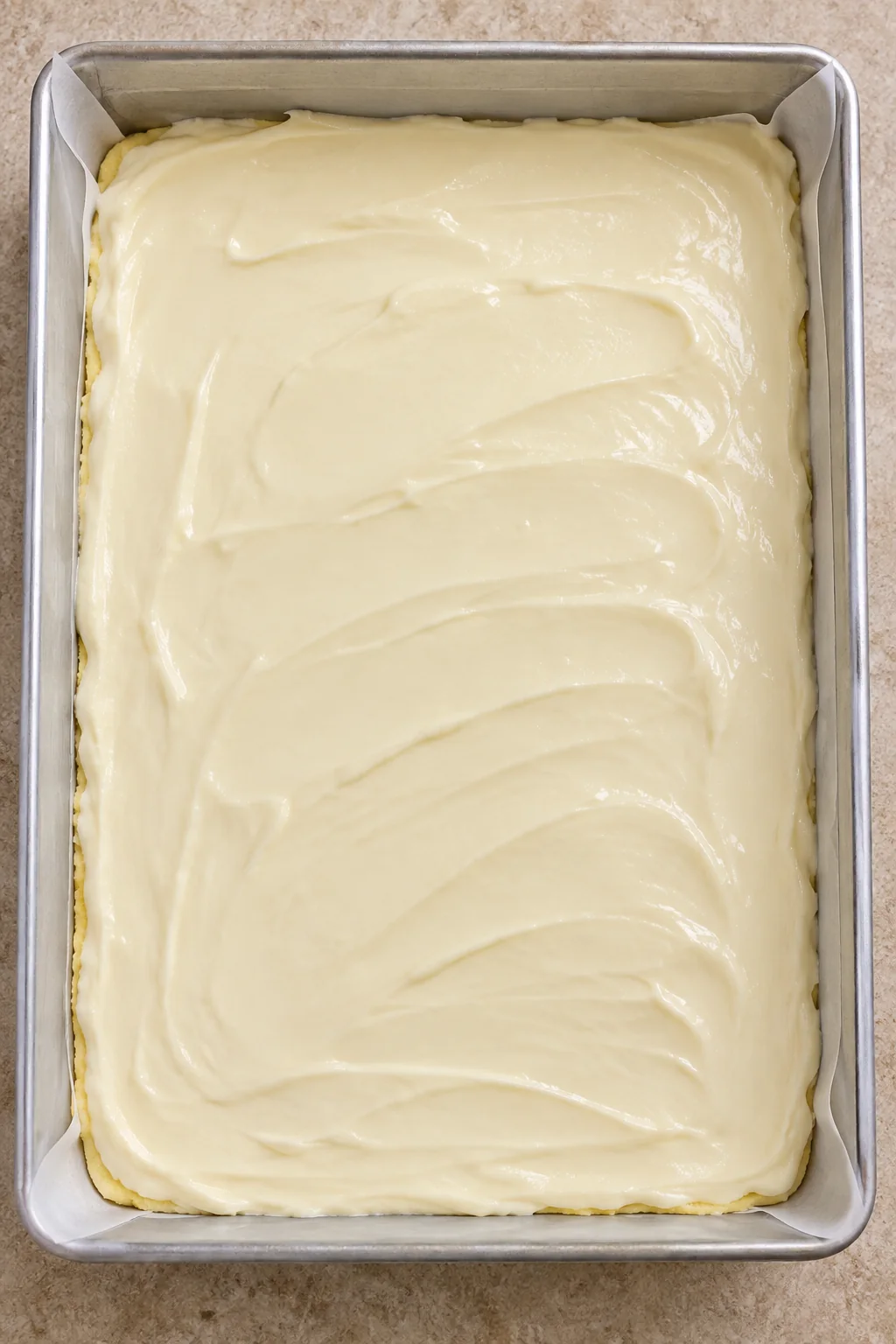
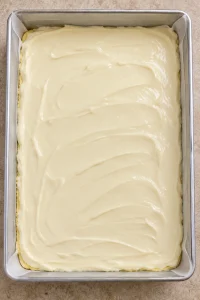
Pour the topping over the pressed crust. Use a spatula to ease it into the corners without digging down into the base. Try to keep the topping at an even depth across the pan; it should sit above the dough as its own layer.
Watch the edges and the middle
Bake for 40–45 minutes at 350°F. Begin checking near the start of that window. The edges should look golden and set, while the center still has a slight jiggle. You are looking for gentle movement in the middle, rather than a loose liquid surface.
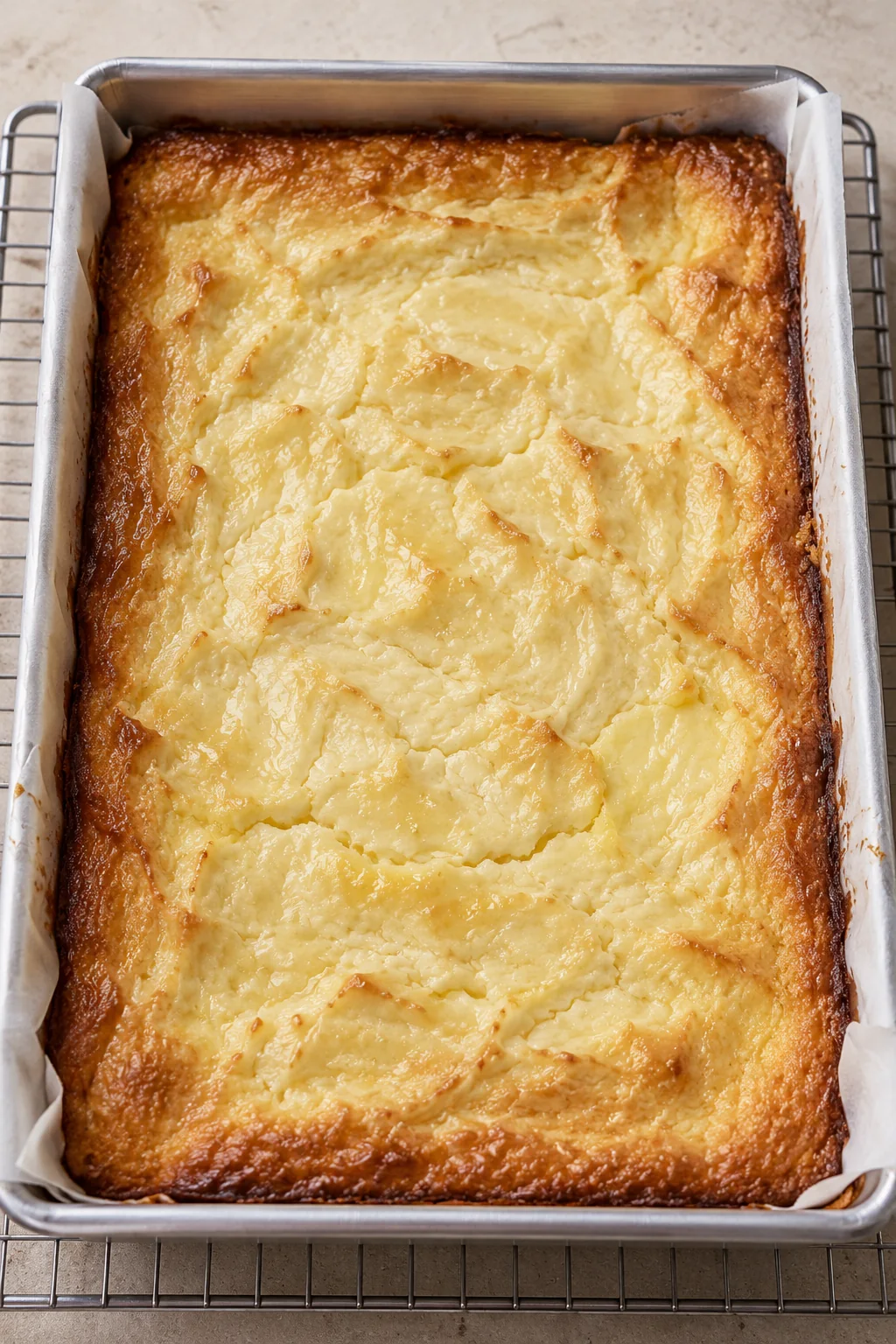
Do not wait for the topping to become completely firm in the oven. Its texture changes as it cools and chills. A dry-looking center is not the goal for this recipe, so the edge color and that small amount of movement are more useful cues than judging it like a plain layer cake.
The wait makes cutting easier
Set the pan on a wire rack and let the cake cool completely. Then refrigerate it for at least 2 hours before cutting, following the original method. That chill is part of preparing the finished texture, not an optional shortcut if you want cleaner squares.
The card uses 15 minutes as a preparation estimate and 45 minutes as the baking allowance. Its 2-hour chilling time does not include the additional time needed for the cake to cool completely first. Leave room in your schedule for that cooling pause.
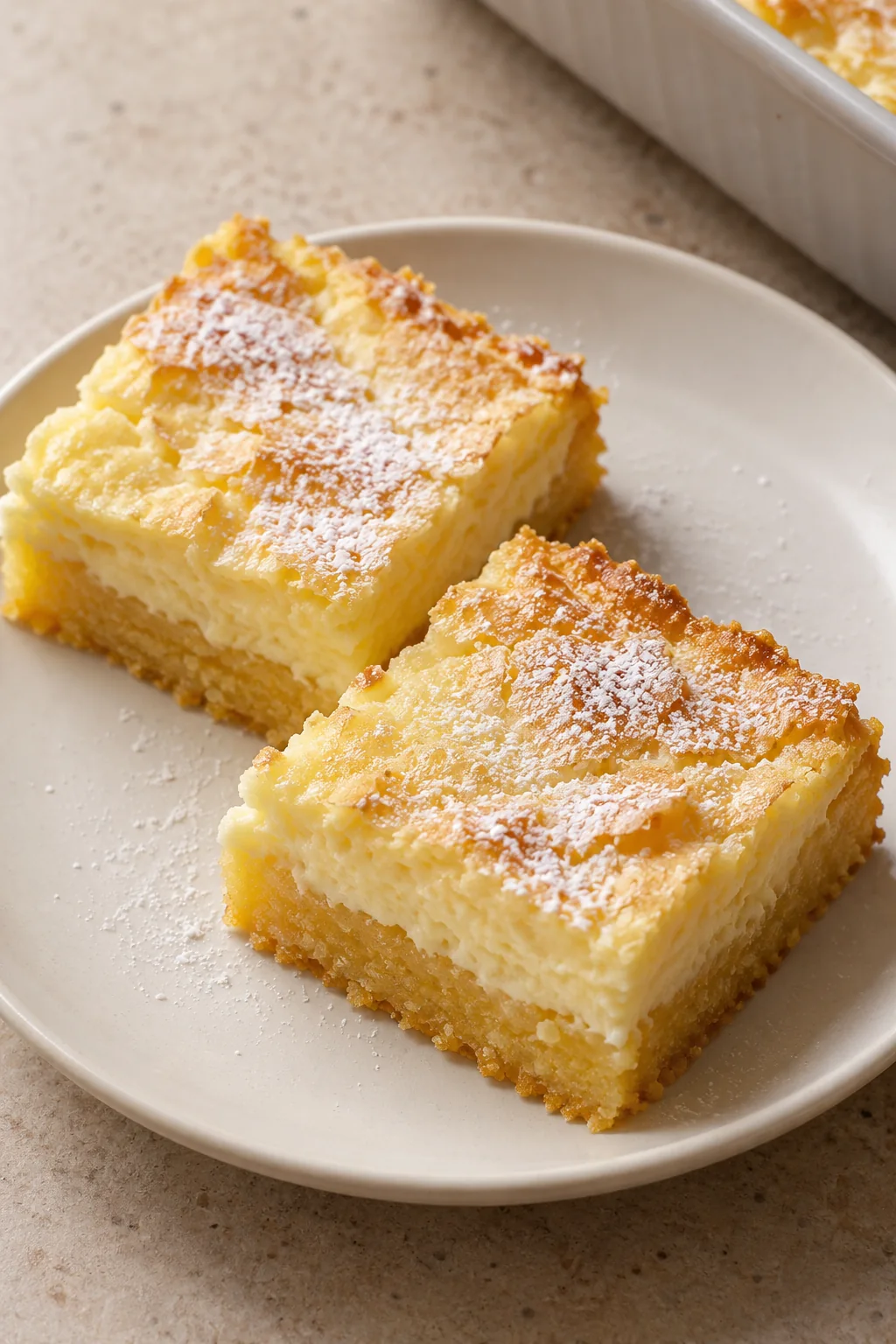
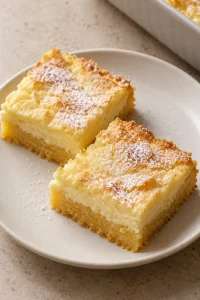
Cut with a sharp knife, wiping it between cuts when the soft topping clings to the blade. Lift each square with a small spatula supporting the base. Dust lightly with powdered sugar just before serving if you like, or leave the golden top plain.
Before you start
Should I follow the cake mix box directions?
No. Use the dry mix with the ½ cup of melted butter and one egg in this recipe. Preparing it as an ordinary cake batter would change the pressed base.
Does butter go into the topping too?
This version uses butter in the crust only. Its topping is cream cheese, two eggs, vanilla, and powdered sugar.
Why is the center still a little wobbly?
A slight jiggle is the baking cue in the original method. The edges should be set and golden, and the center settles further during cooling and chilling.
Ooey Gooey Butter Cake
Equipment
- 9×13-inch baking pan
- Two mixing bowls
- Electric mixer
- Spatula and cooling rack
Ingredients
Crust
- 1 box yellow cake mix 15.25 ounces; dry mix only
- 1/2 cup unsalted butter melted; 1 stick
- 1 Large Egg room temperature
Cream Cheese Topping
- 1 package full-fat cream cheese 8 ounces; softened to room temperature
- 2 Large Eggs room temperature
- 1 tsp Pure Vanilla Extract
- 3 cups Powdered Sugar plus extra for dusting
Instructions
- Preheat & Prep: Preheat your oven to 350°F (175°C). Grease a 9×13-inch baking pan with non-stick spray or line with parchment paper.
- Make the Crust: In a large bowl, mix together the dry yellow cake mix, melted butter, and 1 egg until a thick dough forms.

- Press into Pan: Evenly press the dough mixture into the bottom of the prepared baking pan. Set aside.
- Whip Cream Cheese: In a separate large bowl, use an electric mixer to beat the softened cream cheese until completely smooth and free of lumps.
- Add Wet Ingredients: Beat in the remaining 2 eggs and the vanilla extract until fully combined.
- Incorporate Sugar: Gradually mix in the powdered sugar until the topping is smooth and glossy.
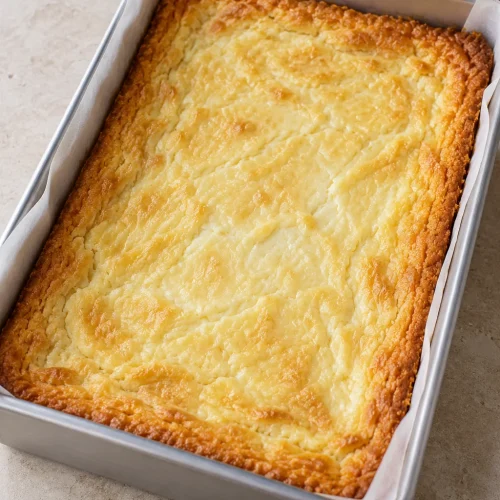
- Layer & Bake: Pour the cream cheese mixture evenly over the prepared crust. Bake for 40-45 minutes. The edges should be golden, but the center should still have a slight jiggle.
- Cool completely: Remove from the oven and let cool completely on a wire rack. For the best texture and clean slices, chill in the refrigerator for at least 2 hours before cutting. Dust with additional powdered sugar before serving, if desired.
Notes
More squares to share
Try Sugar Cookie Cheesecake Bars for another creamy layered dessert, or Boston Cream Poke Cake when you want chocolate on top.