
A patty melt is the sandwich to make when a cheeseburger sounds good, but you want the buttery crunch of grilled cheese, too. This version has a thin beef patty, soft golden onions, American and Swiss cheese, and a little yellow mustard tucked between thick slices of white bread.
The onions take the longest, so get those going first. While they soften, you can shape the beef and set out the bread. Once everything is ready, the sandwiches need just a few minutes in the pan to turn crisp and golden.
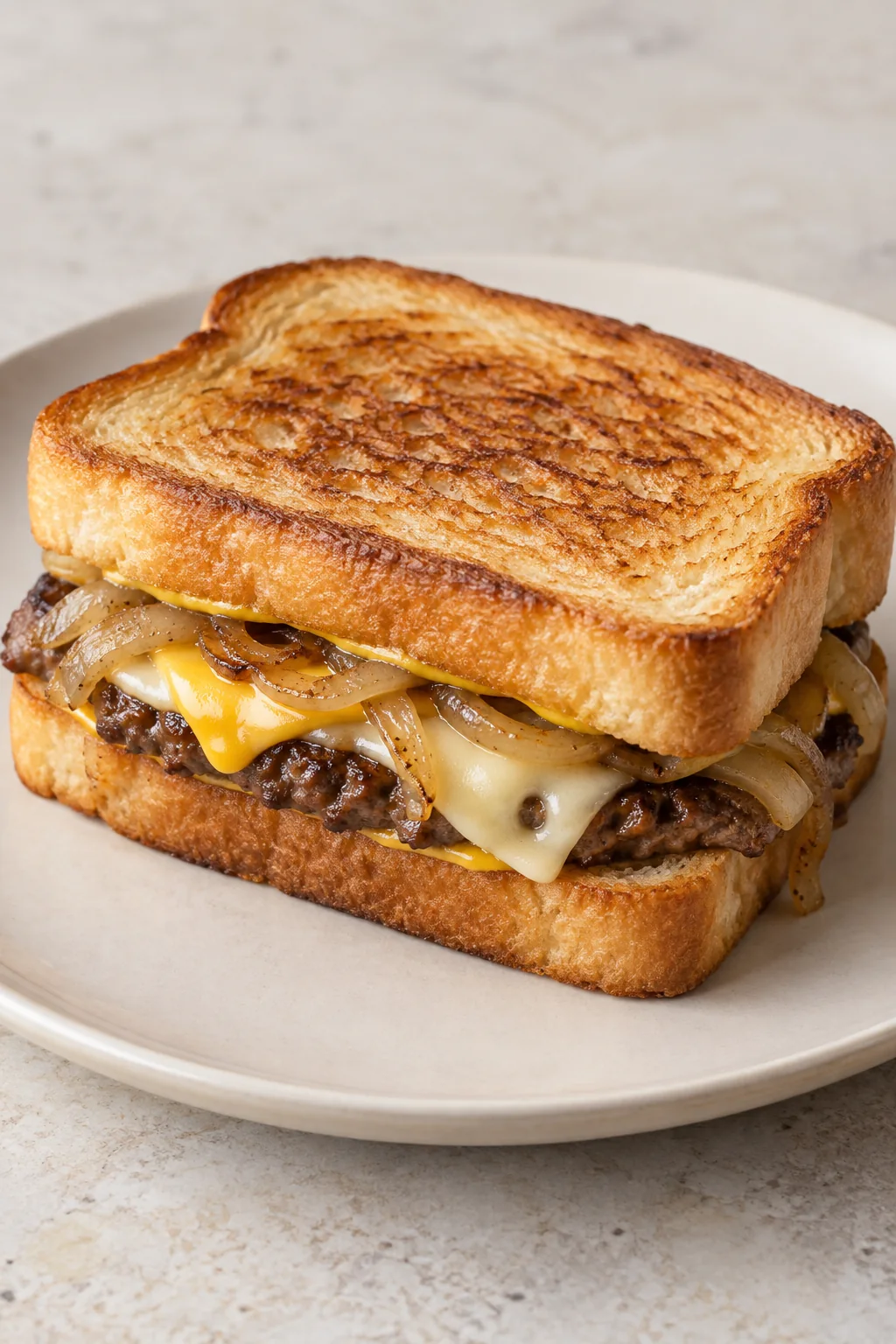
Choose bread that holds the filling
Thick-cut sandwich bread or plain Texas toast works well here. You want slices sturdy enough to lift with a spatula, but still soft enough to bite through. Use plain bread rather than frozen garlic Texas toast, which brings a different seasoning and extra butter to the sandwich.
Rye is another good option if you like its sharper flavor. Whatever bread you choose, use it as a guide when shaping the patties. A round burger inside a wide slice of bread leaves the corners empty, so aim for a thin oval that follows the outline of your slice.
A few ingredient notes
Ground beef: An 80/20 blend gives the patties some richness without needing extra oil in the pan. Mix the Worcestershire sauce, garlic powder, salt, and pepper into the beef just until combined. Working it for too long can make the patties firm.
Sweet onion: Slice it evenly so the pieces soften at roughly the same rate. One extra-large onion gives each sandwich a modest layer. If onions are your favorite part, add another and allow more cooking time.
American and Swiss cheese: American melts readily, while Swiss adds a slightly nutty flavor. Thin slices work best. Butter and yellow mustard: The butter is divided between the onions and the toasted bread; mustard adds a little tang beneath the beef. The exact amounts are in the recipe card below.
Get the onions going first
Use a wide skillet so the sliced onions have room to spread out. Melt half the butter, add the onions, and season lightly. Stir over medium-low heat as they lose their raw bite and soften. At first they may look pale and wet. That is normal; the color comes as their moisture cooks off.
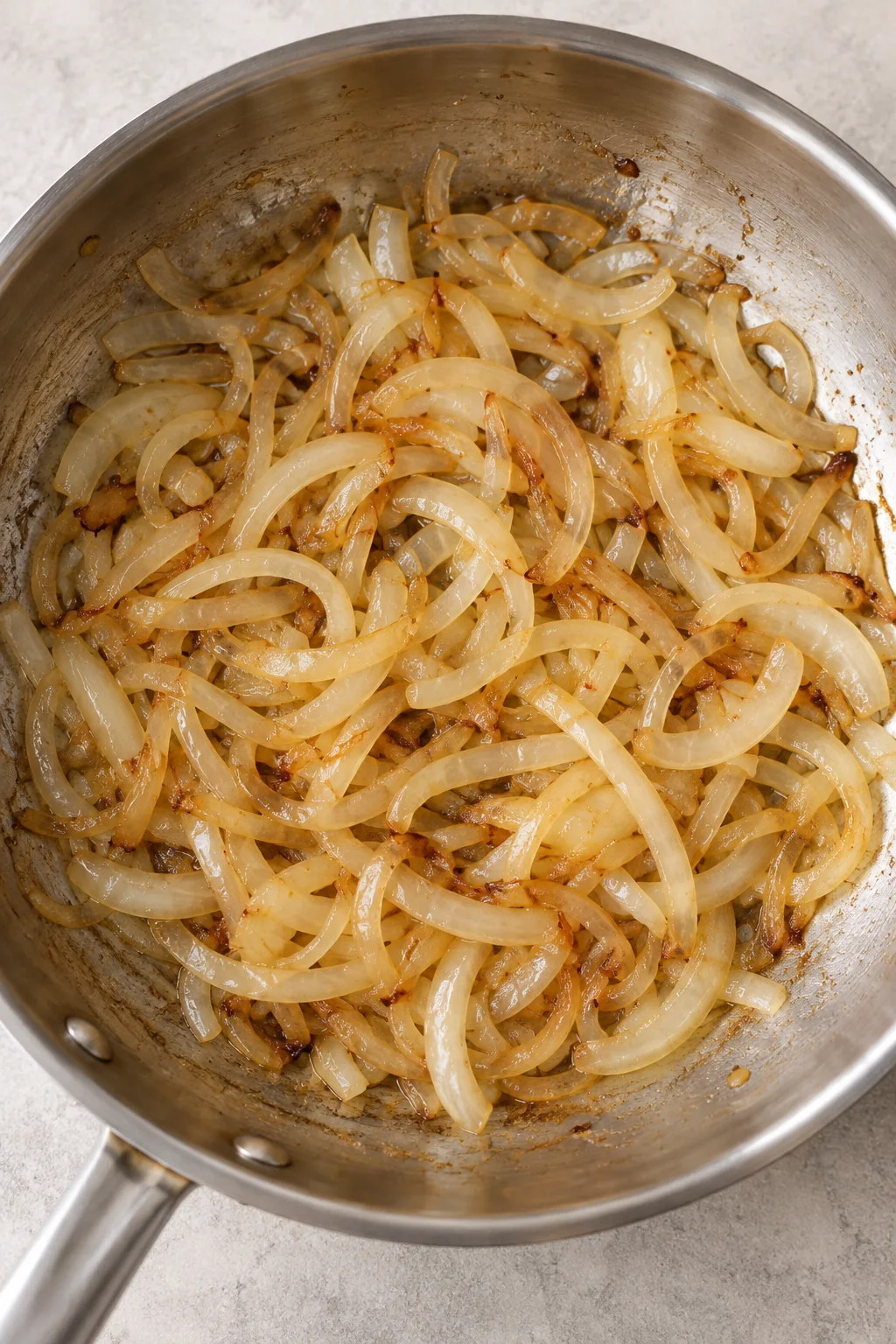
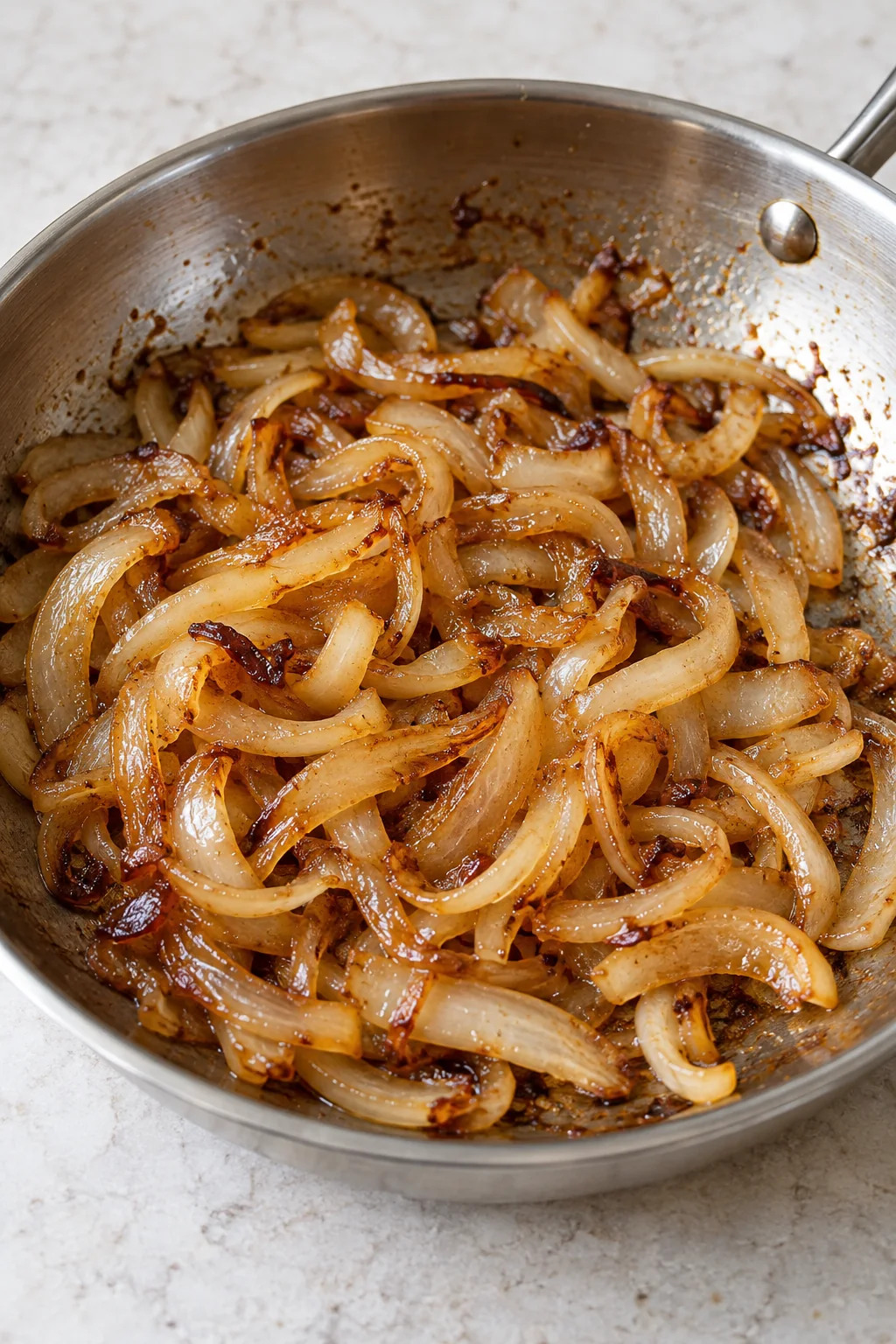
Keep going until the onions are soft and golden, usually about 25 to 35 minutes. The pan and the thickness of the slices make a difference, so watch the onions rather than treating the timer as a deadline. Deeper caramelization takes longer. If the edges start scorching while the centers are still firm, lower the heat and loosen the browned bits with a small splash of water.
Make the patties fit the bread
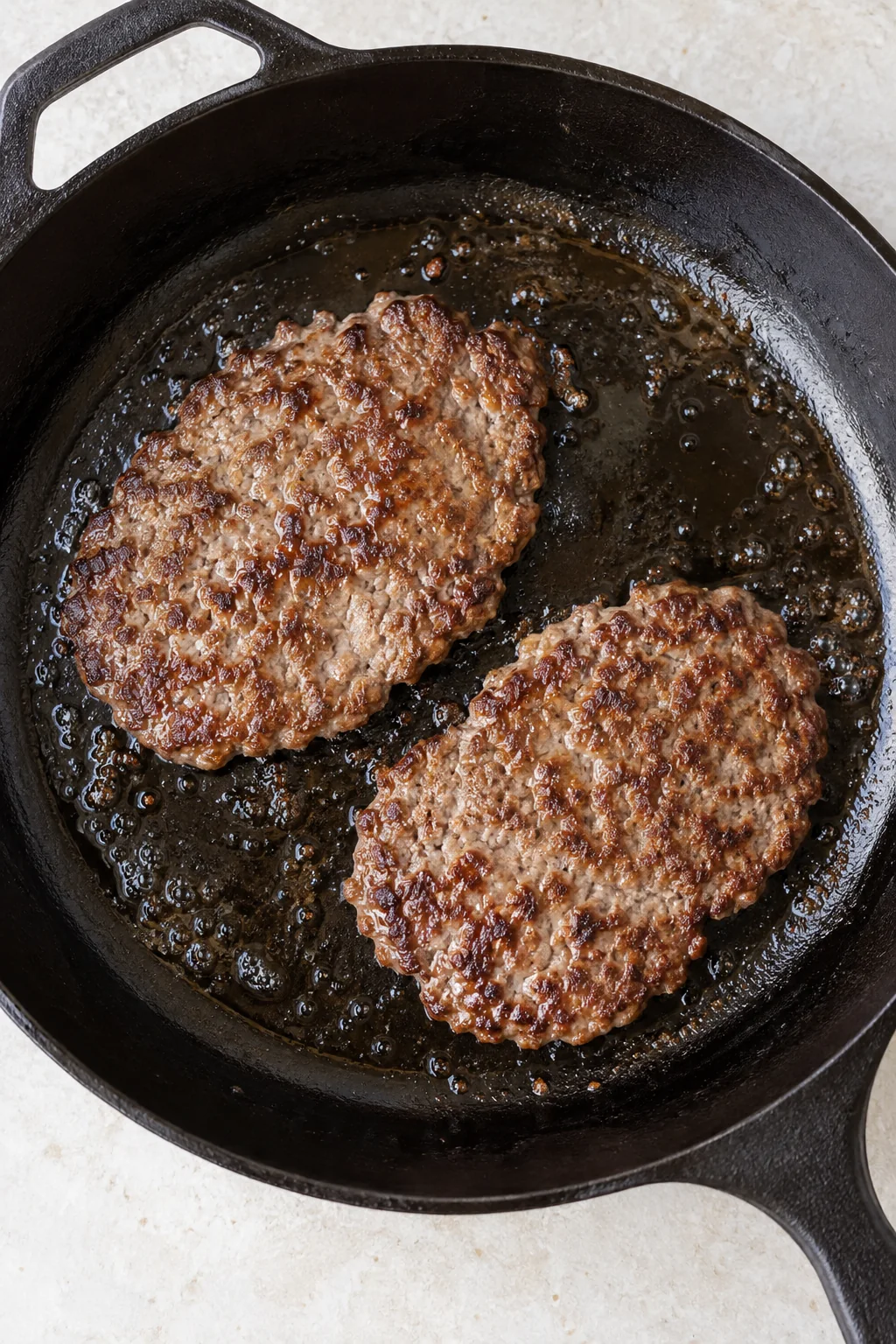
Divide the seasoned beef into six equal portions. Shape them on parchment into thin ovals, a little wider than the bread because they will shrink in the skillet. Keep the thickness even, especially around the edges, so one part does not finish well before the rest.
Cook in batches with space between the patties. Let the first side brown before flipping, and avoid pressing down with the spatula. Start checking after about three minutes per side, but cook each patty to 160°F in the center. For a thin patty, slide an instant-read thermometer in from the side.
Build the sandwiches, then lower the heat
Spread a thin layer of mustard over six bread slices. Divide the onions across the cooked patties and add one slice of each cheese. Give the cheese a moment to soften, then move each topped patty onto a mustard-coated slice. Keep the onion layer fairly even so the sandwich closes without a big mound in the middle.
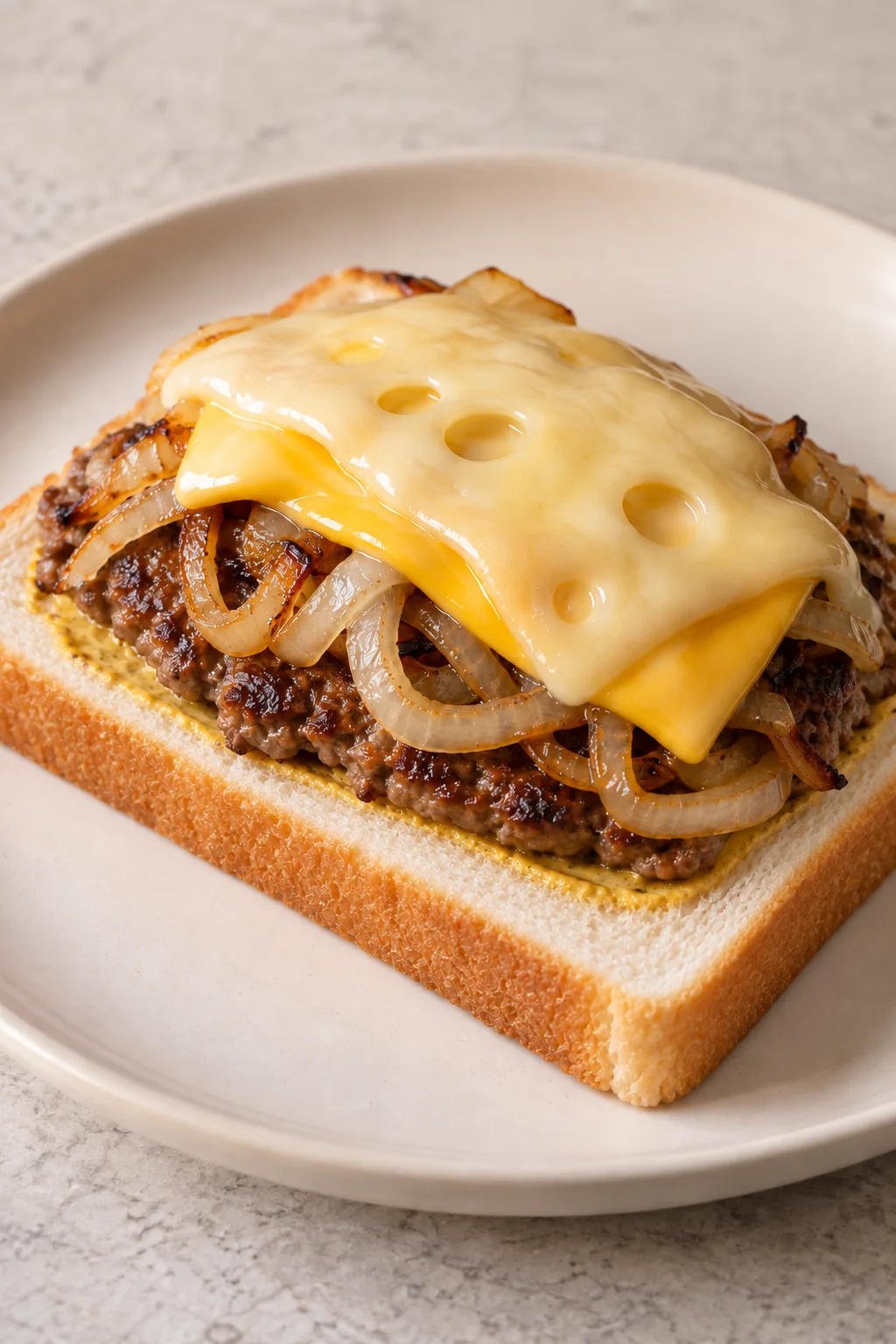
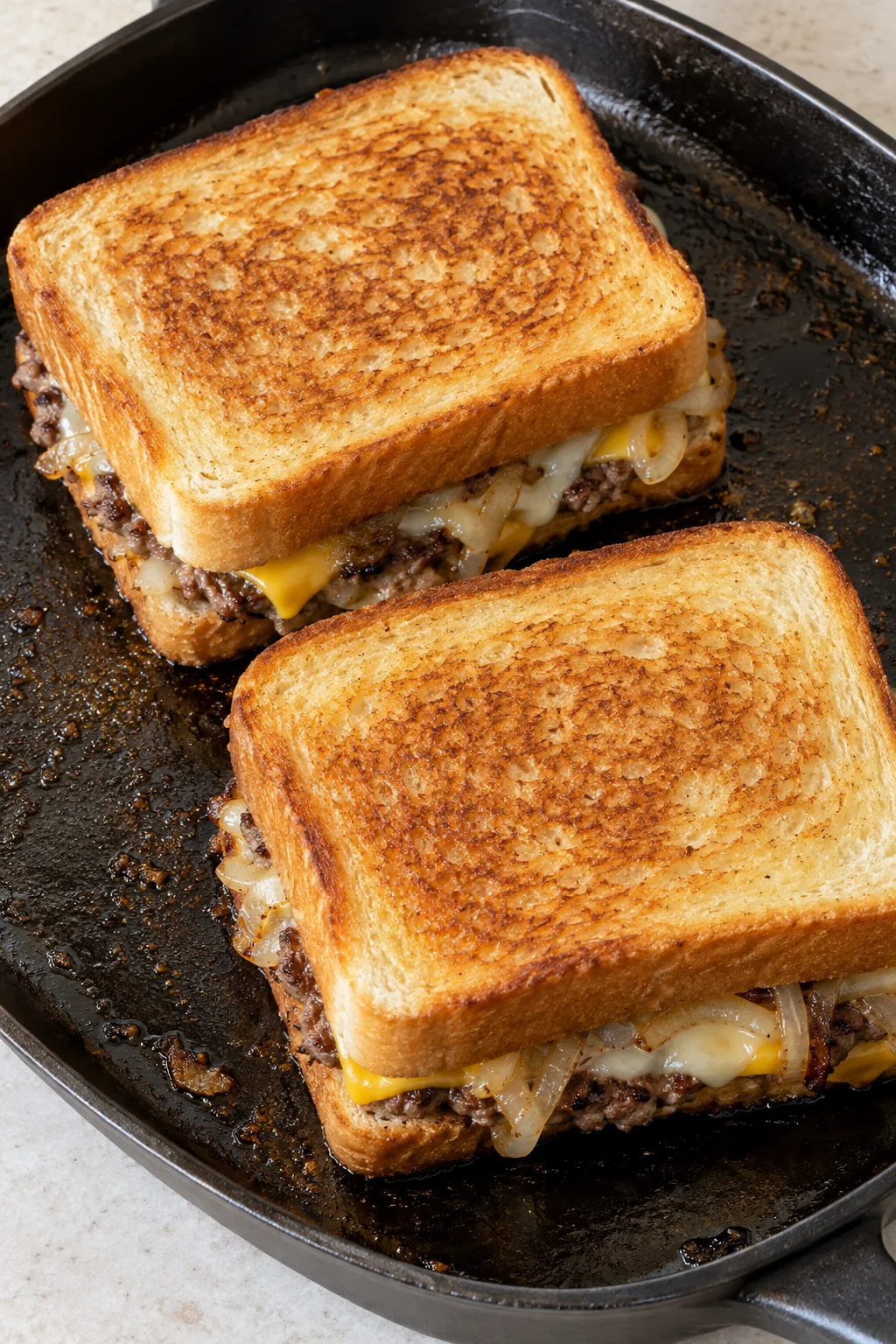
Before toasting, let the skillet cool a little and remove excess beef grease. Add some of the remaining butter, set the sandwiches in the pan, and cover them with the second bread slices. Toast over medium-low heat. A pan hot enough to brown beef can darken the bread before the cheese has time to melt.
After two to three minutes, lift a corner to check the underside. When it is golden, flip with a wide spatula and add the last of the butter beneath the sandwiches. Toast the second side until crisp. A light press helps everything hold together; there is no need to squash the filling out.
A couple of easy changes
You can use all Swiss or all American cheese, or swap one for thinly sliced cheddar. Dijon mustard gives a sharper bite than yellow mustard. If you want to add cooked bacon, keep the layer small so the sandwich stays easy to turn. For a smaller batch, halve every ingredient and make three melts.
Serve while the bread is crisp
Let each sandwich settle for a minute before cutting it in half. Keep the halves side by side on the plate rather than piling them up, which traps heat against the toast. Pickles or a simple slaw are good alongside the rich filling. For a cold side with plenty of vegetables, try California spaghetti salad.
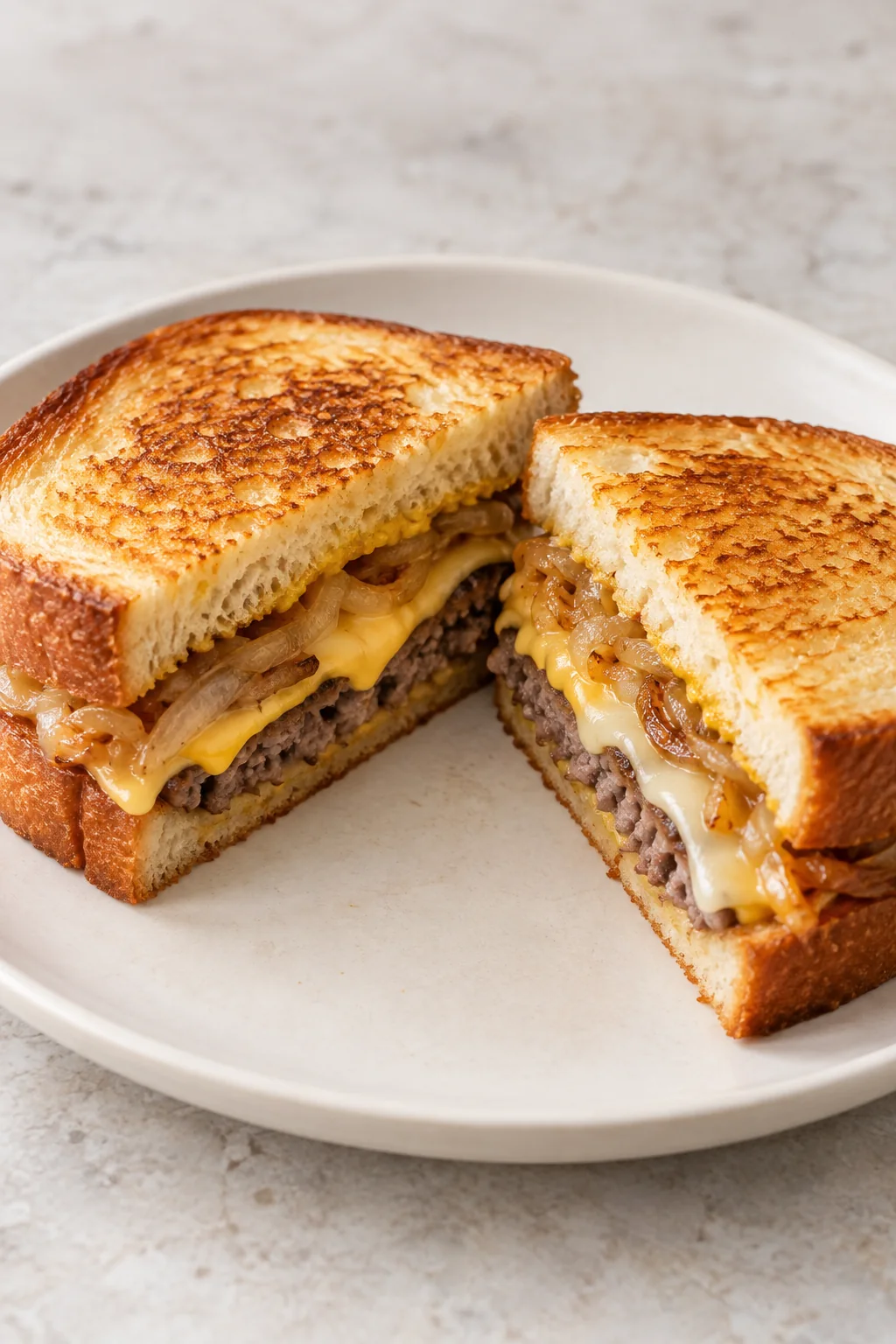
This recipe makes six full sandwiches. If you prefer a pan of smaller sandwiches for sharing, Philly cheesesteak sliders are another option. And when you want seasoned beef patties with gravy instead of bread, take a look at poor man’s steak.
Questions before you cook
Why is my bread getting dark before the cheese melts? The pan is too hot for the final toasting stage. Turn the heat down and briefly cover the skillet to help the cheese soften, then uncover it to finish crisping the bread.
Can I use one skillet for the whole recipe? Yes. Cook the onions first and set them aside, then cook the beef. Remove excess grease and lower the heat before returning the assembled sandwiches to the same skillet.
Why does the filling slide out when I flip it? Too many onions or a patty that is thicker in the center can make the sandwich unstable. Spread the filling evenly and support the entire bottom slice with a wide spatula as you turn it.
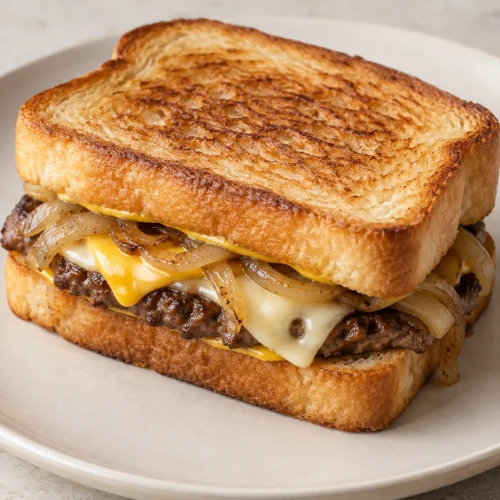
Patty Melt Recipe
Ingredients
- 2 pounds ground beef
- 2 tablespoons Worcestershire sauce
- ½ teaspoon garlic powder
- 1 teaspoon salt plus additional salt for the onions
- ½ teaspoon cracked black pepper plus additional pepper for the onions
- ½ cup butter divided
- 1 extra-large sweet onion peeled and thinly sliced
- 12 slices thick-cut sandwich bread or Texas toast
- 6 slices American cheese
- 6 slices Swiss cheese
- 2 tablespoons yellow mustard
Instructions
- Heat a wide skillet over medium heat and melt 4 tablespoons of the butter.
- Add the sliced onion and season lightly with additional salt and pepper. Reduce to medium-low and cook, stirring regularly, until soft and golden, about 25 to 35 minutes. Lower the heat if the edges scorch, and add a small splash of water if needed to loosen browned bits. Deeper caramelization takes longer. Set the onions aside.
- While the onions cook, combine the ground beef, Worcestershire sauce, garlic powder, 1 teaspoon salt, and ½ teaspoon cracked black pepper in a bowl.
- Mix gently just until the seasonings are distributed, then divide the beef into 6 equal portions.
- On parchment paper, shape each portion into a thin oval slightly wider than a bread slice. Keep the thickness even; the patties will shrink during cooking.
- Arrange the 12 bread slices and spread the yellow mustard evenly over 6 of them.
- Heat a large skillet or griddle over medium heat. Cook the patties in batches, leaving space between them, for about 3 minutes on the first side, until browned.
- Flip and continue cooking, starting to check after about 3 more minutes. Cook each patty to 160°F in the center; insert an instant-read thermometer through the side of a thin patty. Do not press the patties while they cook.
- Divide the cooked onions over the patties. Add 1 slice of American cheese and 1 slice of Swiss cheese to each, and allow the cheese to soften briefly.
- Transfer each topped patty onto a mustard-coated slice of bread, keeping the onions and cheese facing up.
- Remove the pan from the heat briefly and carefully wipe away excess grease with a paper towel held in tongs. Return to medium-low heat for toasting.
- Melt 2 tablespoons of the remaining butter in the skillet or across the griddle, dividing it between batches as needed. Add the prepared sandwiches and cover each with a remaining bread slice.
- Toast for 2 to 3 minutes, checking the underside, until golden and crisp. Lower the heat if the bread browns before the cheese melts.
- Add the final 2 tablespoons of butter beneath the sandwiches as you flip them with a wide spatula, dividing it between batches as needed.
- Toast the second side for another 2 to 3 minutes, until golden and the cheese is melted. Press lightly with the spatula to help the sandwich hold together.
- Let the patty melts settle for about a minute on a cutting board, then cut each sandwich in half and serve.