
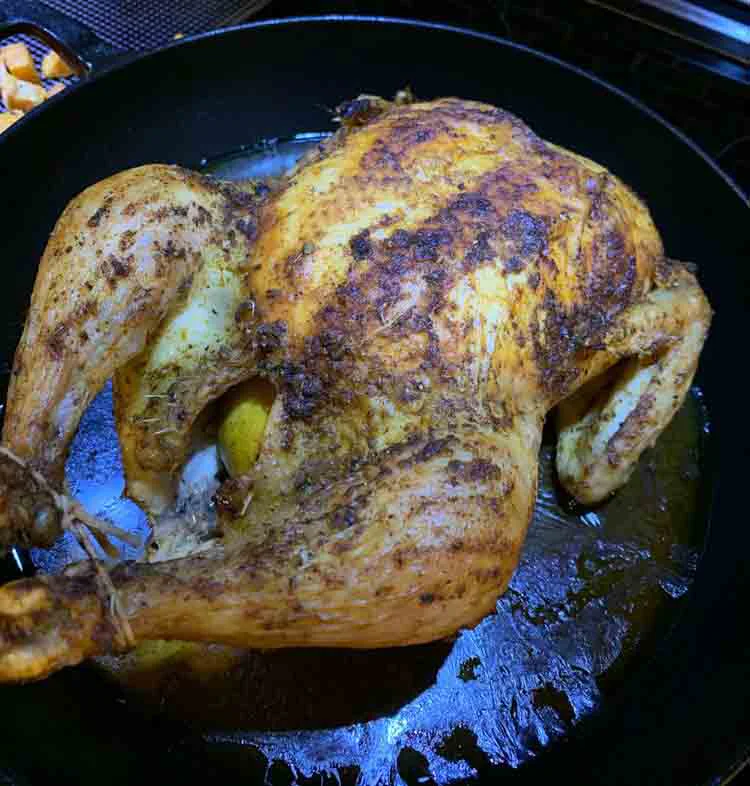
Juicy Roasted Chicken is one of the simplest ways to turn a whole chicken into a comforting family dinner. This version uses salt, black pepper, onion powder, margarine, and celery, so the ingredient list stays short while the chicken roasts with a browned exterior and tender meat.
I like roasting a whole chicken because the oven does most of the work. Once the bird is seasoned and placed in the roasting pan, the main job is checking the temperature near the end. The drippings collect underneath and can be spooned over the chicken before it rests.
A food thermometer is much more reliable than judging doneness by color or cutting into the chicken. The chicken is safely cooked when the thickest part of the breast and the innermost thigh and wing areas reach at least 165°F.
For more easy dinner ideas, browse our chicken recipes and side dishes.
Why This Whole Roasted Chicken Works
The chicken is seasoned both inside and out, which gives the meat more flavor than seasoning only the skin. Onion powder adds savory flavor without adding wet ingredients to the outside of the bird.
Margarine is placed in the cavity and dotted over the outside. As it melts, it mixes with the chicken drippings in the roasting pan. The celery pieces in the cavity add a mild aromatic note while the chicken cooks.
Roasting the chicken uncovered allows the exterior to brown. The exact cooking time can vary with the size and shape of the bird, the roasting pan, and the oven, so temperature should decide when it comes out rather than the clock alone.
Ingredients You’ll Need
Whole chicken: This recipe is written for a chicken around 3 pounds with the giblets removed. A larger bird will need more time in the oven.
Salt and black pepper: Season both the cavity and the exterior so the chicken is flavorful throughout.
Onion powder: One tablespoon gives the chicken a savory onion flavor without pieces of fresh onion on the skin.
Margarine: Half a cup is divided between the cavity and the outside of the chicken. If you use salted margarine, season the chicken a little more carefully with additional salt.
Celery: One stalk is cut into a few pieces and placed inside the cavity as an aromatic.
Ingredients
- 1 whole chicken, about 3 pounds, giblets removed
- Salt, to taste
- Black pepper, to taste
- 1 tablespoon onion powder, or to taste
- 1/2 cup margarine, divided
- 1 stalk celery, leaves removed
How to Make Juicy Roasted Chicken
- Preheat the oven to 350°F.
- Remove the giblets from the chicken if they are included. Pat the outside of the chicken dry with paper towels, then place it breast-side up in a roasting pan.
- Season the cavity and the outside generously with salt and black pepper. Sprinkle the onion powder over the exterior and inside the cavity.
- Place 3 tablespoons of the margarine inside the chicken cavity.
- Cut the celery stalk into 3 or 4 pieces and place the pieces inside the cavity.
- Dot the remaining margarine over the outside of the chicken.
- Roast the chicken uncovered. Begin checking a 3-pound bird around the 1-hour mark. The exact time will vary.
- Remove the chicken from the oven when a food thermometer registers at least 165°F in the thickest part of the breast and the innermost parts of the thigh and wing, without touching bone.
- Spoon some of the hot pan drippings over the chicken, then loosely tent it with foil.
- Let the chicken rest for about 10 to 15 minutes before carving. This gives the juices time to settle and makes the chicken easier to slice.
Tips for Crisp Skin and Juicy Meat
Dry the skin first. Surface moisture works against browning. Patting the chicken dry before seasoning helps the exterior roast more effectively.
Use a thermometer. Whole chickens do not always cook at exactly the same rate. Temperature gives you a much better endpoint than a fixed roasting time.
Check more than one spot. With a whole bird, check the thickest breast area as well as the innermost thigh and wing areas. Keep the thermometer tip away from bone.
Rest before carving. Cutting immediately can send more juice onto the cutting board instead of keeping it in the meat.
What to Serve with Roast Chicken
A whole roast chicken works with almost any classic side. Mashed potatoes, roasted potatoes, green beans, carrots, corn, salad, or roasted vegetables are all easy choices.
If you want a richer chicken dinner next time, try our Broccoli Cheddar Chicken. For a one-pan comfort-food option, our Chicken Bacon Ranch Tater Tot Casserole is another family-style choice.
Using Leftover Roast Chicken
Remove leftover meat from the bones and refrigerate it promptly in a covered container. Use the cooked chicken in sandwiches, salads, soups, pasta, casseroles, or wraps over the next few days.
The carcass can also be saved for homemade stock. Refrigerate or freeze it promptly rather than leaving it at room temperature after dinner.
Storage and Reheating
Store cooked chicken in an airtight container in the refrigerator for up to 3 to 4 days. For easier storage, carve the meat from the bones before refrigerating.
Reheat only the amount you plan to serve. Covering the chicken while reheating helps reduce moisture loss, especially with breast meat.
Frequently Asked Questions
What temperature should a whole chicken reach?
Cook whole poultry to a safe minimum internal temperature of 165°F. Check the thickest part of the breast and the innermost thigh and wing areas with a food thermometer.
How long does a 3-pound chicken take at 350°F?
Start checking around 1 hour. Many birds around this size may need roughly 1 hour to 1 hour 15 minutes, but ovens and chickens vary. Use the internal temperature, not time alone, to decide when it is done.
Can I use butter instead of margarine?
Yes. Butter can be used in the same general way if you prefer its flavor. Keep an eye on the skin as it roasts because milk solids in butter can brown differently.
