
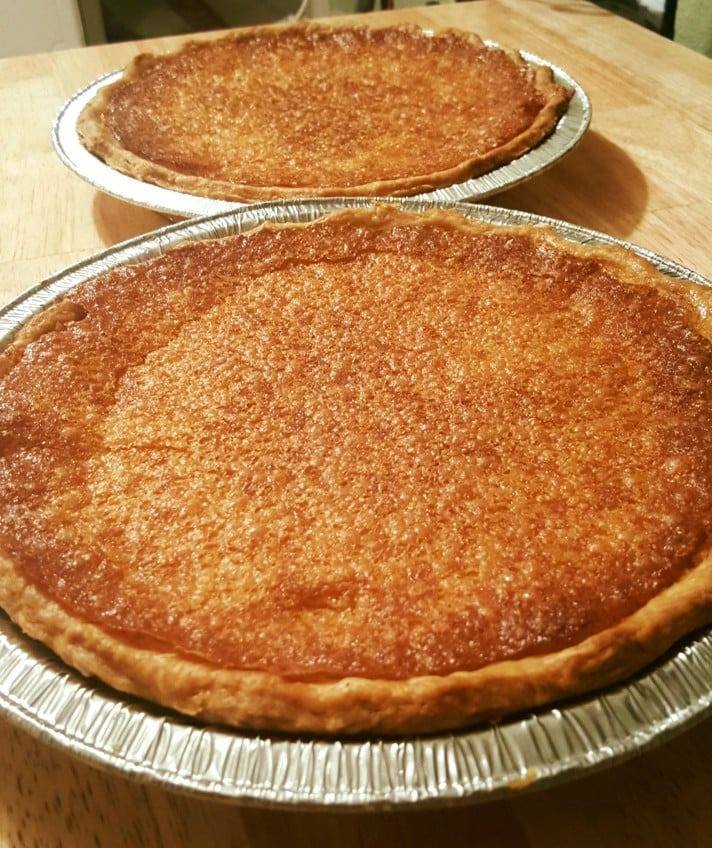
Buttermilk Pie is an old-fashioned custard pie with a lightly tangy filling, a sweet vanilla flavor, and just enough nutmeg to make it feel classic. The filling is simple—eggs, sugar, butter, flour, buttermilk, lemon juice, vanilla, and nutmeg—so the biggest difference between a good pie and an overbaked one comes down to how you judge the center.
I do not wait for this pie to become completely rigid in the oven. I look for a lightly browned top with a center that still has a small, controlled jiggle. The filling continues setting as the pie cools.
What Buttermilk Pie Tastes Like
The buttermilk does not make the finished dessert taste like a glass of buttermilk. Instead, its acidity balances the sugar and gives the custard a gentle tang that keeps the filling from tasting flat.
Vanilla and nutmeg bring the familiar bakery-style aroma, while lemon juice adds a little extra brightness. The texture lands somewhere between a baked custard and a soft chess-style pie.
Ingredients
- 3 large eggs
- 1 1/2 cups granulated sugar
- 1/2 cup butter, softened
- 3 tablespoons all-purpose flour
- 1 cup buttermilk
- 1 tablespoon lemon juice
- 1 teaspoon vanilla extract
- 1/8 teaspoon freshly grated nutmeg
- 1 unbaked 9-inch pie crust
The Part I Watch Most Closely: Doneness
Custard pies can go from silky to dry if they stay in the oven too long. I start checking toward the early end of the 40-to-60-minute window because ovens and pie plates vary.
The outside of the filling should look set, while the very center can still wobble slightly when the pie plate is gently moved. A toothpick or thin knife inserted near the center should come out mostly clean rather than coated in liquid custard.
If the crust edges are getting dark before the filling is ready, I shield just the rim with foil rather than covering the whole pie.
How to Make Buttermilk Pie
- Preheat the oven to 350°F.
- Place the unbaked 9-inch pie crust in its pie plate and set it on a rimmed baking sheet for easier handling.
- Beat the eggs until frothy.
- Add the sugar, softened butter, and flour and beat until the mixture is smooth.
- Stir in the buttermilk, lemon juice, vanilla, and nutmeg.
- Pour the filling into the unbaked pie crust.
- Bake for 40 to 60 minutes, checking early if your oven tends to run hot.
- The pie is ready when the top is lightly browned, the edges are set, and the center has only a slight jiggle.
- If the crust rim browns too quickly, shield the edges with foil for the remaining baking time.
- Remove the pie from the oven and cool for at least 1 hour before slicing.
Why the Pie Needs Time to Cool
I would not judge the final texture while the pie is still piping hot. The egg-and-flour custard continues setting as it cools, which is why the center can look slightly soft when it first comes out of the oven.
For cleaner slices, let it cool completely. If you prefer the pie chilled, refrigerate it after it reaches room temperature.
Make-Ahead Notes
Buttermilk Pie works well as a make-ahead dessert because it needs cooling time anyway. Bake it earlier in the day or the day before, let it cool, then cover and refrigerate.
I would serve it plain, with a light dusting of powdered sugar, or with a small spoonful of whipped cream. The filling already has plenty of sweetness, so it does not need a heavy topping.
Storage
Because this is an egg-and-dairy custard pie, keep leftovers refrigerated and covered. Let individual slices sit out only as long as needed for serving.
Buttermilk Pie Questions
Why did my pie crack?
A cracked or very dry surface can be a sign of overbaking. Pull the pie while the center still has a small jiggle and let residual heat finish setting the custard.
Can I make it without nutmeg?
Yes. Nutmeg gives the pie a traditional warm aroma, but the custard will still set and taste good without it.
Does the pie taste sour?
No. The sugar balances the buttermilk and lemon juice. The finished flavor is sweet and custardy with a mild tang rather than sharply sour.
For more old-fashioned sweets, browse my dessert recipes.
