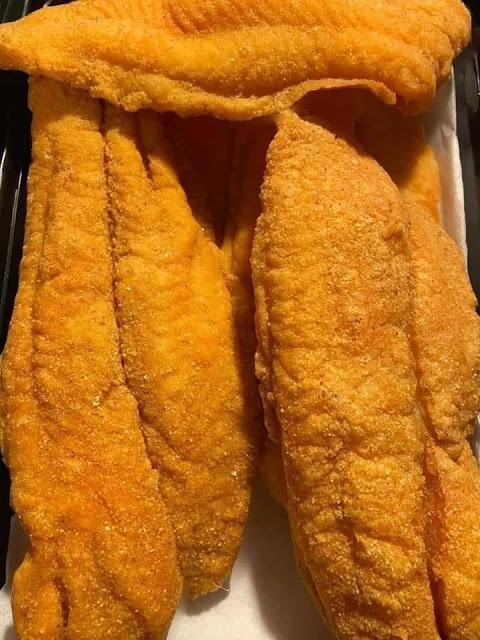
Crispy Fried Fish does not need a thick batter to be good. This version uses a simple flour coating seasoned with paprika, salt, and pepper, then fries the fillets in hot oil until the outside is golden and the fish is cooked through.
My main focus with fried fish is controlling the oil temperature and paying attention to the thickness of the fillets. I would not rely on one exact number of minutes for every piece of cod, haddock, or tilapia because a thin fillet and a thick fillet simply do not cook at the same speed.
The Coating Is Simple on Purpose
The flour creates a light crust rather than a heavy shell. Paprika adds color and a mild savory note, while salt and pepper season both the coating and the fish.
I recommend patting the fish dry before dredging. Surface moisture can make the flour clump and can also cause more splattering when the fillets hit the hot oil.
Ingredients
- 1/2 cup all-purpose flour
- 1/4 teaspoon paprika
- Salt, to taste
- Black pepper, to taste
- 1 pound fish fillets, such as haddock, tilapia, or cod
- About 2 cups vegetable oil, or enough for roughly 1 inch in the pan
- Lemon wedges and tartar sauce, for serving, optional
Get the Oil Hot Before the Fish Goes In
Pour enough oil into a heavy skillet to reach about 1 inch deep and heat it to about 375°F. A thermometer is the easiest way to keep the temperature consistent.
If the oil is too cool, the coating can absorb more oil and turn greasy. If it is much too hot, the outside can brown before the center is cooked. I also let the oil recover between batches instead of adding all the fish at once.
How to Make Crispy Fried Fish
- Pat the fish fillets dry with paper towels.
- In a shallow bowl, stir together the flour, paprika, salt, and black pepper.
- Dredge each fillet in the seasoned flour, coating both sides, then shake off the excess.
- Heat about 1 inch of vegetable oil in a heavy skillet to 375°F.
- Lower one or two fillets into the oil without crowding the pan.
- Fry until the first side is golden, then carefully turn the fish.
- Continue frying until the second side is golden and the center is opaque and flakes easily with a fork. The exact time depends on the thickness of the fillets.
- Transfer the cooked fish to a wire rack set over a baking sheet so excess oil can drain without steaming the crust.
- Let the oil return to temperature before frying the next batch.
- Serve hot with lemon wedges, tartar sauce, or your favorite dipping sauce.
How I Keep the Crust Crisp
I prefer a wire rack over a stack of paper towels. A rack lets air move underneath the fish, which helps the underside stay crisp instead of sitting in trapped steam.
Do not cover the fried fish tightly while it is hot. Trapped steam softens the coating quickly.
Choosing the Fish
Cod and haddock give you thicker, flaky pieces, while tilapia cooks faster because the fillets are usually thinner. Try to cook pieces of similar thickness in the same batch so one does not finish far ahead of the others.
If the fillets are frozen, thaw them completely and blot away excess moisture before coating.
Gluten-Free Option
For a gluten-free version, I would use a gluten-free all-purpose flour blend, rice flour, or finely ground cornmeal instead of regular flour. Check the labels on all seasonings and sauces if you need the finished dish to be strictly gluten free.
What to Serve with Fried Fish
Serve it with lemon, tartar sauce, coleslaw, roasted potatoes, fries, corn, or a simple salad. For more seafood ideas, browse my seafood recipes.
Storage and Reheating
Fried fish is best right after cooking, but leftovers can be refrigerated in a covered container. For better texture, I recommend reheating it in the oven or air fryer rather than the microwave, which tends to soften the crust.
Quick Troubleshooting
Greasy fish: the oil was probably too cool or the pan was overcrowded.
Coating falls off: dry the fillets well and shake off loose flour before frying.
Outside browns before the center is done: the oil may be too hot, or the fillets may be unusually thick.
