
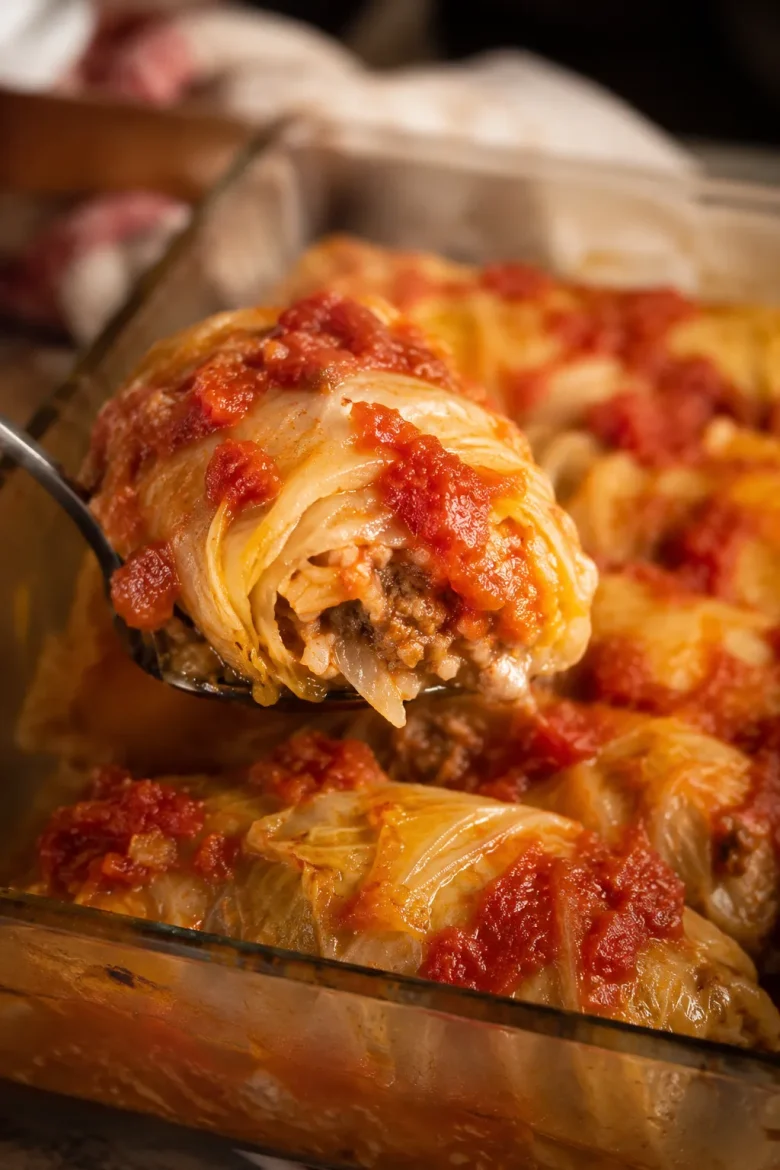
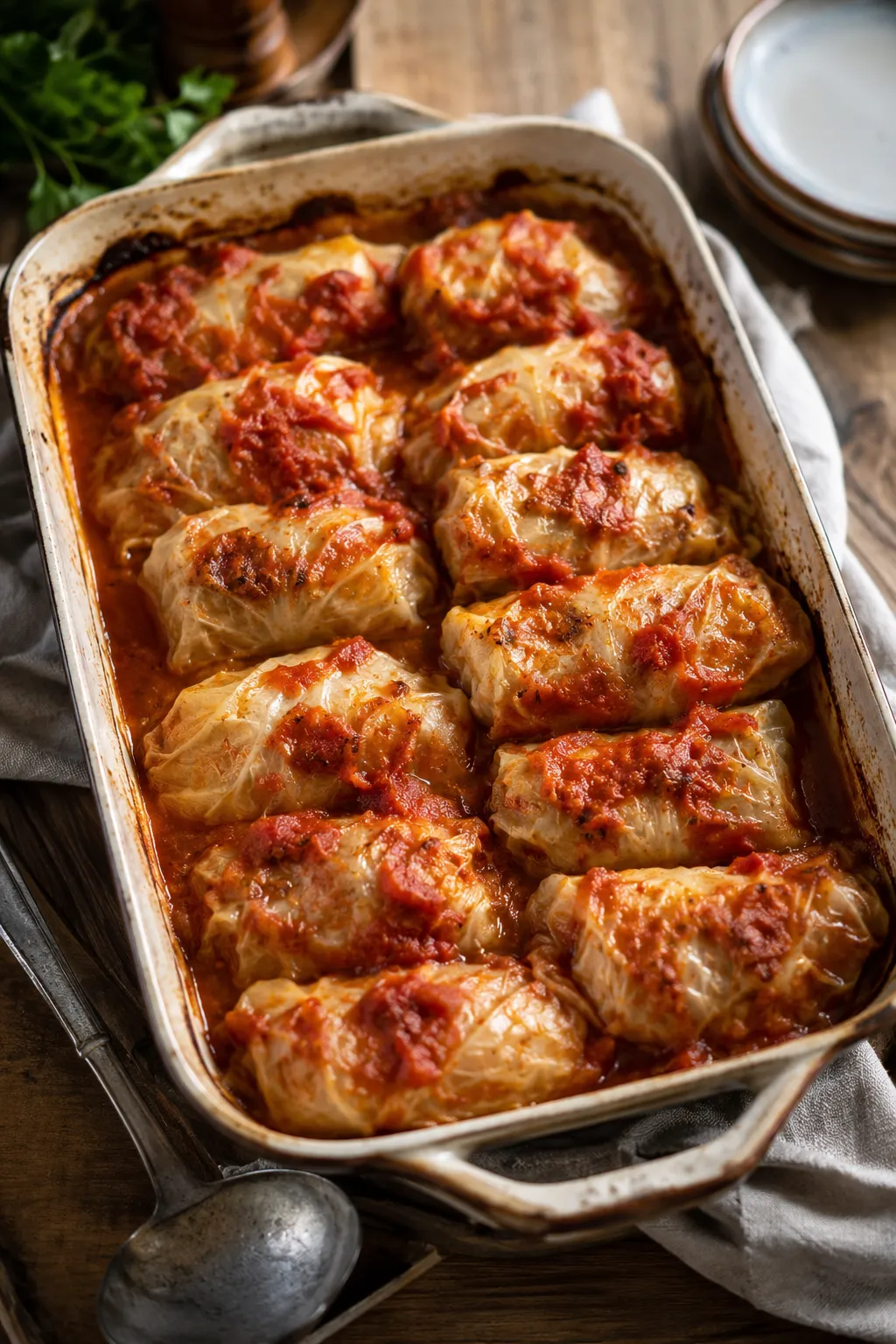
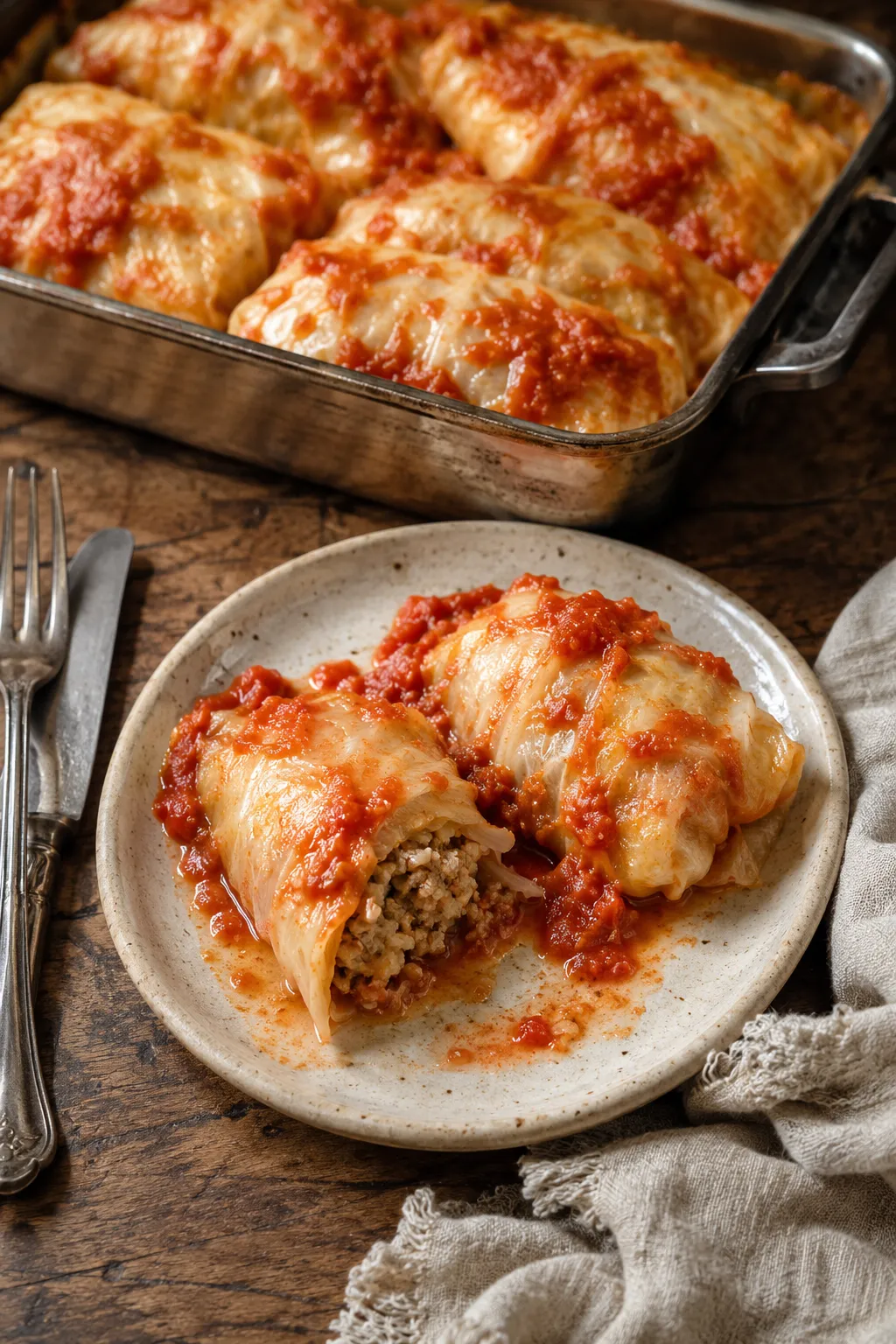
Old Fashioned Cabbage Rolls are one of those dinners that reward a little hands-on prep. Tender cabbage leaves are wrapped around seasoned ground beef and cooked rice, then baked slowly in tomato sauce until the rolls are soft, saucy, and easy to cut with a fork.
The rolling takes a few minutes, but none of the steps are difficult. The part that makes the biggest difference is softening the cabbage enough that the leaves bend without tearing. Once that is done, the filling comes together quickly and the oven takes over.
I also like that cabbage rolls are naturally make-ahead friendly. You can assemble the pan earlier in the day, keep it refrigerated, and bake it closer to dinner. For more cozy beef dinners, try Old Fashioned Goulash or browse the beef recipes.
What Makes These Cabbage Rolls Work
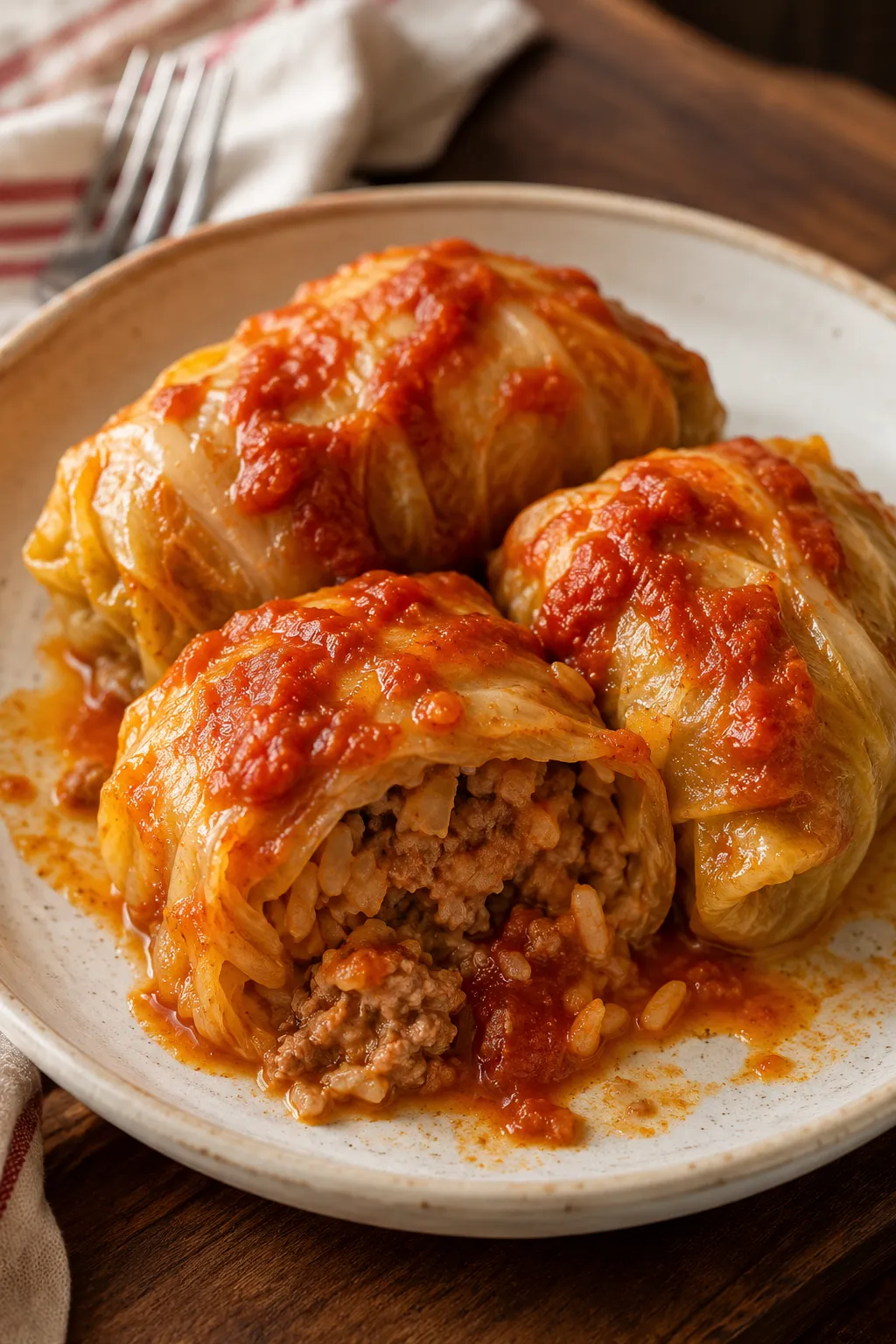
The filling uses cooked rice rather than raw rice. That keeps the texture predictable and prevents the rice from competing with the meat for moisture while the rolls bake. Worcestershire sauce, onion, garlic, dill, parsley, and tomato sauce season the beef without turning the filling into something overly complicated.
The cabbage leaves do two jobs at once. They hold the filling together, and as they bake under the sauce they become tender and slightly sweet. A little of the cabbage cooking water is mixed into the tomato sauce so the rolls braise instead of drying out.
Ingredient Notes
Green cabbage: Choose a firm medium head with large outer leaves. Those broad leaves are easiest to roll. The inner leaves may need another short dip in boiling water before they become flexible enough to use.
Ground beef: Lean ground beef works well because the rolls bake in plenty of sauce. Mix the filling gently. Overworking ground beef can make the center firm and dense.
Cooked long-grain rice: Let the rice cool a bit before mixing it with the raw beef. Long-grain rice holds its shape well and keeps the filling tender.
Tomato sauce: Part of the sauce goes into the filling and the rest goes over the rolls. If your canned tomato sauce tastes especially sharp, a very small pinch of sugar can soften the acidity.
Dill and parsley: Dill gives the filling its familiar cabbage-roll flavor, while parsley keeps the seasoning from feeling heavy.
How to Roll Cabbage Without Tearing It
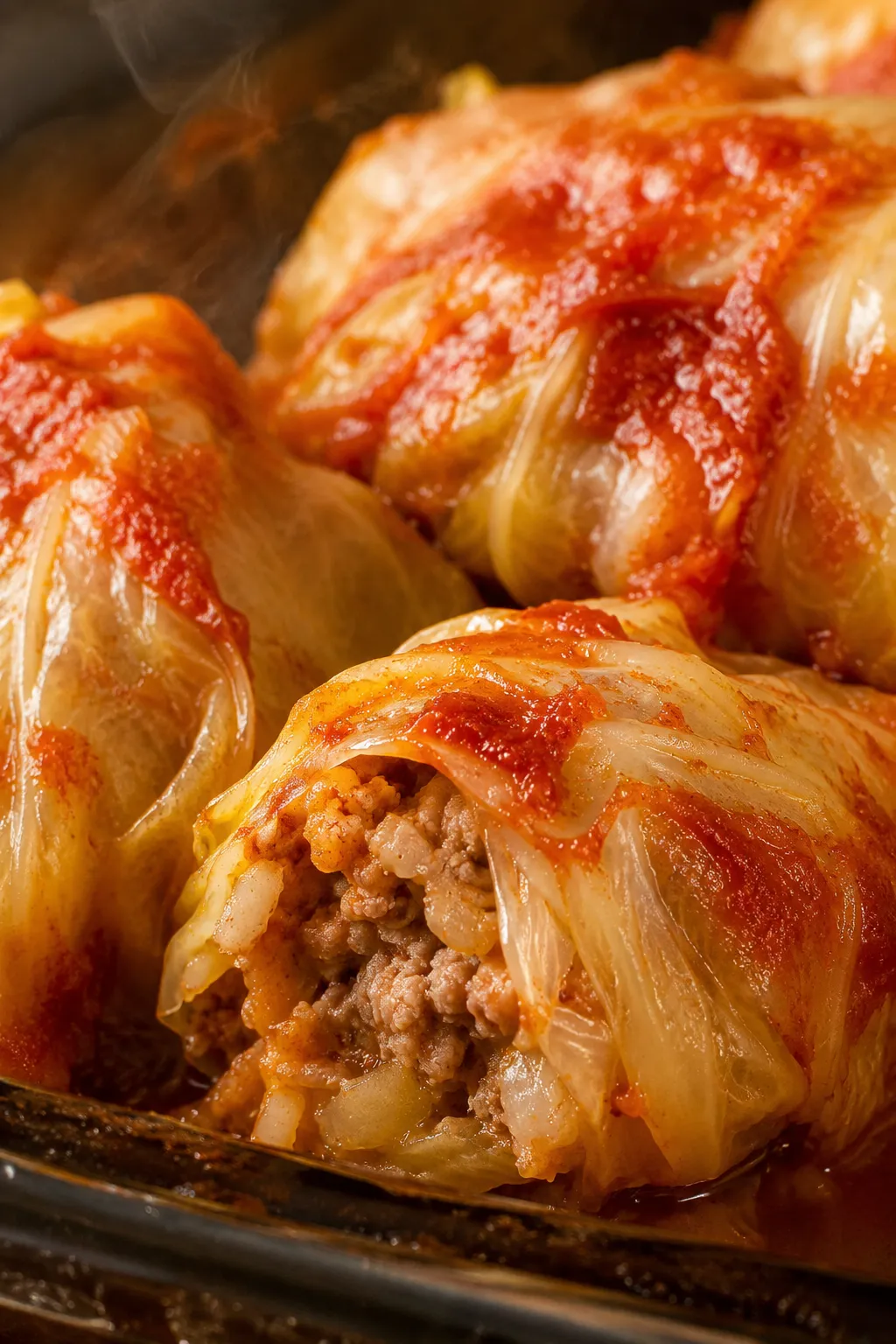
Do not try to peel every leaf from a raw cabbage head. Boil the cabbage first and remove the softened outer leaves as they loosen. If you reach leaves that still feel stiff, put the cabbage back into the hot water for a few more minutes.
Once a leaf is cool enough to handle, trim down the thick center rib. You do not need to remove the whole rib, just enough of the bulky section to let the leaf fold easily.
Use about 1/4 cup filling per large leaf. Fold the sides inward, roll the cabbage around the filling, and place the roll seam-side down in the baking dish. A smaller amount of filling is much easier to wrap than an overstuffed roll.
Cooking the Rolls Evenly
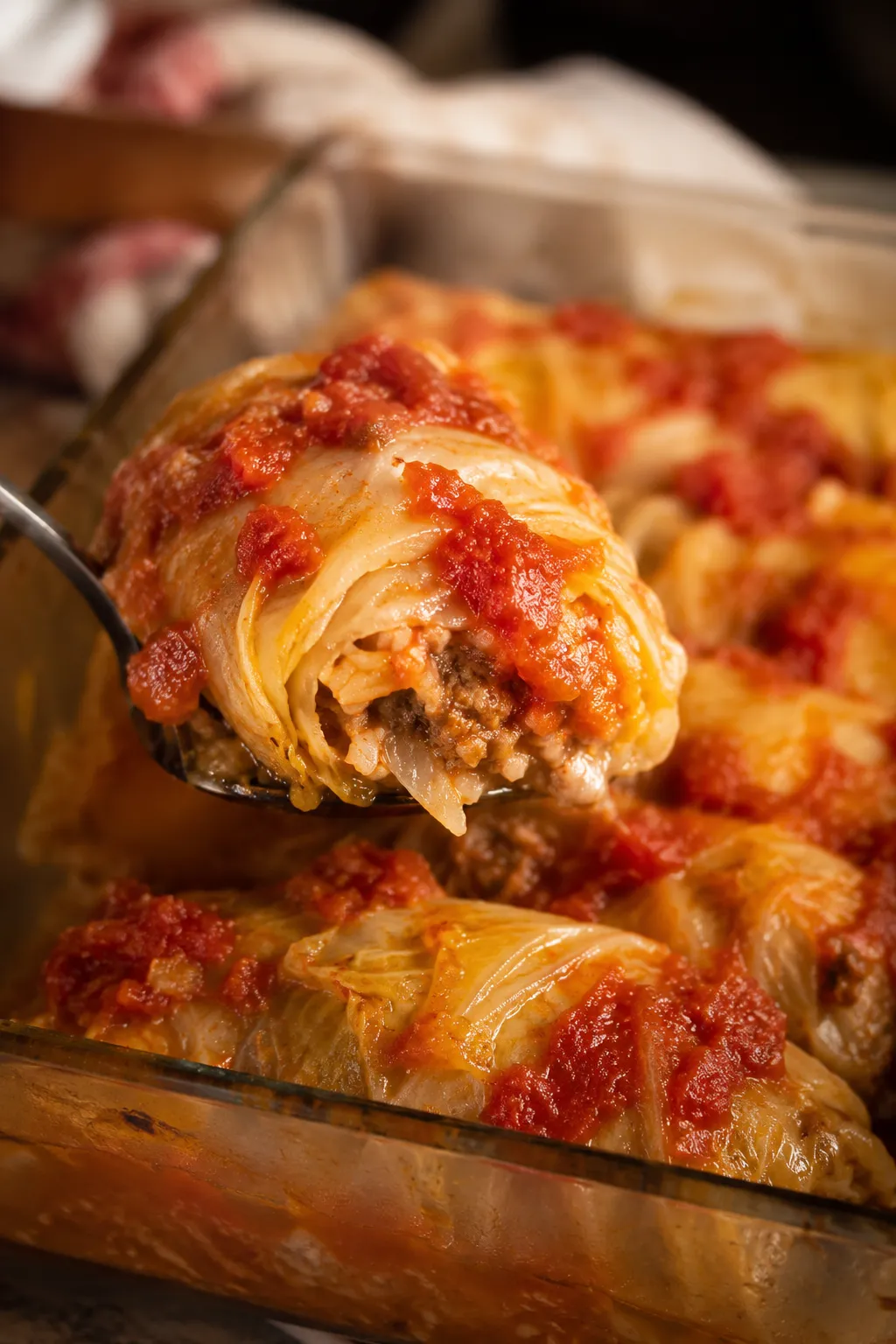
Line the bottom of the baking dish with a few extra cabbage leaves, arrange the rolls snugly over them, and pour the thinned tomato sauce over everything. Cover the pan tightly with foil so moisture stays trapped while the cabbage softens.
The published baking time is about 1 hour to 1 hour 15 minutes at 350°F, but use the filling temperature as the final check. Because the filling contains raw ground beef, the center of a cabbage roll should reach 160°F on a food thermometer before serving.
Easy Variations
Ground turkey can replace the beef if you prefer a lighter filling, while ground pork gives the rolls a richer flavor. Jasmine or basmati rice can stand in for standard long-grain rice as long as it is cooked first.
If you want a milder pan, leave out the red chili flakes. For more heat, use the full amount. Brown rice can also work, although it gives the filling a firmer, nuttier texture.
Frequently Asked Questions
Why are my cabbage leaves tearing?
They are usually still too firm. Return the cabbage to the boiling water and soften the inner leaves in stages. Trimming the thick center rib also makes each leaf easier to bend.
Can I use uncooked rice?
Not with this formula. It is built around cooked rice. Raw rice would require different liquid amounts and baking time.
How do I know the filling is cooked?
Insert a food thermometer into the center of one of the larger rolls. The ground-beef filling should reach 160°F.
Old Fashioned Cabbage Rolls
Ingredients
- 1 cup cooked long-grain rice or similar variety
- 1.5 pounds lean ground beef or extra lean ground beef
- 1.5 tablespoons Worcestershire sauce
- 1 large egg
- 1 yellow onion peeled and minced
- ⅓ cup parsley roughly chopped
- 3 cloves garlic minced
- 1.5 teaspoons salt
- ½ teaspoon black pepper
- ½ teaspoon dried dill
- ½ teaspoon onion powder
- ½ to 1 teaspoon red chili flakes optional
- 42 ounces tomato sauce divided
- 1 medium head green cabbage
- ½ cup water leftover from boiling cabbage
- Fresh dill chopped, for garnish, optional
Instructions
- Cook the rice according to package instructions and set aside. Preheat the oven to 350°F.
- In a large bowl, combine the ground beef, Worcestershire sauce, egg, cooked rice, onion, parsley, garlic, salt, black pepper, dried dill, onion powder, red chili flakes if using, and ½ cup of tomato sauce.
- Mix gently until everything is combined. Do not overmix.
- Bring a large pot of water to a boil. Carefully add the whole head of cabbage and boil for 8 to 10 minutes, turning partway through.
- Carefully remove the cabbage from the pot. Do not discard the cabbage water.
- Let the cabbage cool until safe to handle. Gently remove the softened leaves and trim the thick center rib from each leaf so it rolls more easily.
- If the inner leaves are still firm, return the cabbage to the boiling water for a few more minutes and continue removing leaves as they soften.
- Place several cabbage leaves on the bottom of a deep 9×13-inch baking dish or roasting pan.
- Place about ¼ cup of the beef and rice mixture onto each softened cabbage leaf.
- Fold in the sides, roll the leaf around the filling, and place each cabbage roll seam-side down in the prepared baking dish.
- Continue until the filling and usable cabbage leaves are used.
- Whisk the remaining tomato sauce with ½ cup of the reserved cabbage water.
- Pour the sauce evenly over the cabbage rolls.
- Cover the baking dish tightly with foil.
- Bake at 350°F for about 1 hour to 1 hour 15 minutes, or until the cabbage is tender and the center of the beef filling reaches 160°F on a food thermometer.
- Let the rolls rest briefly, then garnish with fresh chopped dill if desired and serve with the tomato sauce from the pan.
