
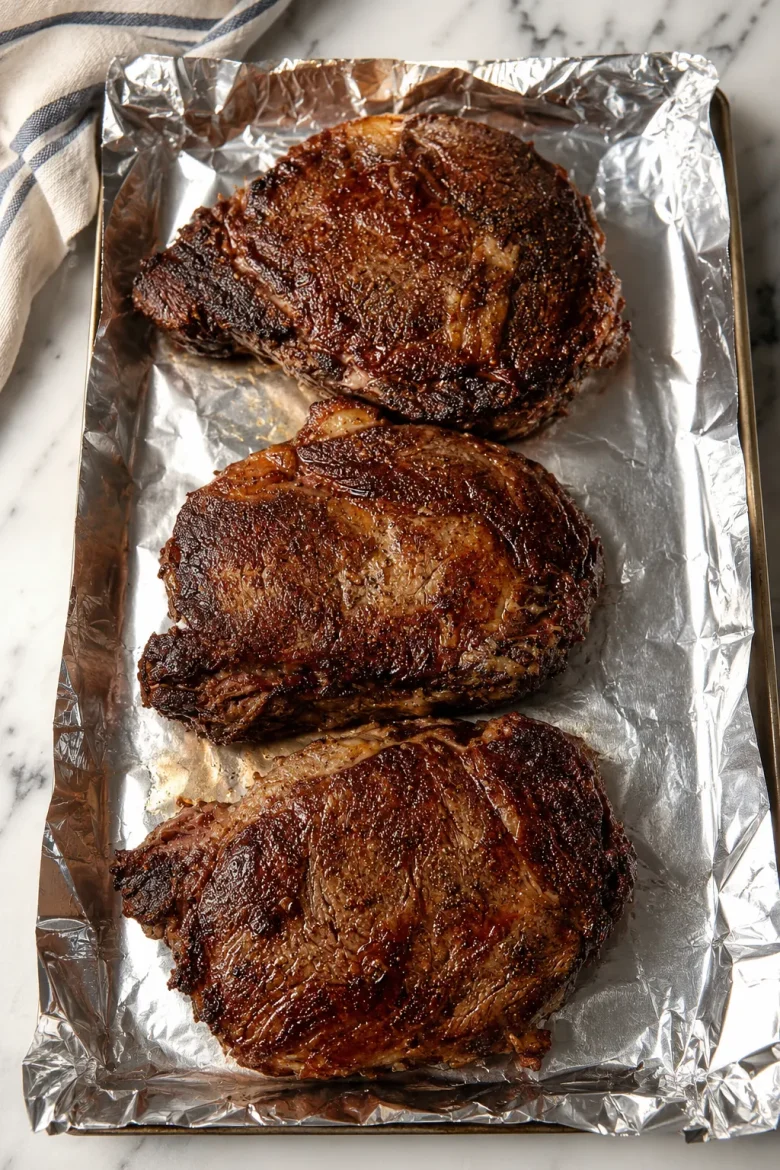
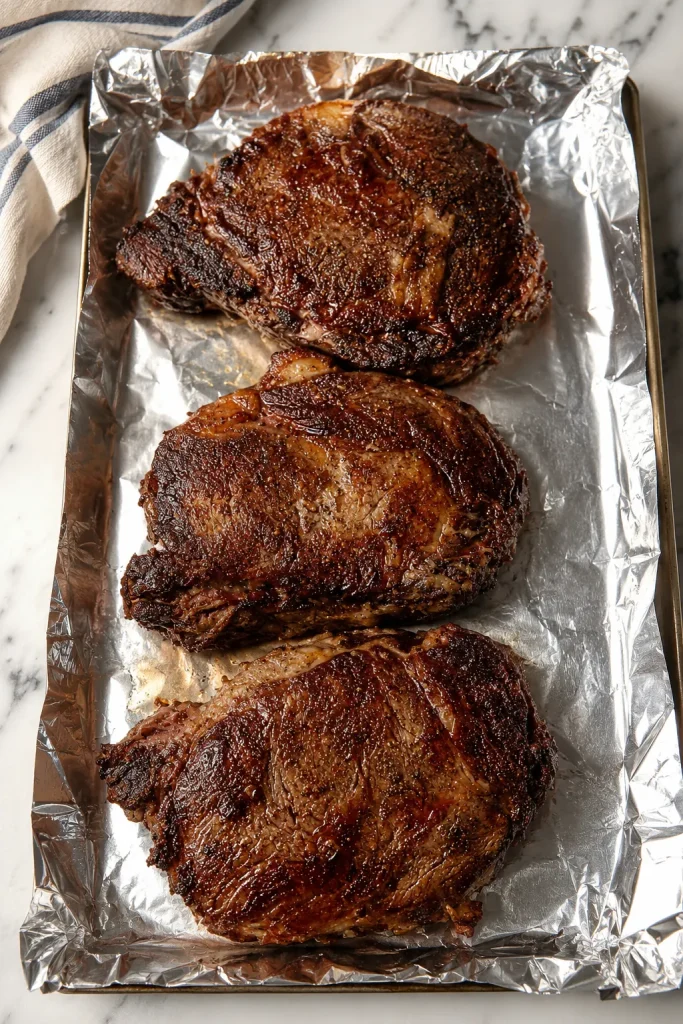
How to Cook Ribeye Steak in a Skillet
A good pan-seared ribeye depends on a few practical details: start with a well-marbled steak, dry the surface thoroughly, use a heavy hot skillet, and check the center with an instant-read thermometer instead of relying only on cooking time. Those steps help you build a browned crust without overcooking the middle.
This method walks through choosing the steak, preparing it for the pan, searing both sides, checking doneness, and resting before slicing. Ribeye has enough marbling to stay flavorful with very simple seasoning, so salt, black pepper, and a little butter are usually all you need.
Why Ribeye Works Well for Pan-Searing
Ribeye is cut from the rib section and is known for visible marbling. That fat renders as the steak cooks and helps keep the meat juicy. If your steak includes the outer ribeye cap, that section is especially tender and benefits from the same quick, high-heat cooking method.
How to Choose a Ribeye
Your final dish is only as good as the raw ingredients you start with. When you are standing at the butcher counter or browsing the meat case, keep these three golden rules in mind:
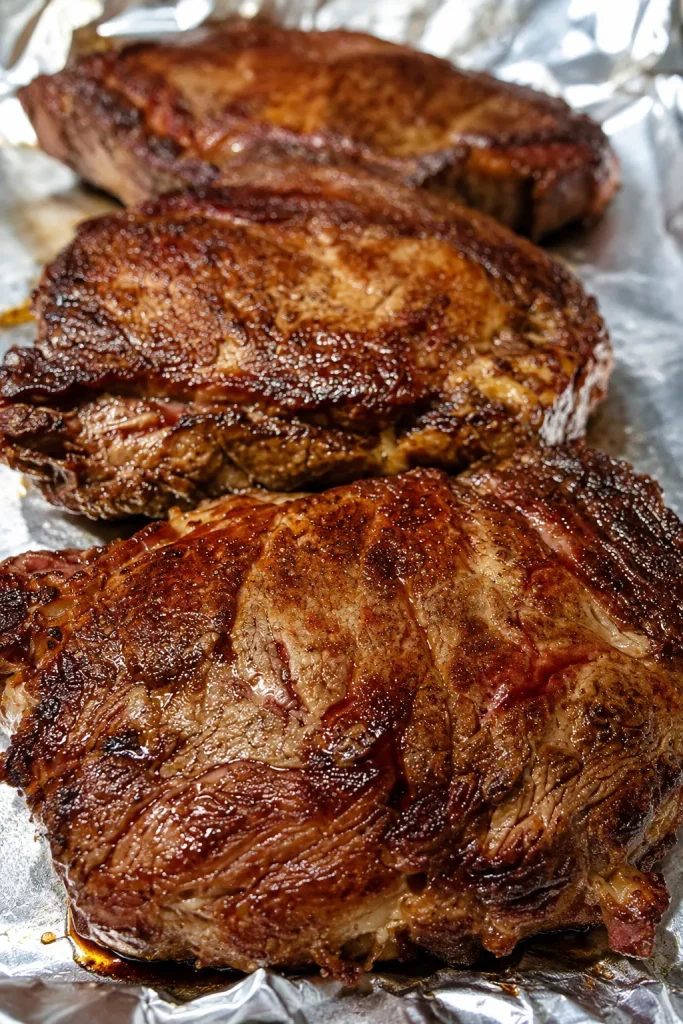
- Seek Out Generous Marbling: Look for a steak with fine, white flecks of fat evenly distributed throughout the red meat. Avoid steaks with large, hard chunks of fat and little marbling in the muscle itself. Prime grade beef will offer the best marbling, but a high-quality Choice cut is also excellent for home cooking.
- Thickness is Crucial: For a proper pan-sear, you need a thick steak. Look for a ribeye that is at least 1.5 to 2 inches thick. A thick cut allows you to develop a heavy, aggressive crust over high heat without accidentally overcooking the center.
- Bone-In vs. Boneless: A bone-in ribeye (often called a cowboy steak if it is thick enough) makes for a stunning presentation and can insulate the meat slightly near the bone. However, a boneless ribeye provides better, flatter contact with the pan, ensuring a more even sear across the entire surface. For this skillet method, boneless is highly recommended for maximum crust development.
Tools That Help with a Good Sear
Achieving that coveted steakhouse-level crust requires the right equipment. You do not need a professional commercial kitchen, but you do need these two accessible tools:
- A Heavy Cast Iron Skillet: Cast iron is unmatched in its ability to retain heat. When you drop a cold steak into a hot pan, the pan’s temperature naturally plummets. Cast iron holds its temperature through this shock, giving you that immediate, aggressive sear.
- An Instant-Read Meat Thermometer: Do not leave your expensive steak to guesswork or the highly unreliable “poke test.” An instant-read thermometer is the only foolproof, scientific way to nail your exact preferred level of doneness.
Pan-Searing Ribeye Step by Step
1. Prep for Success (The Dry Brine) Moisture is the enemy of a good crust. At an absolute minimum, pat your steak completely dry with paper towels before seasoning. For the ultimate results, salt your steak generously and leave it uncovered in the fridge on a wire cooling rack for up to 24 hours. This dry brining process draws moisture out, dissolves the salt, and reabsorbs it, seasoning the meat straight through while drying out the exterior for an unbeatably crispy crust.
2. The Smoking Hot Pan Bring your steak to room temperature for about 30 to 45 minutes before cooking to remove the chill. Place your dry cast iron skillet over high heat until it is smoking hot. Add an oil with a high smoke point—like avocado oil, grapeseed oil, or clarified butter. Carefully lay the steak into the pan, laying it away from your body to prevent dangerous oil splatters.
3. The Butter Baste (Arroser) After flipping the steak to sear the second side, we employ a classic French technique: arroser, or basting. Drop unsalted butter, crushed garlic cloves, and fresh sprigs of thyme or rosemary into the hot pan. As the butter foams and turns nutty and brown, tilt the skillet and use a large spoon to continuously baste the hot, aromatic butter over the steak. This accelerates the cooking process, deepens the crust, and infuses the meat with incredible flavor.
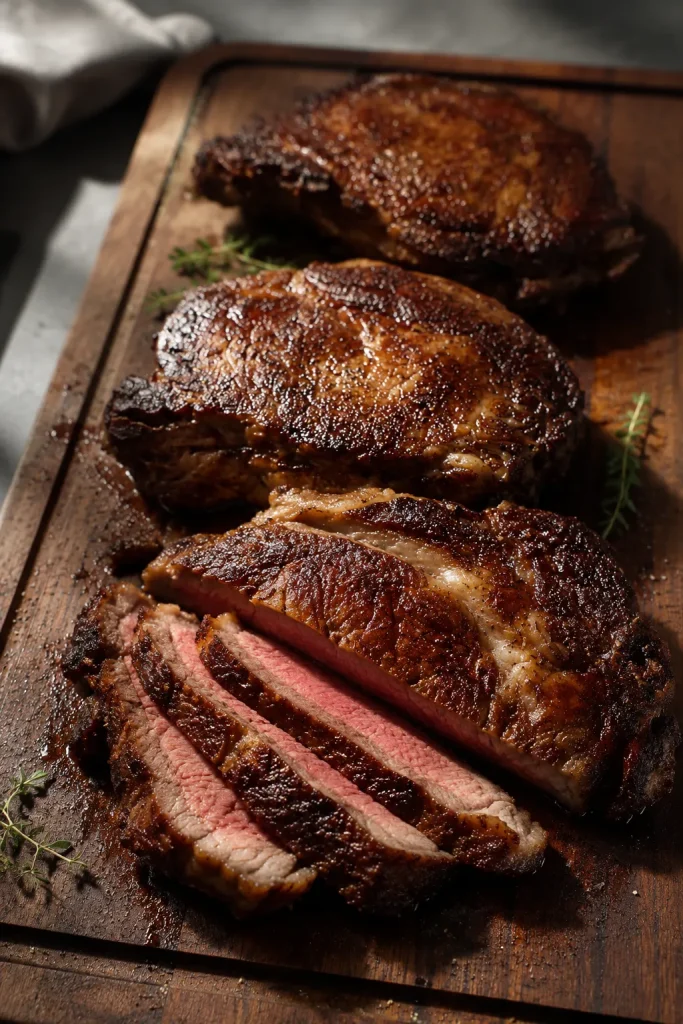
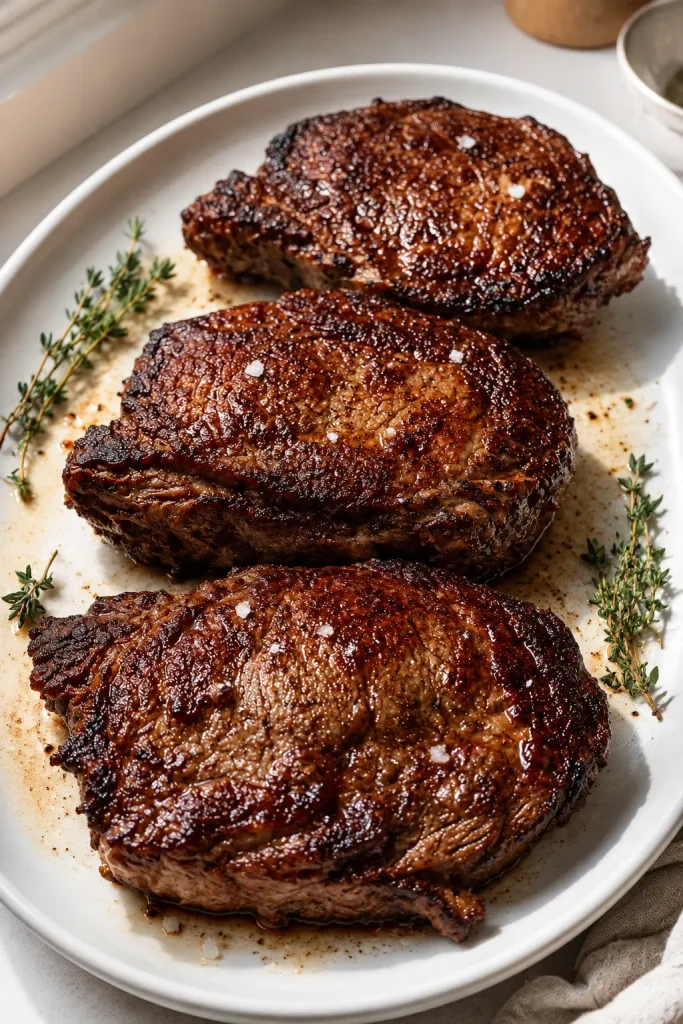
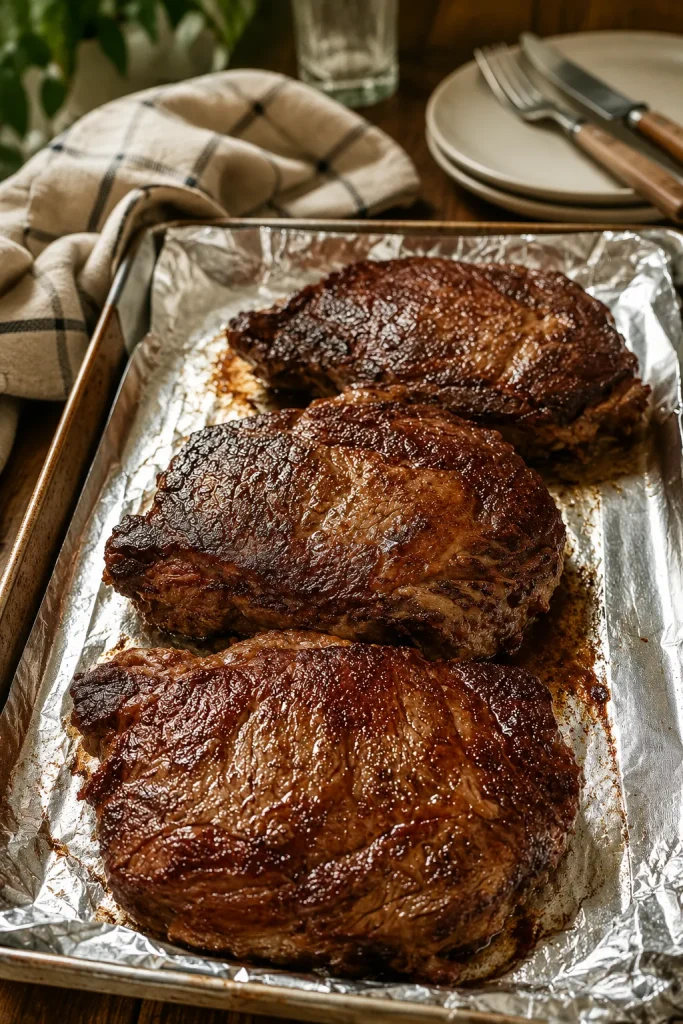
4. The All-Important Rest Taking the steak off the heat is only half the battle. You absolutely must let it rest. During cooking, the muscle fibers contract, driving juices to the center of the meat. If you slice into it immediately, those juices will bleed out onto your cutting board, leaving you with a dry steak. Resting for 10 minutes allows the fibers to relax and the juices to redistribute evenly throughout the entire cut.
Temperature Guide for Ribeye Steak
Remove your steak from the pan 5 degrees before your target temperature, as the internal heat will continue to rise (carryover cooking) while it rests on the board.
- Rare: Pull at 120°F (Target: 125°F) – Cool red center.
- Medium-Rare: Pull at 130°F (Target: 135°F) – Warm red center. (Highly recommended for ribeye to allow the fat to render properly).
- Medium: Pull at 140°F (Target: 145°F) – Warm pink center.
- Medium-Well: Pull at 150°F (Target: 155°F) – Slightly pink center.
- Well Done: Not recommended for this heavily marbled cut.
Frequently Asked Questions About Cooking Ribeye
Do I need to marinate a ribeye steak? Absolutely not. A high-quality ribeye is incredibly flavorful and tender entirely on its own. Marinating is typically reserved for tougher, leaner cuts of meat like flank or skirt steak to help break down connective tissues. For a ribeye, my Smoky Coffee Steak Rub and an aromatic butter baste are all you need to elevate its natural beefy profile.
Can I cook a ribeye in the oven? Yes, the “reverse sear” method is excellent for exceptionally thick cuts. You bake the steak at a low temperature (around 250°F) until it reaches an internal temperature of about 115°F, then finish it with a lightning-fast, screaming hot sear in a skillet for 1 minute per side. This guarantees edge-to-edge even cooking, though the standard pan-sear outlined below is much faster and perfect for weeknight dinners.
What is the difference between a prime rib and a ribeye? They come from the exact same primal cut of the cow. Prime rib is a large, bone-in roast cooked whole, whereas ribeye steaks are sliced from that same roast prior to cooking. If you slice a raw prime rib roast into individual steaks and pan-sear them, you are cooking ribeye steaks.
Ribeye Steak
Ingredients
- 1 Boneless Ribeye Steak 1.5 to 2 inches thick, roughly 16-20 oz
- 1 tbsp Kosher Salt use slightly less if using standard table salt
- 1 tsp Coarsely Ground Black Pepper
- 1 tbsp Avocado Oil or other high-smoke-point oil
- 3 tbsp Unsalted Butter
- 3 cloves Garlic lightly crushed and peeled
- 3 sprigs Fresh Thyme or Rosemary
Instructions
- Prep the Steak: Remove the ribeye from the refrigerator 30 to 45 minutes before cooking. Thoroughly pat the steak completely dry on all sides with paper towels. Season generously with kosher salt and coarsely ground black pepper, pressing the seasoning gently into the meat so it adheres.
- Heat the Skillet: Place a heavy cast iron skillet over high heat. Allow the pan to get smoking hot (about 3-5 minutes). Add the avocado oil, ensuring it coats the bottom of the pan evenly.
- The First Sear: Carefully lay the steak into the skillet, laying it away from you to prevent splashing. Press down lightly with tongs or a spatula to ensure even contact. Sear undisturbed for 3 to 4 minutes until a deep, dark brown crust forms.
- Flip and Baste: Flip the steak. Immediately add the unsalted butter, crushed garlic cloves, and fresh thyme sprigs to the skillet. As the butter melts and begins to foam, tilt the pan slightly toward you. Using a large spoon, continuously baste the hot melted butter over the top of the steak for another 2 to 3 minutes.
- Check Temperature: Use an instant-read meat thermometer inserted into the thickest part of the steak. Remove the steak at 130°F for medium-rare, or 140°F for medium. Be sure to sear the fat cap on the edge for about 30 seconds using tongs before removing from the heat.
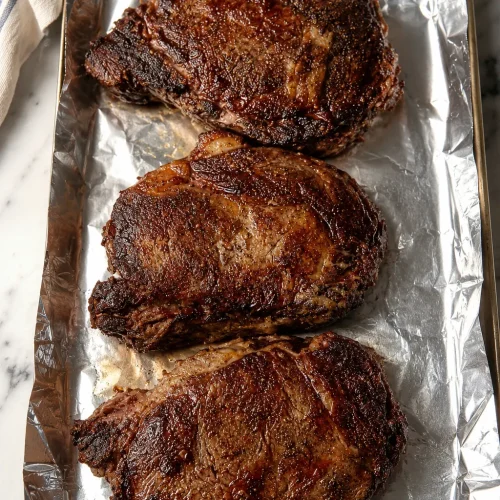
- Rest the Meat: Transfer the steak to a cutting board (ideally one with a juice groove). Loosely tent with aluminum foil and let the meat rest undisturbed for at least 10 minutes.
- Slice and Serve: Slice the steak against the grain to ensure a tender bite. Pour any resting juices and remaining browned butter from the pan over the sliced meat just before serving.
Notes
- Dry Brining: For even better results, salt your steak up to 24 hours in advance and leave it uncovered in the fridge on a wire rack. This draws out surface moisture for an even better crust.
- Pan Choice: Do not use a non-stick pan for this recipe. High heat will ruin the non-stick coating, and it will not yield a proper sear. Cast iron or heavy-bottomed stainless steel are essential.
