
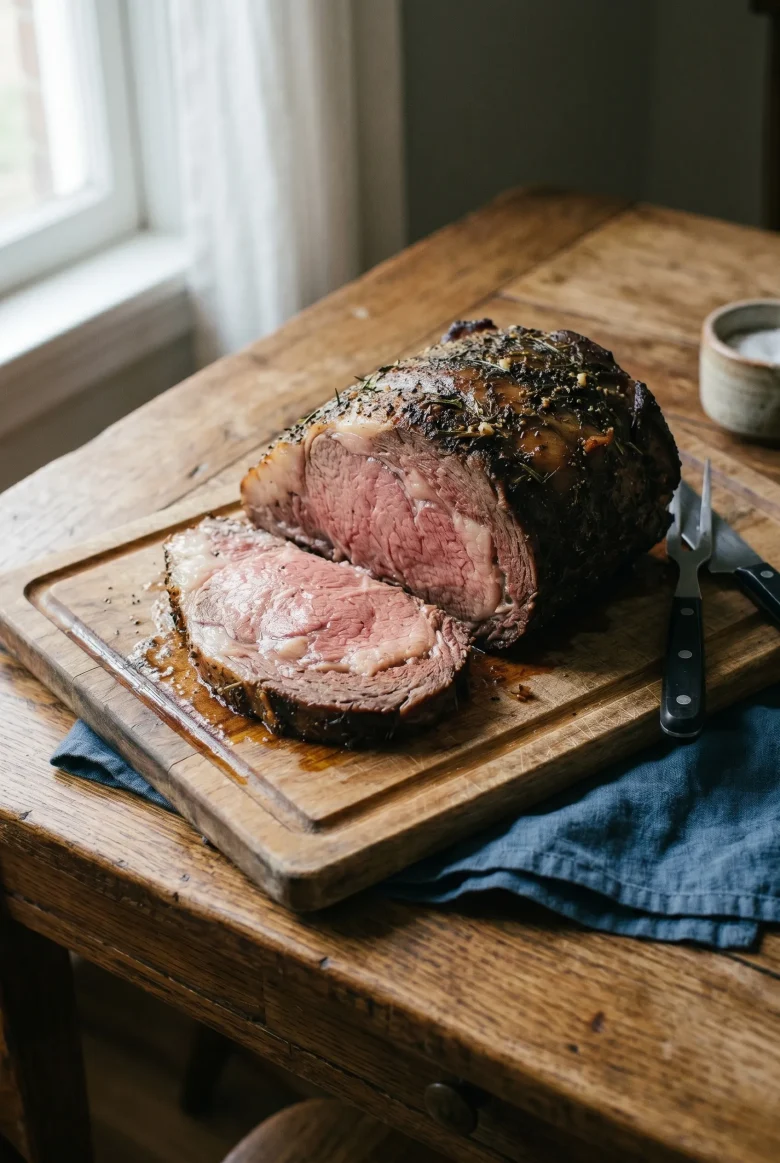
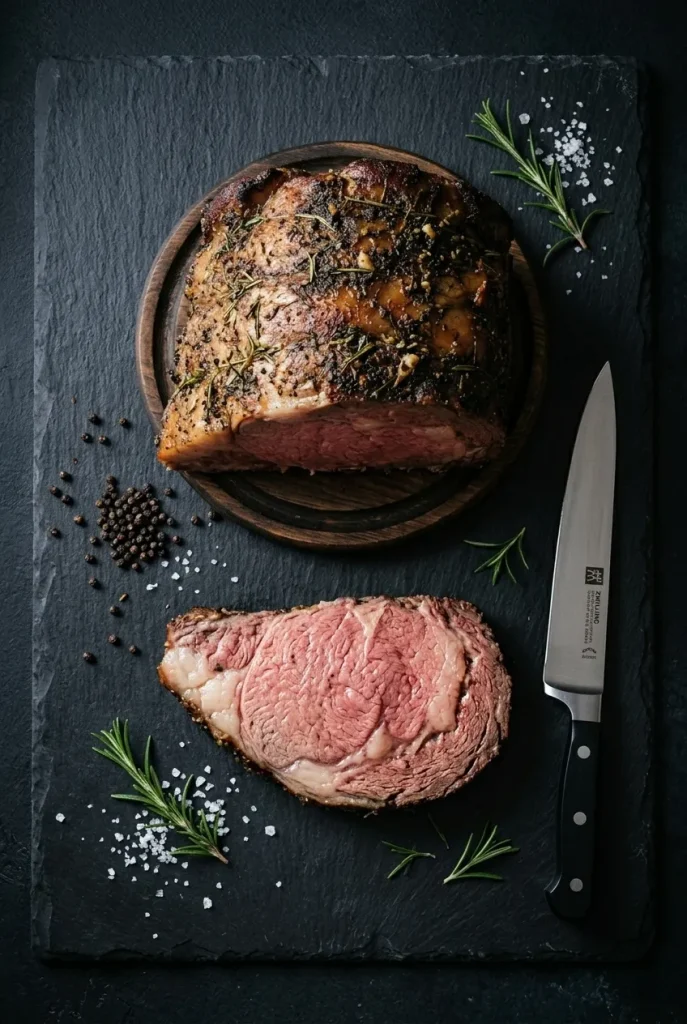
Best Ever Prime Rib uses a high-heat start followed by a closed-door oven period to build a browned crust while the center cooks gently in the oven’s residual heat. It is a useful holiday method, but the timing should be treated as a guide rather than a guarantee because ovens lose heat at very different rates.
The part I would not skip is the thermometer check. A roast can look beautifully browned on the outside and still be below a safe temperature in the center. I check the thickest part and look for at least 145°F, followed by a 3-minute rest before carving.
This version keeps the simple salt, pepper, and garlic seasoning that lets the beef stay the focus. The closed-door method does most of the work, while the thermometer tells you when the roast is actually ready.
Choosing a Prime Rib Roast
Prime rib is also sold as a standing rib roast. A bone-in roast makes an impressive presentation and the bones act as a natural rack. A boneless roast is easier to carve and works with the same general method.
If you buy a bone-in roast, you can ask the butcher to cut the bones away and tie them back onto the roast. That gives you the presentation and flavor of a bone-in roast while making carving much easier at the table.
As a rough planning guide, many cooks allow about one pound of bone-in roast per person, although serving size depends on the rest of the menu and how much leftover beef you want.
Simple Prime Rib Seasoning
A well-marbled rib roast does not need a long list of ingredients. Kosher salt seasons the meat and helps the surface dry, black pepper adds bite, and garlic powder gives the crust savory flavor without the risk of fresh garlic scorching during the very hot first stage.
- Prime rib roast: Bone-in or boneless.
- Kosher salt: Season generously but adjust to the size of the roast.
- Black pepper: Freshly cracked gives the best aroma.
- Garlic powder: Coats the roast evenly and handles high oven heat well.
How the Closed-Door Method Works
The roast begins in a very hot oven, usually 500°F to 550°F depending on what your oven safely supports. That first blast of heat browns the exterior quickly.
For the initial high-heat phase, use the roast’s weight in pounds multiplied by 5 minutes as a starting point. When that time is up, turn the oven off and leave the door closed for 2 hours.
The important distinction is that this timing does not determine final doneness. Oven insulation, cooling fans, roast shape, and starting temperature all affect how much heat remains in the oven. After the 2-hour period, check the thickest part of the roast with a food thermometer, avoiding the bone.
If the center has not reached 145°F, turn the oven to 325°F and continue cooking until it does. Once the roast reaches at least 145°F, let it rest for at least 3 minutes before carving.
Tips That Matter Most
Do not leave the roast out all afternoon. Letting it lose some refrigerator chill can help with more even cooking, but raw meat should not sit at room temperature for more than 2 hours total.
Dry the surface well. Paper towels remove surface moisture so the seasoning sticks and the exterior browns more effectively.
Know how your oven behaves. Some newer ovens run cooling fans after they are turned off. If yours vents heat aggressively, the closed-door method may finish at a lower temperature than expected.
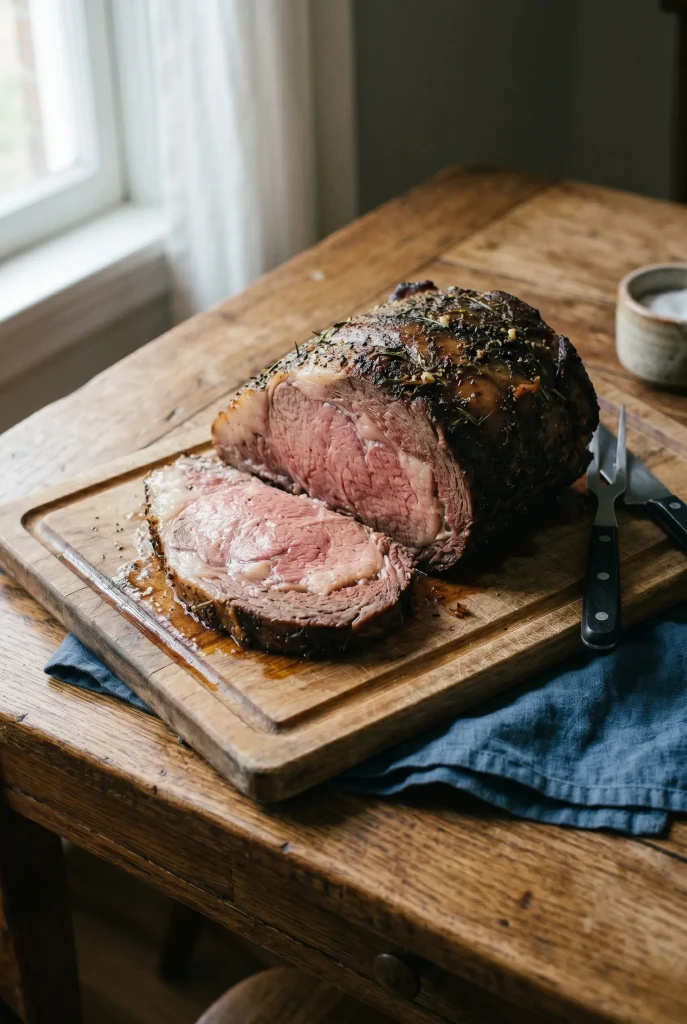
Use temperature, not color, as the final check. Browning and pinkness are useful quality clues, but they do not replace a food thermometer.
What to Serve with Prime Rib
Prime rib is rich, so I would keep the sides fairly classic. Mashed or roasted potatoes, green beans, asparagus, a crisp salad, Yorkshire pudding, or horseradish cream all pair well with the beef.
Frequently Asked Questions
Does the closed-door method work in every oven?
No. Ovens vary in insulation and heat retention, and some automatically vent heat after they are switched off. That is why the final thermometer reading matters more than the clock.
What if the roast is below 145°F after two hours?
Set the oven to 325°F and continue cooking until the thickest part reaches at least 145°F. Then rest the roast for at least 3 minutes before carving.
Can I use this method for a boneless prime rib?
Yes. Place a boneless roast on a rack so hot air can circulate around it, then use the same thermometer-based final check.
Best Ever Prime Rib
Ingredients
- 1 Prime Rib Roast Bone-in or boneless, any size
- 2 Tablespoons Kosher Salt Adjust based on roast size
- 1 Tablespoon Black Pepper freshly cracked
- 1 Tablespoon Garlic Powder
Instructions
- Remove the prime rib from the refrigerator 1 to 2 hours before cooking so it loses some of its chill. Do not leave raw meat at room temperature for more than 2 hours total.
- Preheat the oven to 500°F to 550°F, using the highest normal baking temperature your oven safely supports.
- Pat the roast dry with paper towels. Mix the kosher salt, black pepper, and garlic powder, then season the roast evenly on all sides.
- Place the roast fat-side up in a shallow roasting pan. If boneless, set it on a roasting rack; the bones can act as the rack for a bone-in roast.
- For the initial high-heat phase, multiply the exact roast weight in pounds by 5 minutes. Use this only as a timing guide, not as a doneness test.
- Roast uncovered at the preheated high temperature for the calculated time.
- When the timer ends, turn the oven off and keep the door closed for 2 hours. This method works best in an oven that holds residual heat well; ovens with aggressive cooling fans may lose heat faster.
- After 2 hours, check the thickest part of the roast with a food thermometer, avoiding the bone. For USDA food-safety guidance, the roast should reach at least 145°F before it is removed from the heat source. If it is below 145°F, heat the oven to 325°F and continue cooking until it reaches 145°F.
- Once the roast has reached at least 145°F, let it rest for at least 3 minutes before carving. Slice against the grain and serve.
